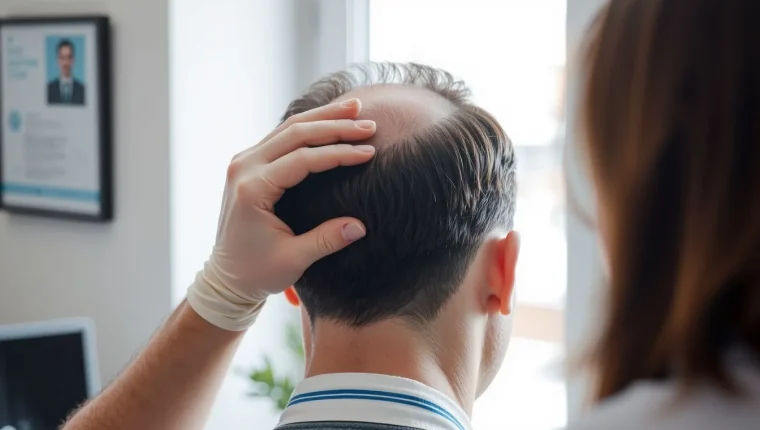
A receding hairline changes how your face is framed, and it rarely stops at a few strands. Once the corners thin and the forehead deepens, the question becomes practical: what actually restores hair where it used to be? Hair plugs for a receding hairline are one answer, but they are not the only one, and they are not right for every pattern of loss. Whether the procedure is worth it depends on facts you should weigh before committing money or scalp to it. You need to understand what the procedure physically does, whether your hairline and health make you a suitable candidate, what density and longevity you can realistically expect, and how the costs and trade-offs compare with the alternatives.
How Hair Plugs for a Receding Hairline Actually Work

A receding hairline loses hair in a specific pattern: the frontal hairline thins and pushes backward, while the sides and back of the scalp usually keep their density. That pattern matters because it determines both where new hair is needed and where healthy hair can be borrowed from.
Hair plugs work by moving hair from a dense area to the thinning front. In the traditional version, a surgeon removed small round grafts of skin, each holding several follicles, from the back or sides of the scalp. These grafts were then placed into holes punched along the hairline. Because the donor zone sits outside the reach of the hormone that drives pattern baldness, the transplanted follicles keep growing where they are moved.
That donor source is the whole point. Hair taken from the back of the head retains its genetic resistance, so it survives in its new location. The catch is that early plug grafts were large and round, so they healed with a distinct tufted look — sometimes called a doll’s hair or corn-row appearance.
Modern versions use much smaller grafts, often single hairs at the very front edge, to mimic a natural hairline. But this is still a surgical redistribution of existing hair, not a way to grow new follicles. The amount of donor hair is finite, which is why the procedure is usually planned across sessions rather than as a single fix.
Who Makes a Good Candidate for This Procedure
Not everyone with a receding hairline is a good fit for hair plugs, and understanding why comes down to two things: where your donor hair is and how stable your loss has become. The strongest candidates have dense, healthy donor hair at the back and sides of the scalp, because that is the region surgeons harvest from. If that zone is thin or already showing signs of miniaturization, there may simply not be enough grafts to rebuild a hairline that looks full and natural.
Just as important is the pattern of your loss. A receding hairline that has settled into a predictable shape tends to be far easier to treat than one that is still actively moving. When shedding is ongoing or unpredictable, transplanted grafts can end up stranded as the surrounding natural hair continues to retreat, leaving gaps and an unnatural outline over time.
Certain health factors also matter. Uncontrolled conditions, active scalp infections, or a tendency toward heavy scarring can make the procedure a poor choice. Age plays a role too, since younger adults often face decades of continued loss ahead.
Candidacy is not a minor detail; it shapes how much density is achievable and how long the result holds, which is exactly what the next section explores.
What Results You Can Realistically Expect

At the hairline, a transplant does not recreate the density you had at twenty. Surgeons typically place grafts in a soft, irregular pattern that mimics how a natural hairline thins rather than forming a hard, straight line. Most patients end up with a noticeable improvement in coverage and framing of the face, but the result reads as “thinning that looks intentional” rather than a full head of hair. If you expect the density of your teenage hairline, you will be disappointed.
How close you get to that ceiling depends heavily on the method. Modern follicular unit extraction places individual grafts and generally produces more natural, scar-light results than the older plug techniques the name still evokes. But the more important variable is what happens around the transplanted hair. Grafts are taken from a stable donor zone and keep growing, yet the native hair behind them often continues to recede. Over five to ten years, the transplanted line can stay put while the area behind it thins, creating a gap that needs planning, not just surgery.
That is why durability is tied to maintenance. Without medication or a future touch-up session, results hold at the hairline but the surrounding picture keeps changing. The next section covers those ongoing costs and how they compare with alternatives.
Risks, Costs, and Recovery Compared to Alternatives
Any surgical procedure carries some risk, and a hairline transplant is no exception. In the weeks after the operation, the scalp often feels tight, tender, and swollen, and small scabs form around each graft site. Bleeding, infection, and poor wound healing are uncommon but possible, and some patients develop numbness or itching that lingers. A more frequent concern is shock loss, where existing hairs near the treated area shed temporarily before regrowing. Recovery itself is gradual: most people need several days away from work, must avoid strenuous activity and sun exposure for a period, and wait months before the final result is visible.
Cost is the other practical hurdle. Pricing usually depends on the number of grafts required, so a receding hairline that needs dense coverage can run into thousands of dollars, and because the procedure is typically considered cosmetic, insurance rarely covers it. When weighed against alternatives, medication such as minoxidil or finasteride costs far less and involves no downtime, though it must be used continuously and works best on thinning rather than bare areas. Other transplant techniques may offer similar or refined results at comparable expense.
Is It Worth It? Weighing the Pros and Cons
Whether hair plugs are worth it comes down to how well your situation matches the conditions where the procedure performs best. If you have dense, healthy donor hair and a receding pattern that has stabilized, the math often works in your favor: a skilled surgeon can rebuild a natural-looking hairline, and the transplanted follicles tend to hold for years. The trade-offs are real, though. Cost, downtime, and the possibility of shock loss all weigh against the result, and for some people these downsides simply outweigh the benefit.
The verdict flips when donor supply is thin, the hairline is still actively receding, or your expectations run ahead of what surgery can deliver. In those cases, the money and recovery may buy less than you hope. Match the decision to your own priorities — appearance, budget, tolerance for risk — rather than a universal answer.
FAQs
Are hair plugs for a receding hairline a permanent solution or do they require ongoing maintenance?
Hair plugs for a receding hairline are considered a permanent solution because the transplanted follicles are typically resistant to the hormone that causes pattern baldness, so the grafted hair should continue to grow for life. However, the natural hair surrounding the plugs may keep thinning over time, which can create an uneven look and may require additional procedures or maintenance. Many patients also use medications like finasteride or minoxidil to preserve their remaining hair and protect the overall result.
How much do hair plugs for a receding hairline typically cost, and does insurance cover any part of the procedure?
Hair plugs for a receding hairline typically cost between $4,000 and $15,000, depending on the number of grafts, the clinic's location, and the surgeon's experience. Most health insurance plans classify hair restoration as a cosmetic procedure and do not cover it, though limited coverage may apply if hair loss results from a medical condition or injury.
What results can someone realistically expect from hair plugs for a receding hairline compared to other treatments like medication or transplants?
Hair plugs for a receding hairline typically deliver permanent, transplanted coverage in the treated zones, but they do not stop ongoing hair loss, so results can look uneven over time without additional treatment. Medications like finasteride and minoxidil work to slow or partially regrow thinning hair across the scalp, yet they require consistent, lifelong use and rarely restore a full hairline on their own. Modern follicular unit transplants generally produce more natural, denser hairlines than older plug techniques and are often combined with medication for the best long-term outcome. Realistically, the strongest results come from pairing surgical restoration with medical therapy rather than relying on any single option.