If you have researched nose surgery, you have probably encountered two terms: open rhinoplasty and closed rhinoplasty. Some people say open is the gold standard; others say it causes more swelling and a visible scar. Neither claim is a rule. The technique is a surgical choice that depends on your nose’s structure, what needs to change, and how predictable the result must be. Open rhinoplasty gives the surgeon direct, three-dimensional access to the framework of the nose. That access is an advantage in some cases and unnecessary in others. It is not a brand or an automatic upgrade. What matters is whether the technique fits your anatomy and your goal, and whether your surgeon can explain that fit clearly.
What Open Rhinoplasty Involves and How It Differs from Closed Techniques
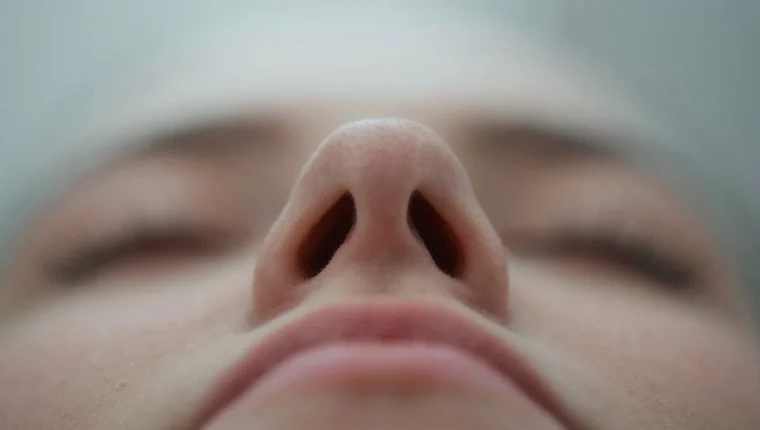
Open rhinoplasty gets its name from the way the surgeon reaches the nasal framework: through a small incision across the columella, the strip of skin between the nostrils. From that point, the skin and soft tissue covering the nose are carefully lifted upward as a single envelope, exposing the underlying cartilage and bone directly. This external incision is what separates open from closed approaches, and it is the reason the technique is sometimes called the “external” approach. The columellar cut is usually a fine, stepped or zigzag line placed in a natural crease, designed to heal inconspicuously.
Once the skin envelope is raised, the surgeon works with a fully visible framework. The nasal bones, upper lateral cartilages, and lower alar cartilages can be examined, reshaped, or rebuilt under direct sight rather than by feel. That direct line of sight is the defining mechanical feature of the open technique.
Closed rhinoplasty takes a different route. All instruments pass through the nostrils, and the skin is not lifted off the framework. The surgeon works beneath the surface, relying on touch and experience to judge the shape and position of the underlying structures. No external incision is made, so there is no columellar scar.
The practical difference is not simply about scarring. It is about visibility. In an open approach, the surgeon can see the nasal framework as it is being changed, which allows for precise, controlled adjustments. In a closed approach, that same work happens through narrower access, which can be an advantage for simpler changes but a limitation when the anatomy is irregular or the case is complex. The choice between the two therefore shapes how much control the surgeon has during the procedure, not just where the incision sits.
Why Surgeons Recommend the Open Approach for Complex Nasal Cases
When a nose presents structural problems rather than a straightforward cosmetic concern, the surgical plan shifts. Surgeons often reach for the open approach because complex cases demand something the closed technique cannot reliably deliver: direct, unobstructed exposure of the underlying framework. That visibility is not a matter of comfort — it is a matter of control.
Think about what complex actually means in this context. A dorsum that needs structural grafting, a tip that must be rebuilt rather than refined, asymmetries that run deeper than the surface, or a revision nose where scar tissue has distorted the original anatomy. In each of these situations, the surgeon is not adjusting what is visible; they are reconstructing what sits beneath it. Grafts must be placed with precision, sutures must hold cartilage in exact position, and small differences between the two sides must be identified and corrected. Working through the nostrils limits the angle of view and forces the surgeon to operate partly by feel.
The open technique removes that limitation. Lifting the skin envelope gives a full view of the cartilaginous and bony structures, so grafts can be secured where they are needed and asymmetries can be seen and addressed in the same session. For revision work in particular, this matters because scar tissue obscures normal landmarks, and guessing is not an option.
The recommendation, then, follows the difficulty of the problem — not a surgeon’s personal preference. When the nose requires rebuilding rather than reshaping, the open approach gives the precision the case demands.
Open Rhinoplasty Pros and Cons: Functional and Aesthetic Outcomes Compared

Choosing between an open and closed approach is not about which technique is universally better; it is about which set of trade-offs fits your nose and your goals. The open method gives the surgeon a clear, direct view of the nasal framework, but that advantage comes with its own costs in swelling, scarring, and recovery time. Weighing these honestly is the only way to decide whether it suits you.
The clearest benefit of the open approach is surgical control. Because the surgeon can see the underlying structures without obstruction, grafts, sutures, and tip refinements can be placed with a high degree of precision. This matters most when the problem is functional as well as cosmetic, such as a deviated septum combined with a crooked bridge, or when revision work requires rebuilding support that has already been weakened. In these situations, predictability of the final shape and of the airway tends to improve.
The costs are equally real. The open technique involves a small incision across the columella, and the additional dissection generally produces more swelling than a closed procedure. That swelling can make early results look uneven and can take months to settle fully. The scar is usually thin and fades well, but it is still a visible trade-off for some patients.
| Outcome | Open Technique | Closed Technique |
|---|---|---|
| Surgeon visibility | Direct, unobstructed view of the framework | Limited to what can be seen through the nostrils |
| Precision for complex or revision cases | Higher control over grafts and tip shaping | More difficult when structure must be rebuilt |
| Functional correction | Well suited to combining airway and shape repair | Effective for simpler septal issues |
| Swelling after surgery | Typically more pronounced | Generally less |
| Scarring | Small external incision on the columella | No external incision |
| Recovery appearance | Results may look uneven for longer | Often settles more quickly |
The pattern is consistent: the open technique trades a longer, more visible settling period for greater control in noses that genuinely need it. If your case is straightforward, a closed approach may achieve the same result with less disruption. If it is complex or a revision, the open route often earns its extra cost.
Who Makes the Best Candidate for an Open Technique
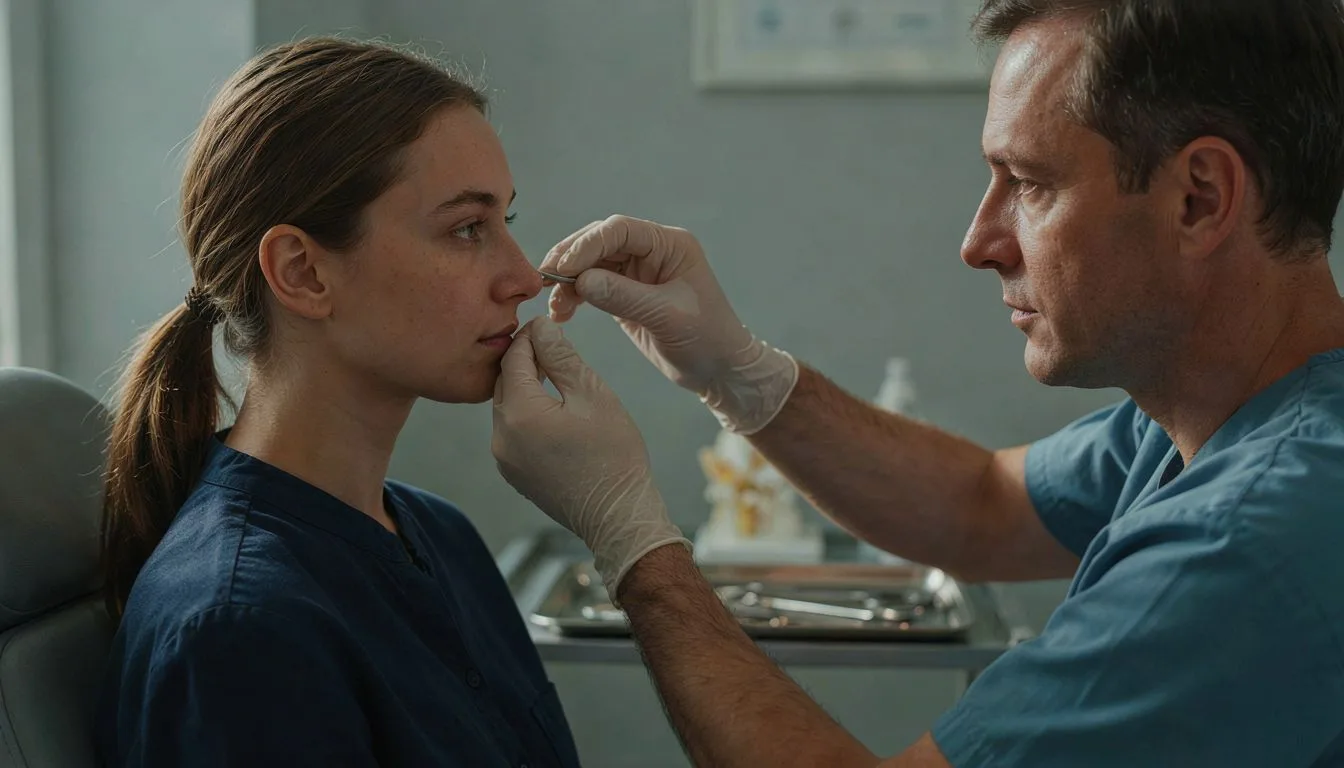
Candidacy for an open approach comes down to a handful of factors surgeons genuinely weigh during examination. The first is nasal anatomy. A nose with a deviated septum, a crooked bridge, asymmetric tip cartilages, or a weak and collapsing middle vault gives the surgeon more to correct, and more to correct means more reason to want the wider view that open exposure provides. A relatively straight nose with a minor dorsal hump and a well-supported tip often does not demand that level of access.
Prior surgery is the second factor. A revision nose usually contains scar tissue, altered cartilage, and structural changes that are hard to read from below. If you have had a previous rhinoplasty, the open route is frequently the more predictable one, though this is a clinical judgment rather than an automatic rule.
Breathing problems matter too. When a blocked airway stems from septal deviation, valve collapse, or internal irregularities, the surgeon needs to see and rebuild those structures, not just reshape the outside. Aesthetic goals point the same direction: a request for significant tip refinement, rotation, or bridge reconstruction asks for direct, unobstructed exposure of the framework.
Factors that point away from open include a nose needing only a small dorsal adjustment, no prior surgery, and no functional complaint. Even then, the technique is a surgeon’s call. Candidacy is confirmed in examination, with imaging and a full history, not by any article.
Risks, Recovery, and Scarring Expectations After Open Rhinoplasty
The scar is usually the first concern patients raise, and the honest answer is that it is real but small. In an open rhinoplasty, the incision crosses the narrow strip of skin between the nostrils — the columella — and typically follows a subtle stepped or inverted-V pattern designed to hide within the natural shadow of the nose. Once healed, most patients describe it as a faint, thin line that is easy to miss in conversation distance. Mature scarring takes months, not weeks: expect redness to fade gradually and the line to soften over six to twelve months. People with darker skin tones or a history of keloids may heal with more visible pigmentation, which is worth discussing before surgery rather than after.
Recovery follows a predictable rhythm. The first week brings bruising around the eyes, congestion, and a splint that most surgeons remove within seven to ten days. By the second week, social downtime is largely over for many patients, though swelling remains the dominant feature of the following months. This is where expectations matter most: the nose you see at three weeks is not the nose you will see at one year. Swelling resolves from the top down, so the tip is typically the last area to settle, and asymmetry that looks obvious early on often softens considerably with time.
Technique-related risks include infection, bleeding, and rare skin or cartilage complications at the columella, along with the possibility of revision if healing or scarring does not match the plan. These are not reasons to avoid the procedure, but they are reasons to choose a surgeon who tracks outcomes honestly and explains what revision would involve.
Choosing the Right Surgeon and Planning Your Open Rhinoplasty Consultation
Once you understand what open rhinoplasty involves, who it tends to suit, and what recovery really looks like, the decision shifts from the procedure itself to the person performing it. Experience matters most in two areas: how many open cases a surgeon performs regularly, and how often they handle revision noses. Because the open approach gives direct, unobstructed exposure of the nasal framework, it is often chosen for complex or previously operated noses — so a surgeon who works comfortably in that territory is better positioned to anticipate scar tissue, weakened cartilage, and other variables that change the plan mid-surgery.
Your consultation should feel less like a sales pitch and more like a working session. Ask how the surgeon decides between open and closed for a nose like yours, what specific changes they propose, and how they would handle a result that falls short of the goal. Bring up the candidacy factors you have already weighed — anatomy, goals, revision history — and let the surgeon respond to them directly rather than in general terms.
Treat the meeting as a two-way fit check. You are evaluating their judgment as much as their skill, and they are assessing whether your expectations align with what surgery can realistically deliver.
FAQs
What are the main open rhinoplasty pros and cons compared with closed techniques?
Open rhinoplasty gives the surgeon direct, three-dimensional visibility of the nasal framework through a small external columellar incision, which makes it easier to place precise sutures and grafts in complex revision or tip cases. The trade-offs are a visible scar at the columella, slightly longer operating and recovery times, and a small risk of tip numbness or skin issues. Closed rhinoplasty avoids an external scar and often heals faster, but it offers less direct exposure for intricate grafting and can be harder to teach or perform in difficult secondary cases.
Which patients are considered the best candidates for open rhinoplasty?
The best candidates for open rhinoplasty are typically patients who need complex or revision work, such as correcting a severely deviated septum, rebuilding a collapsed nasal tip, or fixing problems from a previous nose surgery. It also suits people with thick skin or significant asymmetry, because the open approach gives the surgeon direct, precise visibility of the underlying structures. If your goals are minor and straightforward, a closed technique may be enough, so the right choice really comes down to how much exposure and control your case demands.
How visible is the scar after open rhinoplasty, and does it affect the overall pros and cons?
The scar from open rhinoplasty sits across the columella, the narrow strip of skin between the nostrils, and typically heals into a thin, faint line that most people find barely noticeable once fully matured. Surgeons usually place the incision along natural creases and use fine sutures to help it blend, so in the trade-off between the pros and cons of open rhinoplasty, the scar is generally considered a minor cosmetic downside rather than a major one. The bigger advantages, like direct visualization and greater precision for complex tip work, tend to outweigh this small, largely hidden mark for most candidates.