After deciding on otoplasty, you may wonder what recovery will feel like day by day. Knowing when you can return to work, sleep comfortably, or exercise again can make the decision more manageable. The honest answer is that healing after ear surgery unfolds in distinct stages, each with its own routines and milestones. The first days involve dressings and swelling, the first week brings the most soreness, and the following months involve gradual settling rather than active recovery. The otoplasty recovery timeline below reflects typical patterns, though your own healing may vary slightly depending on your body and the specifics of your procedure.
What Happens in the First 48 Hours After Otoplasty

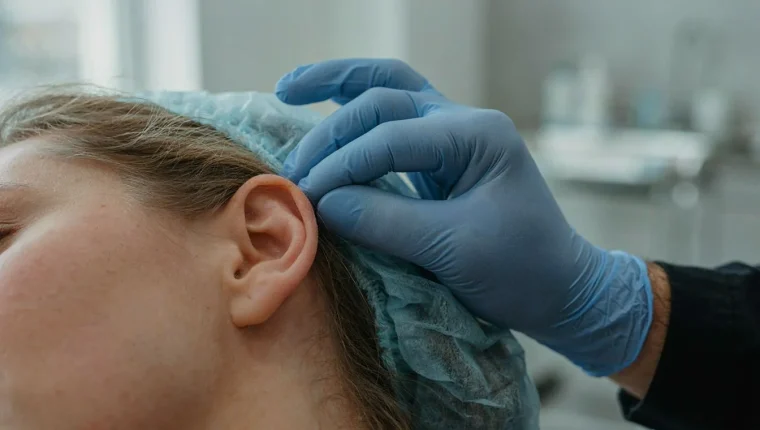
The moment your anesthesia wears off, you’ll notice something surprising: your ears are completely covered. Most surgeons wrap the head in a soft, bulky pressure dressing that protects the new ear contours and keeps swelling in check. Underneath, the skin may look bruised and slightly swollen, and the ears themselves will sit higher and firmer than their final position—this is entirely expected at this stage.
The sensations you feel in those first hours are usually manageable. Pressure and tightness around the head are the most common complaints, often described as a band being squeezed around the ears. A dull throbbing or mild to moderate soreness is normal, and sharp, severe pain is not typical—your surgical team will have given you prescription pain medication to stay ahead of discomfort, ideally taken with food.
Your first care instructions are simple but important: keep the dressing dry, rest with your head elevated, and avoid touching or adjusting the bandages. You won’t be washing your hair yet, and that’s fine.
One thing you cannot skip is arranging a companion. Because anesthesia affects coordination and judgment for 24 hours or more, someone must drive you home and ideally stay with you through the first night to help with medication and comfort.
Week One: Managing Swelling, Soreness, and Dressings
The first week is when most of the visible changes happen. Swelling and bruising usually peak around day three, so don’t be alarmed if your ears look puffier on the third morning than they did right after surgery. From that point, the swelling gradually settles, and any bruising behind or around the ears begins shifting in color and fading.
The pressure dressing placed during surgery typically stays on for the first five to seven days. Your surgeon will remove it at a follow-up visit—resist the urge to peek underneath or loosen it at home, even if it feels tight or itchy. That dressing does important work keeping the new ear contours protected while the initial swelling goes down.
Hygiene requires some creativity this week. The area must stay completely dry, which means no washing your hair over the tub or shower with your head back, or better yet, waiting until your surgeon clears it. Dry shampoo can be a practical stand-in for a few days. If someone can help you wash your hair carefully with the dressings shielded, that’s an option worth arranging in advance.
Soreness follows a steady downward trend. The sharpest discomfort typically eases within the first two to three days, and by the end of the week, most people describe their ears as tender rather than genuinely painful. Persistent, worsening pain is different and should prompt a call to your surgical team.
When Can You Return to Work, School, and Exercise?
Most adults plan about one week off work after otoplasty, though the right amount depends on what your job actually involves. If you sit at a desk or take calls all day, you can often return to light duties within seven to ten days, as long as you can avoid bumping your head and feel comfortable being seen in a headband. School-age patients usually need a similar week at home, and many families schedule surgery around a school break so the first phase of healing happens out of the classroom.
Exercise returns in stages. Gentle walking is typically fine within the first few days and actually supports circulation. Light cardio can often resume around two weeks, but anything that raises your heart rate sharply, strains your upper body, or risks a fall waits longer—usually three to four weeks for strenuous workouts.
Contact sports are the strictest category. Football, basketball, wrestling, and martial arts carry a real risk of a direct hit to the ear, so most surgeons hold clearance for these until six weeks or later. The key point is that your surgeon’s individual clearance always overrides any general guideline—your follow-up appointment is where that final green light is given.
Sleeping Positions and Daily Habits That Protect Your Ears
How you sleep after otoplasty matters more than almost any other habit in the first weeks. The cartilage is still settling into its new shape, and pressure from a pillow can undo careful surgical work. That’s why sleeping on your back with your head elevated is the gold standard—ideally propped on two or three pillows, or resting in a recliner for the first several nights. Side sleeping is off-limits initially because even brief contact can bend the ear, shift internal sutures, or worsen swelling.
Most surgeons also provide a protective headband or compression garment to wear over the ears. This serves two purposes: it keeps the ears gently cushioned against accidental contact during sleep, and it helps the cartilage hold its corrected position as it heals. Expect to wear it continuously at night for the first few weeks, and many patients continue wearing it during sleep for a month or longer.
Daily routines need small adjustments, too. Skip headphones and earbuds entirely, choose loose hairstyles that don’t tug at the ears, and brush hair carefully away from the surgical site. If you wear glasses, ask your surgeon about a temporary frame adjuster so the arms rest above or in front of the ears rather than on them. Helmets—whether for cycling or work—should wait until your surgeon confirms the ears can tolerate that pressure.
These habits typically relax gradually over the following months, guided by what your surgeon observes at each follow-up visit.
What Your Follow-Up Appointments Will Involve

Your surgeon will typically see you within the first few days after surgery, when the pressure dressing comes off and the ears are examined for the first time. This visit is often the moment patients feel the biggest sense of relief, since seeing the new ear shape for the first time makes the whole process feel real.
Most practices follow a rhythm of early visits: a dressing check within the first week, then a suture or healing review around the two-week mark. At each appointment, the surgeon looks at three things in particular—symmetry between the ears, how well the incisions are closing, and whether the swelling trend is moving in the right direction. Mild asymmetry from uneven swelling is common early on and usually settles as healing progresses.
These visits are also when the protective headband gets adjusted or, eventually, retired. Many surgeons reduce nighttime headband use around the four-to-six-week visit once the cartilage has firmed up.
Come prepared with questions. Worth asking about: sleeping positions, when you can resume specific activities, and what changes in ear sensation are expected. Writing your questions down beforehand ensures nothing gets forgotten in the moment.
Signs of Complications and When to Call Your Surgeon
Most otoplasty recoveries unfold without incident, but knowing the difference between normal healing and a genuine problem is what keeps small issues from becoming serious ones. The signs that warrant a call to your surgeon fall into a few clear categories, and recognizing them early is the most important part of protecting your result.
Infection is the concern your surgical team watches for most closely during the first week. Contact the office if you notice redness that spreads rather than fades, increasing warmth around the ear, cloudy or foul-smelling discharge from the incision, or a fever above 38.5°C (101.3°F). Mild swelling and tenderness are expected; escalating pain is not.
Bleeding that soaks through the dressing, or sudden severe pain that doesn’t respond to your prescribed medication, also warrants an immediate call. So does visible wound separation, or a noticeable change in the symmetry between your ears that appears days after surgery rather than at the initial dressing removal.
One rule above all: when in doubt, call. Surgeons would far rather answer a question that turns out to be nothing than have you wait at home with something that needed treatment.
How Your Otoplasty Recovery Timeline Progresses Over the First Six Months
By the end of the first month, most of the visible drama is behind you, but your ears are still quietly remodeling. Residual swelling continues to fade through weeks four to eight, and this is usually when ears begin to look increasingly natural rather than slightly “operated on.” Subtle asymmetries you may notice early on often even out on their own as each side heals at its own pace.
Between months three and six, deeper changes take place. The scar tissue behind the ear softens, fading from firm ridges to smooth, barely detectable lines. Numbness and hypersensitivity—both common after otoplasty—gradually normalize as the small sensory nerves recover. Many patients find their ears feel like their own again during this window, no longer tender to touch or cold weather.
It’s tempting to judge your final contour at week six, but patience pays off. Swelling can mask the true shape of the cartilage for several months, so surgeons generally wait until the six-month mark before assessing whether any refinement is worthwhile.
Looking back over the full arc, the pattern is consistent: the first 48 hours demand rest and protection, week one brings peak swelling and dressing care, activity resumes gradually over the following weeks, and the mature, settled result reveals itself as firmness and numbness resolve—typically by the half-year point.
FAQs
When can I return to work or school after otoplasty?
Most people can return to desk work or school within 5 to 7 days after otoplasty, once the initial dressing is removed and you feel comfortable being around others. If your job or activities involve heavy lifting, intense physical exertion, or contact risks, plan for about 2 to 3 weeks before resuming them, and avoid contact sports for at least 4 to 6 weeks. Students often schedule the procedure during a school break so the first few days of healing happen privately and comfortably. Your surgeon will confirm your specific timeline at your follow-up visit based on how well you're healing.
How long do I need to wear the headband after ear surgery?
You typically need to wear the headband continuously for the first 1 to 2 weeks after ear surgery, keeping it on day and night to protect your ears and reduce swelling. After that initial period, most surgeons recommend wearing it only at night for an additional 4 to 8 weeks, so the total recovery often spans about 6 weeks to 3 months. Your surgeon will give you a precise timeline based on your specific procedure and healing progress, so follow their instructions closely.
When will my ears look and feel normal after otoplasty?
Most swelling noticeably settles within the first few weeks, and your ears will start looking and feeling much more natural around the one- to two-month mark. Faint residual swelling can persist for three to six months, especially in the earlobe, but this is usually subtle and only visible to you. Any tightness or numbness fades gradually as the nerves recover, often taking several months. Once the final results settle in, the improvements are typically permanent.