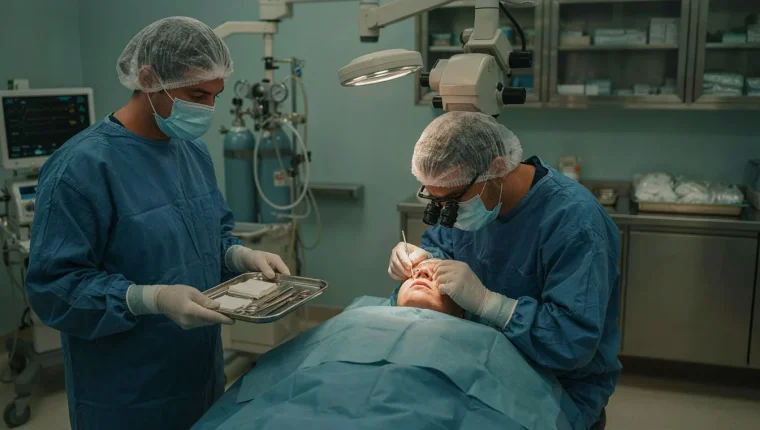
If you’re weighing eyelid surgery in Istanbul versus Toronto, the online price gap is real, but it rarely tells the whole story. The same procedure can have two very different totals in the two cities once everything is added up. A quote that looks like a bargain can shift once travel, follow-up visits, and currency conversion enter the picture. Likewise, Toronto’s higher price may already include costs that Istanbul quotes list separately.
This guide compares the two honestly. We’ll look at what actually drives the numbers, what each quote tends to include, and why the cheapest headline figure is often not the cheapest outcome. What we won’t do is hand you a single verdict on which city wins — that depends on your priorities, your budget, and how you define value.
Average Price Ranges for Blepharoplasty in Istanbul and Toronto

If you’ve started pricing out eyelid surgery, the first real shock usually comes from the size of the gap between Istanbul and Toronto. For upper blepharoplasty alone, Istanbul clinics typically quote somewhere between $1,200 and $2,500. Toronto surgeons, by contrast, commonly charge $3,500 to $6,000 for the same procedure. Lower eyelid surgery follows a similar pattern: roughly $1,500 to $3,000 in Istanbul versus $4,000 to $7,000 in Toronto. When upper and lower lids are combined into one session, Istanbul quotes often land between $2,500 and $4,500, while Toronto ranges run from $6,000 to $10,000 or more.
Those figures are indicative, not fixed quotes, and the spread within each city is wide for good reason. The surgeon’s reputation and case volume matter enormously, as does the technique used. A straightforward skin excision costs less than a procedure that also repositions fat pads or tightens the lid margin. Anesthesia adds another variable: local sedation keeps fees down, while general anesthesia brings in an anesthesiologist’s charge. Facility type plays a role too, since a fully accredited private hospital commands higher operating room fees than a smaller surgical suite. In Toronto, part of the higher figure reflects the cost structure of a regulated medical market, including malpractice insurance and overhead that Turkish clinics simply don’t carry at the same level.
It helps to think of these numbers as the starting point of a conversation rather than the final bill. The quoted fee is only one line in a longer estimate, and two clinics quoting the same headline price can end up thousands of dollars apart once everything is accounted for. That is why the next step in any realistic comparison is understanding what each quote actually covers before you treat one number as cheaper than another.
Currency, Exchange Rates, and What the Quoted Fee Actually Includes
Two quotes for the same procedure can look worlds apart on paper, yet the gap often narrows once currency and package details enter the picture. Istanbul prices are typically listed in euros or US dollars, while Toronto clinics quote in Canadian dollars. That means the figure you see depends heavily on the exchange rate at the moment you compare — and rates move. A quote that seemed attractive at one rate can shift meaningfully within weeks, especially for larger surgical fees. Locking in a rate or paying at a favorable moment is a practical way to manage that uncertainty.
Just as important is what each number actually covers. A Toronto quote may bundle surgeon’s fees, anesthesia, facility use, and follow-up visits into one total, while some Istanbul packages separate these items or fold them into a single all-inclusive price. Neither approach is inherently better, but they are not directly comparable until you break them down. Ask for an itemized breakdown rather than accepting a single figure. Confirm whether anesthesia, operating room time, post-operative checkups, and any revision policy are included or billed separately.
Payment method adds another layer. Credit card transactions and international transfers can carry conversion fees or unfavorable spreads, quietly raising the real cost. When you compare offers, convert everything to one currency using a consistent rate, then add those transaction costs. Only then does the comparison reflect what you will genuinely pay.
Surgeon Experience, Clinic Accreditation, and Safety Standards in Both Cities
Price tells you what a procedure costs; credentials tell you what you’re actually buying. In Toronto, eyelid surgery is typically performed by surgeons holding certification from the Royal College of Physicians and Surgeons of Canada, often with fellowship training in oculoplastic or facial plastic surgery. Clinics operating in or affiliated with teaching hospitals follow provincial accreditation rules, and anesthesia is administered by dedicated anesthesiologists with hospital backup available if something goes wrong.
Istanbul presents a wider spectrum. Many surgeons serving international patients are highly experienced, some with European or American board certifications and memberships in international societies such as ISAPS or the European Society of Ophthalmic Plastic and Reconstructive Surgery. But the market also includes providers with thinner credentials, which is why verifying board certification and specialization directly matters more here than in Canada. Accreditation is similarly uneven: private hospitals accredited by JCI or ISO offer standards comparable to Western clinics, while smaller standalone offices may not hold equivalent oversight.
Anesthesia and emergency care deserve specific attention. In Toronto, regulated standards govern who can administer sedation and how emergencies are handled. In Istanbul, reputable hospitals maintain modern operating rooms and emergency protocols, but you should confirm these arrangements in advance rather than assume them.
Before committing to any provider, ask: Who will perform the surgery, and what are their credentials? Is the facility accredited, and by whom? Who administers anesthesia, and what emergency backup exists? How many blepharoplasty procedures has the surgeon performed? Requesting answers in writing — and cross-checking them against independent registries — gives you a realistic picture of the skill and safety behind each quote.
Travel, Accommodation, and Recovery Time Added to the Total Cost
Once the surgical fee is set aside, the trip itself becomes the next line item. For patients traveling to Istanbul, round-trip flights from major North American or European cities typically run between $500 and $1,200, depending on season and how far in advance you book. Turkey also requires most visitors to obtain a visa, either through the e-visa system or on arrival, adding roughly $50 to $60. Add airport transfers and local transport around the clinic, and a medical trip carries a baseline travel overhead of several hundred dollars before you have even checked into a hotel.
Accommodation is where the recovery timeline directly shapes the bill. Most surgeons advise staying in the city for at least 7 to 10 days after upper blepharoplasty, so sutures can be reviewed and early swelling monitored. A comfortable hotel near the clinic in Istanbul might cost $60 to $120 per night, while a comparable stay in Toronto runs $150 to $250 per night. That single difference often adds $500 or more to the Canadian side of the ledger.
Time off work is the quietest cost of all. Bruising and swelling usually settle within 10 to 14 days, and many patients take one to two weeks away from their jobs. If you are traveling abroad, you also need buffer days for the flight and the pre-operative consultation, which stretches that absence further. Lost income or unused leave is real money, even when it never appears on an invoice.
Here is the part that surprises people: travel costs can narrow the price gap between the two cities considerably. A lower surgical fee in Istanbul may be offset by flights, lodging, meals, and unpaid time off. When the gap is already modest, the savings can shrink to a fraction of what the headline quote suggested.
Insurance Coverage, Financing Options, and Hidden Fees to Watch For

Insurance rarely pays for eyelid surgery when the procedure is purely cosmetic. In Toronto, upper blepharoplasty may qualify for provincial coverage only when a surgeon documents a functional problem — most commonly visual field obstruction, where drooping skin genuinely blocks part of your sight line. The same logic applies in Istanbul under SGK, but approvals usually require a formal field-of-vision test and a physician’s report. If your motivation is appearance rather than vision, budget for the full cost out of pocket in either city.
Financing differs just as much. Canadian clinics often partner with medical financing companies offering monthly installments, though interest can add several hundred dollars over a year. Turkish clinics more frequently accept staged payments — a deposit to book, the balance before surgery — and some quote discounts for bank transfer or cash. International patients should confirm whether card surcharges apply, since a 3–5% fee on a large bill is not trivial.
Watch for costs that never appear in the headline quote: initial consultations, preoperative bloodwork, prescription eye drops and ointments, compression or cold-therapy supplies, and revision surgery, which is almost never bundled. Ask two questions in writing before you commit: does the quoted price include follow-up visits, and what happens financially if a touch-up is needed? Getting the answer in your quote — not just in conversation — protects you in both cities.
Long-Term Value: Revision Rates, Follow-Up Care, and Overall Satisfaction
The quoted fee is only the beginning of what you’ll actually spend on eyelid surgery. The truer measure of value shows up in the years that follow: how often a procedure needs revision, how easily you can reach your surgeon afterward, and whether you’d make the same choice again.
Revision rates for upper blepharoplasty are generally low when the first operation is done well, but they aren’t zero. Asymmetry, an overcorrected lid, or a crease that sits too high can all prompt a second procedure. The critical question is who pays for it. In Toronto, reputable surgeons typically include a defined revision window in their fee, often six to twelve months, though this depends on the practice. In Istanbul, revision policies vary far more widely, and a clinic that offers a low initial price may charge full price again for any correction. Before you commit, ask in writing how long the revision window lasts and what it covers.
Follow-up care is where traveling abroad creates real friction. A Toronto patient can usually return to the clinic within days for a stitch check or a concern about healing. An Istanbul patient who flies home a week after surgery loses that easy access. Some clinics arrange virtual check-ins or partner with a local doctor, but this is follow-up continuity, and it is not guaranteed. Confirm the plan before you book.
Satisfaction surveys consistently show that patients care most about natural-looking results and feeling heard, not about the lowest price. A cheaper operation that needs a revision, or one with no one to call when something looks wrong, rarely feels like a bargain in hindsight. Judge value over years, not at checkout.
FAQs
How much does eyelid surgery cost in Istanbul compared to Toronto?
Eyelid surgery (blepharoplasty) in Istanbul typically costs between $1,500 and $3,500, while the same procedure in Toronto generally ranges from $4,000 to $8,000 CAD. The price gap mainly reflects lower operating costs, surgeon fees, and overhead in Turkey, though Toronto clinics often include follow-up visits and hospital fees that Istanbul quotes may list separately. Patients should factor in travel and accommodation when comparing total expenses, and verify surgeon credentials and accreditation before choosing a provider.
Which city offers better value for eyelid surgery when travel and recovery expenses are included?
Istanbul generally offers the best overall value for eyelid surgery when travel and recovery costs are included, because procedure prices are far lower than in Western Europe or the United States even after adding flights, hotel, and aftercare. Mexico and Thailand can also be cost-effective, but Istanbul's combination of high surgical volume, competitive clinic pricing, and short recovery stays often produces the lowest total expense. Total value still depends on the specific surgeon, clinic package, and length of stay, so comparing all-in quotes is essential.
Why is there such a large price gap for eyelid surgery between Istanbul and Toronto?
The gap mainly reflects differences in overhead costs, regulation, and market pricing rather than the surgery itself. Toronto clinics pay much higher rents, staff wages, malpractice insurance, and licensing fees, all of which are built into the price. Istanbul has lower operating costs plus a competitive medical-tourism market that keeps fees down. As a result, the same procedure can cost several times more in Toronto even when the surgical technique is comparable.