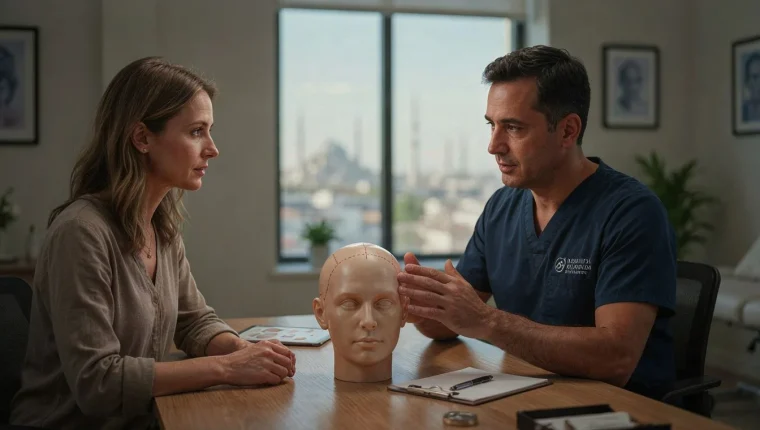
A brow lift in Turkey for Americans has become one of the most searched cosmetic surgery topics in recent years. The same procedure costs $8,000–$15,000 in the United States and often runs $2,500–$4,500 in Istanbul, including hospital fees and aftercare. But price isn’t the whole story. Quality varies widely between clinics, recovery logistics from the US add complexity, and choosing the wrong surgeon can turn a bargain into a costly mistake. How do you distinguish genuinely excellent clinics from aggressive marketers? In this guide, we’ll break down real costs, surgeon credentials, safety considerations, and what Americans who’ve already made the trip wish they had known beforehand — so you can decide with facts, not hype.
Why Americans Consider a Brow Lift in Turkey
Cost is the driving force behind this trend, but it is rarely the whole story. A forehead lift that typically runs $8,000 to $15,000 in the United States can often be completed in Istanbul for a fraction of that price, even after adding international flights and a hotel stay. For many American patients, that gap turns a procedure they had been postponing for years into something achievable within a single vacation window.
Geography plays a quiet role as well. Turkey sits at the crossroads of Europe and Asia, and Istanbul in particular has built its reputation on high surgical volume. Surgeons there may perform several brow procedures a week, which simply is not the case for many practitioners in smaller American cities. That repetition builds a level of routine and refinement that patients find reassuring.
There is also the matter of access. Reputable Turkish clinics tend to operate on an all-inclusive model, bundling the surgery, anesthesia, hospital fees, medications, transfers, and interpreter services into one transparent price. Americans accustomed to navigating insurance claims, surprise billing, and weeks of phone calls often find this simplicity refreshing.
Finally, cultural momentum matters. Turkey has become one of the most visited countries in the world for cosmetic surgery, and word travels through patient communities, social media, and before-and-after galleries. Americans researching their options today arrive with far more firsthand accounts than they would have a decade ago, which makes the decision feel less like a leap of faith and more like an informed choice.
How Much Does a Brow Lift Cost in Turkey vs. the US?
Numbers tell the story more clearly than any marketing pitch. In the United States, a brow lift typically runs between $6,000 and $12,000, and that figure covers only the surgeon’s fee, anesthesia, and facility costs — before you factor in consultation fees, prescriptions, or post-operative garments. The American Society of Plastic Surgeons places the average surgeon’s fee alone at roughly $3,900, and geographic variation is significant: a forehead lift in Manhattan or Beverly Hills can easily exceed the national average.
Turkey operates in an entirely different price range. A complete brow lift there generally costs between $2,000 and $4,500, and this is where the all-inclusive package model changes the math entirely. Unlike US quotes, which stack line item by line item, Turkish clinics usually bundle nearly everything into one figure.
A typical bundled price includes:
- Surgical fees and hospital costs — the operation itself, anesthesia, and use of an accredited facility, all quoted as a single amount.
- Accommodation — usually 3 to 7 nights in a hotel near the clinic, arranged by the clinic’s patient coordinator.
- Transfers — private driver service between the airport, hotel, and hospital for every appointment.
- Medications and follow-up visits — prescriptions, dressings, and post-operative checkups during your stay, often including a translation-assisted consultation.
Even after adding a round-trip flight from the US, commonly $700 to $1,200 depending on season and departure city, most patients land at 50 to 70 percent below what the surgery alone would cost at home. The gap exists largely because of lower labor, rent, and malpractice insurance costs in Turkey — not because clinics cut corners on equipment or surgeon training, many of whom are internationally certified. What the price does not include is downtime from work, which you’d face regardless of where you operate.
What’s Included in Turkish Brow Lift Packages?
The appeal of an all-inclusive package goes beyond the surgery itself. Most Turkish clinics structure their offers so that Americans land, have surgery, recover, and fly home without ever having to arrange logistics themselves. Understanding exactly what’s bundled—and what isn’t—is where the real value comparison happens.
A typical all-inclusive package covers the surgical fee, anesthesia, and hospital costs, but the extras are what set Turkish providers apart. Nearly every reputable clinic includes airport transfers in a private vehicle, hotel accommodation for a set number of nights (usually four to seven), all pre-operative testing such as blood work and ECG, and a dedicated patient coordinator who speaks English and stays reachable throughout your stay. Post-operative medications, compression garments or surgical dressings, and at least one in-person follow-up visit before departure are also standard inclusions.
Packages vary more than marketing pages suggest. Some clinics only cover hotel stays for the patient, not a traveling companion, while others charge extra for extended accommodation if your surgeon recommends a longer recovery period. flights are almost never included, so budget that separately when comparing quotes.
The smartest approach is to request an itemized breakdown in writing before committing. Ask specifically how many follow-up visits are included, whether revision policies exist, and what happens if complications arise after you return to the US—since legitimate clinics will answer these questions directly rather than vaguely. A package that looks cheaper but excludes critical aftercare may end up costing more than a slightly pricier competitor that truly covers everything.
Choosing a Qualified Surgeon and Accredited Clinic
Vetting a surgeon is where the savings either become a smart investment or a costly mistake. Since your first meeting will likely happen over video rather than in an exam room, you need to verify credentials independently, not just take a clinic’s website at face value.
Start with the surgeon, not the clinic. In Turkey, legitimate cosmetic surgeons hold certification from the Turkish Medical Association and, ideally, the Turkish Society of Plastic, Reconstructive and Aesthetic Surgery (TPRECD). Ask for the surgeon’s full name, medical license number, and before-and-after photos of brow lift procedures they personally performed — not stock images or a clinic-wide portfolio.
A few verification steps worth your time:
Check whether the surgeon operates in a hospital or a licensed private surgical facility, and confirm that facility is JCI-accredited or holds equivalent international certification. JCI accreditation means the hospital has passed audits on surgical safety, sterilization, and emergency protocols comparable to US standards.
Confirm who will actually perform your procedure. Some high-volume clinics use rotating staff, so get written confirmation that the surgeon you researched is the one holding the scalpel.
Ask about pre-operative testing. Reputable providers require blood work, ECG, and anesthesia clearance before scheduling surgery — not just a same-day consultation.
Language matters too. Your surgeon and anesthesia team should communicate clearly in English, both in consultations and during aftercare. If the translation feels shaky during your video call, imagine it during a post-operative concern at midnight. Request direct contact details for the surgeon or a dedicated patient coordinator before you book, and don’t hesitate to walk away from any clinic that pressures you toward same-week deposits.
What to Expect During Your Medical Trip to Turkey
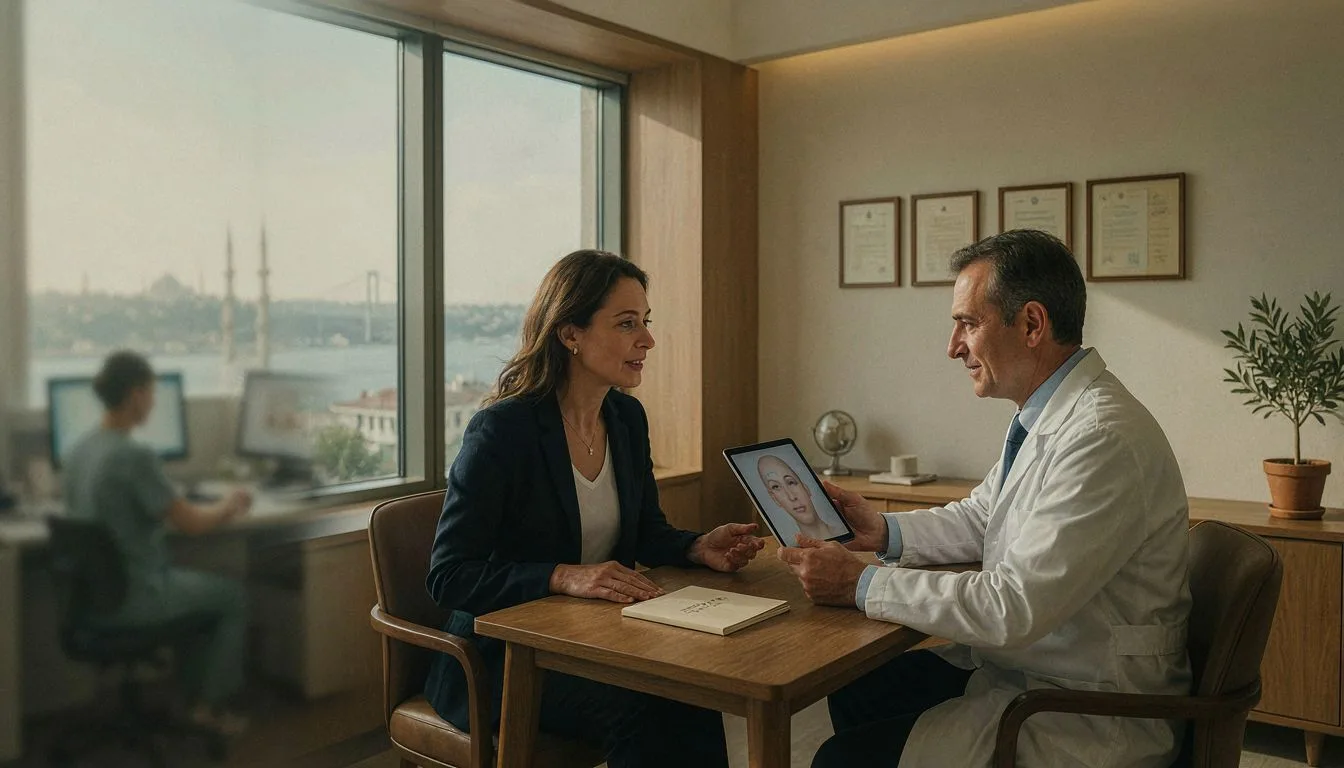
Once you’ve chosen your surgeon and clinic, the trip itself becomes the part most Americans know least about. A typical brow lift journey to Turkey runs five to seven days, and your days are usually mapped out for you from the moment you land. Understanding this day-by-day itinerary before you fly removes most of the anxiety around traveling abroad for surgery.
Most reputable clinics send a patient coordinator who speaks fluent English and stays with you throughout the process. Here’s what the standard flow looks like:
- Day 1 — Arrival and consultation: You land in Istanbul, a private transfer takes you to your hotel, and you’ll typically meet your surgeon that same day or the next morning for final bloodwork, imaging, and a face-to-face review of your surgical plan.
- Day 2 — Surgery day: A brow lift usually takes one to three hours under general anesthesia, and most patients stay in the hospital overnight for monitoring before returning to their hotel.
- Days 3–4 — First check-ups: The surgeon examines your incisions, removes any drains, and confirms your healing is on track. This is your window to ask every question while you’re still in the country.
- Days 5–7 — Clearance to fly: Before departure, you’ll receive a fit-to-fly assessment, along with written aftercare instructions and prescribed medications for the trip home.
A few practical details make the experience smoother. Istanbul’s clinics are used to international patients, so English-speaking staff, hotel-to-clinic transfers, and digital follow-up channels (often WhatsApp) are standard rather than exceptional. Bring loose clothing, leave heavy lifting to the included transfers, and plan your return flight with a buffer day in case your surgeon wants one extra check before clearing you. Americans also don’t need a visa waiver issue to worry about — U.S. citizens can enter Turkey with an e-Visa obtained online in minutes.
One expectation worth setting now: your results will look rougher in Turkey than they will in six months. Swelling and bruising peak in the first week, so judge nothing until you’re home and healing — the next section walks you through that timeline in detail.
Recovery Timeline and Aftercare Planning Before You Fly Home
Recovery is where a well-planned trip either stays smooth or becomes stressful, so it deserves the same attention as the surgery itself. Most patients experience noticeable bruising and forehead tightness during the first 72 hours, with swelling peaking around day two and gradually settling. By day five to seven, when clinics typically issue your fit-to-fly clearance, you’ll look presentable in public and feel comfortable traveling — though full healing continues for weeks after you land in the US.
Your first days in Turkey follow a predictable rhythm. You’ll keep your head elevated, use cold compresses as directed, and attend scheduled check-ups where your surgeon monitors incision healing and removes any sutures or clips. These visits aren’t optional extras; they’re how your surgical team confirms you’re healing properly before recommending a flight. Long-haul cabin pressure and immobility pose real concerns in the earliest days, which is exactly why reputable clinics won’t clear you before roughly day five.
Aftercare planning should begin before you ever board your flight home. Ask your clinic these practical questions in advance: How many post-operative check-ups are included, and are any available by video after you return? Will you receive written operative notes and imaging to hand to a US physician if needed? Are medications prescribed for the full recovery period, or only for your stay? And what is the protocol — and the cost — if a complication requires revision treatment?
A few smart habits make a measurable difference once you’re home. Sleep with your upper body elevated for two weeks, avoid heavy lifting and strenuous workouts for three to four weeks, and skip alcohol and smoking, both of which slow tissue healing. Schedule a follow-up with a primary care doctor or dermatologist stateside shortly after your return, and keep your clinic’s contact information handy for remote consultations.
Budget realistic downtime, too. Most Americans take seven to ten days off work, and social swelling can linger subtly for a month. Patients who treat the first ten days as structured recovery — not a rushed turnaround — consistently report smoother results and far fewer complications.
Potential Risks and How to Minimize Them Abroad
Every surgery carries risk, and a brow lift is no exception — but the risks associated with having it done in a foreign country are specific and, for the most part, preventable. The most serious of these is the complication management gap: if you develop an infection, hematoma, or poor scar healing after you’ve flown home, your American surgeon may be reluctant to take over a procedure someone else performed, and returning to Turkey for a revision is rarely practical.
The good news is that the most common issues are minor. Temporary numbness along the incision line, prolonged swelling, and asymmetry during early healing all typically resolve within weeks. Serious complications — nerve damage, hair loss around the incision, or unfavorable scarring — are rare when the surgeon is properly board-certified and the facility is fully accredited.
Minimizing risk starts before you ever board the plane. Request your surgeon’s full credentials, confirm the hospital holds JCI accreditation or equivalent, and ask directly how complications are handled: Is revision surgery included in the package? Who covers the cost if something goes wrong within the first year? A clinic that dodges these questions is telling you everything you need to know.
Your behavior after surgery plays an equally large role. Follow the aftercare protocol precisely, attend every scheduled check-up before your fit-to-fly clearance, and avoid flying earlier than your surgeon recommends — cabin pressure changes can worsen swelling and, in rare cases, contribute to bleeding. Once home, arrange a follow-up with a local physician for wound checks, and keep your Turkish clinic’s contact details handy; reputable clinics respond to patient questions for months after the procedure.
Finally, secure comprehensive medical travel insurance that covers complications from elective surgery abroad. Standard travel policies usually exclude it. The Americans who come home from Turkey satisfied are almost invariably the ones who treated risk management as part of the planning — not an afterthought.
FAQs
How much does a brow lift in Turkey cost compared to the United States?
A brow lift in Turkey typically costs between $2,000 and $4,500, while the same procedure in the United States generally ranges from $6,000 to $12,000 or more. This means patients can often save 50-70% by choosing Turkey, even after factoring in flights and accommodation. The lower prices reflect Turkey’s lower operating costs and favorable exchange rates rather than reduced quality, as many clinics there are internationally accredited and surgeons perform high volumes of cosmetic procedures.
Is it safe to travel from America to Turkey for a brow lift procedure?
Yes, traveling from America to Turkey for a brow lift is generally safe, as many Turkish clinics are internationally accredited and surgeons there perform high volumes of cosmetic procedures with modern facilities. Choose a board-certified surgeon, verify the clinic’s accreditation and patient reviews, and plan to stay in Turkey for about 7-10 days for your initial recovery and follow-up appointments. The main considerations are travel-related risks like flying shortly after surgery and coordinating post-operative care once you return home, so discuss your medical history and travel plans thoroughly with your surgeon beforehand.
How long should Americans stay in Turkey after a brow lift surgery?
Americans should typically plan to stay in Turkey for 7 to 10 days after a brow lift surgery. This allows time for the initial consultation and surgery, followed by a follow-up appointment where sutures are checked or removed, usually around day 7. Most initial swelling and bruising subsides within the first week, making it safe to fly home once your surgeon clears you at the post-operative checkup.