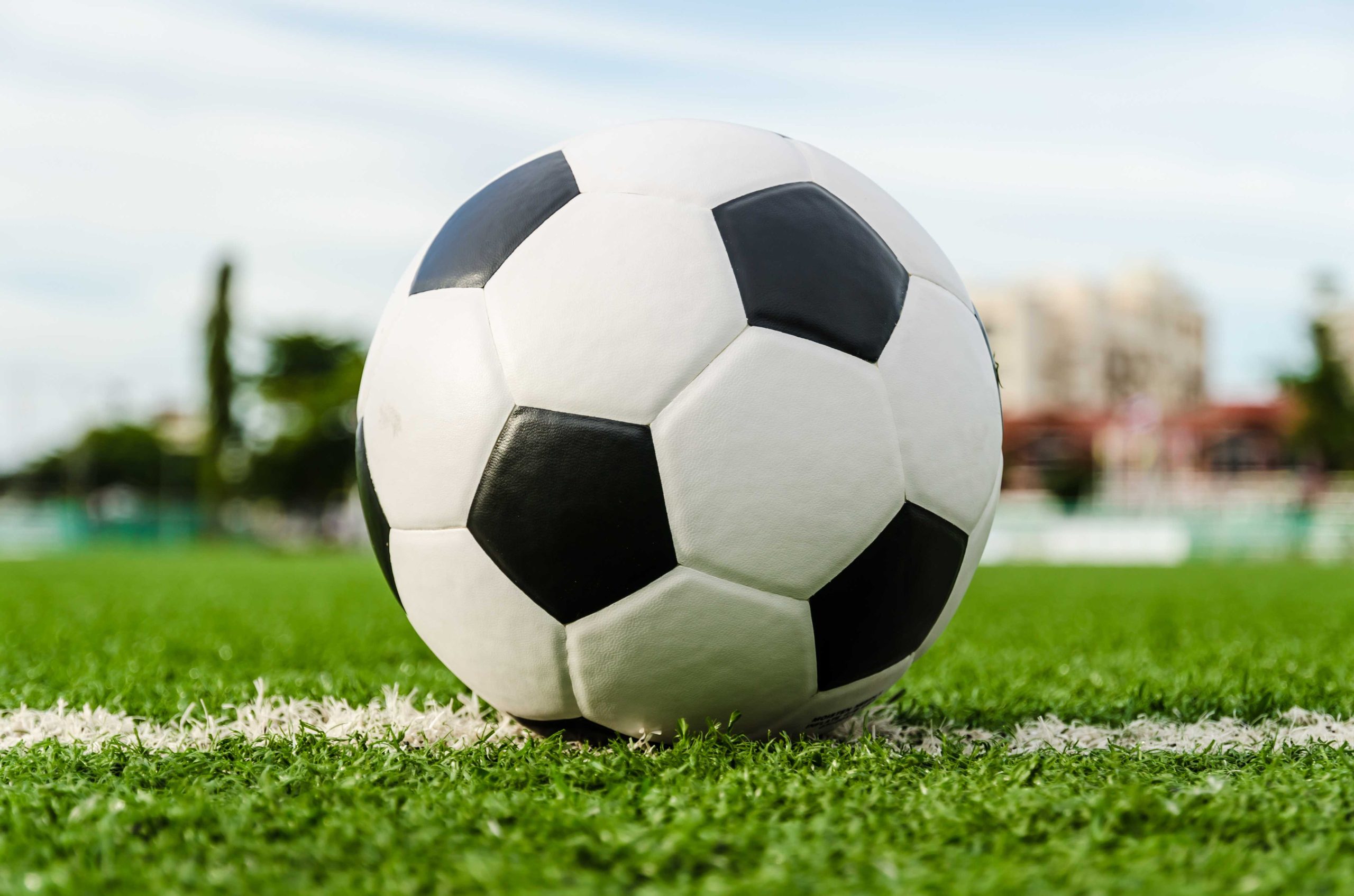
Can a soccer ball cause hair loss? For most players, playing soccer or heading the ball is not a direct cause of permanent hair loss. Repeated impact, scalp irritation, tight hairstyles, sweat, friction from headgear, or an unrelated condition may sometimes make shedding more noticeable. The key is separating a temporary change in hair growth from common causes such as genetics, stress, illness, or nutritional problems. This article explains what soccer-related factors could affect the scalp and hair follicles, what they cannot realistically cause, and when thinning deserves closer attention. If hair loss continues, appears in patches, or follows a scalp injury, a qualified healthcare professional can help identify the cause.
Can Soccer Cause Hair Loss? Understanding the Possible Connection
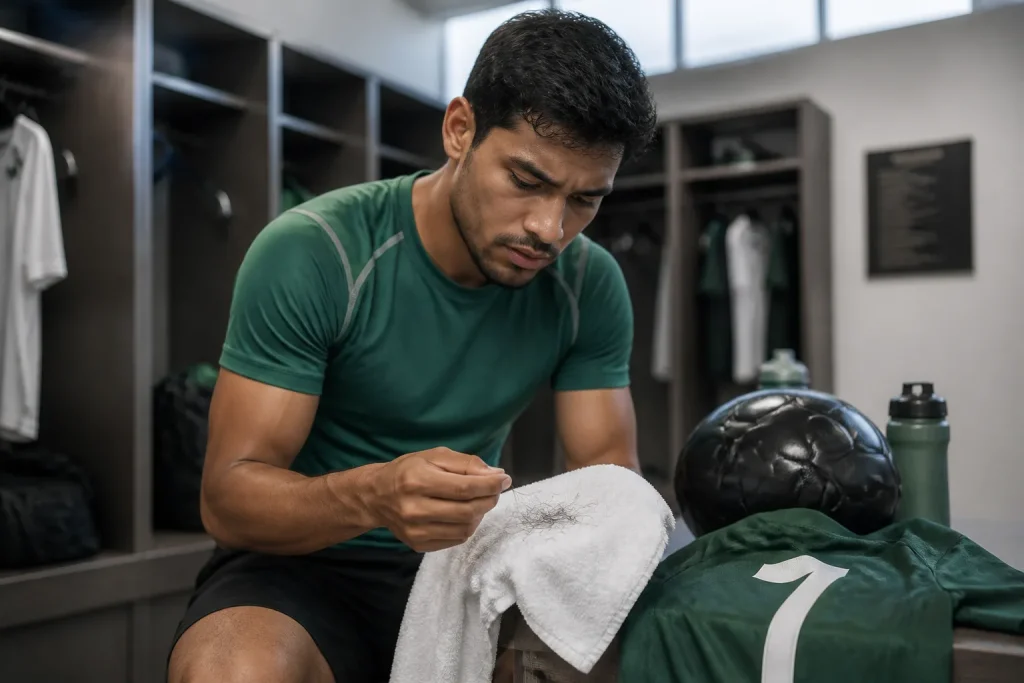
Soccer itself is not generally considered a direct cause of permanent hair loss. Many players notice ordinary daily shedding, which can become more visible when loose hairs collect on clothing, in the shower, or around protective equipment. Noticeable thinning after playing does not automatically mean the sport has damaged the hair.
The possible connection usually involves circumstances surrounding the activity rather than soccer alone. A significant blow to the scalp, repeated irritation, an existing scalp condition, restrictive hairstyles, or individual susceptibility to hereditary or stress-related shedding may all influence how dense the hair appears. These factors can occur together, making timing alone an unreliable way to identify the cause.
Hair follicle injury is one potential pathway, but it is not the expected result of routine heading, training, or competition. The likelihood and severity depend on the force of an impact, whether the skin was cut or bruised, and how the area heals. Temporary shedding may also follow physical stress or illness, sometimes appearing weeks after the triggering event rather than immediately. Persistent thinning, patchy loss, scalp pain, or visible skin changes deserves closer evaluation so an appropriate cause can be identified.
How Head Injuries and Scalp Trauma May Affect Hair Follicles
A routine soccer-ball impact usually does not damage hair follicles. Follicles sit beneath the skin, and ordinary heading during play is unlikely to disrupt their function or cause permanent hair loss. Concern is more relevant when an impact produces a cut, deep bruise, swelling, or another injury that affects the scalp itself.
A wound can temporarily disturb the growth cycle around the injured area. Local inflammation may cause nearby hairs to enter a resting phase, leading to shedding weeks or months later rather than immediately. This type of delayed loss is sometimes called traumatic alopecia. If the injury heals without significant tissue damage, hair may gradually regrow as the follicles recover.
More serious trauma can damage the follicle permanently. Deep lacerations, burns, infection, or substantial tissue loss may replace normal skin with scar tissue. Because scarred skin may lack functioning follicles, hair density can remain reduced in a clearly defined patch. The location of the change is useful: shedding confined to the site of a scalp wound is more suggestive of local trauma than diffuse loss across the head.
Timing also matters. Hair loss that begins soon after a visible injury, or develops several weeks later in the same area, deserves attention to the scalp’s healing process. By contrast, gradual thinning unrelated to an impact may have another explanation. A healthcare professional can assess the skin and follicles, especially if there is persistent redness, pain, crusting, or a smooth bald patch.
Can Sweating, Friction, or Soccer Gear Trigger Hair Shedding?
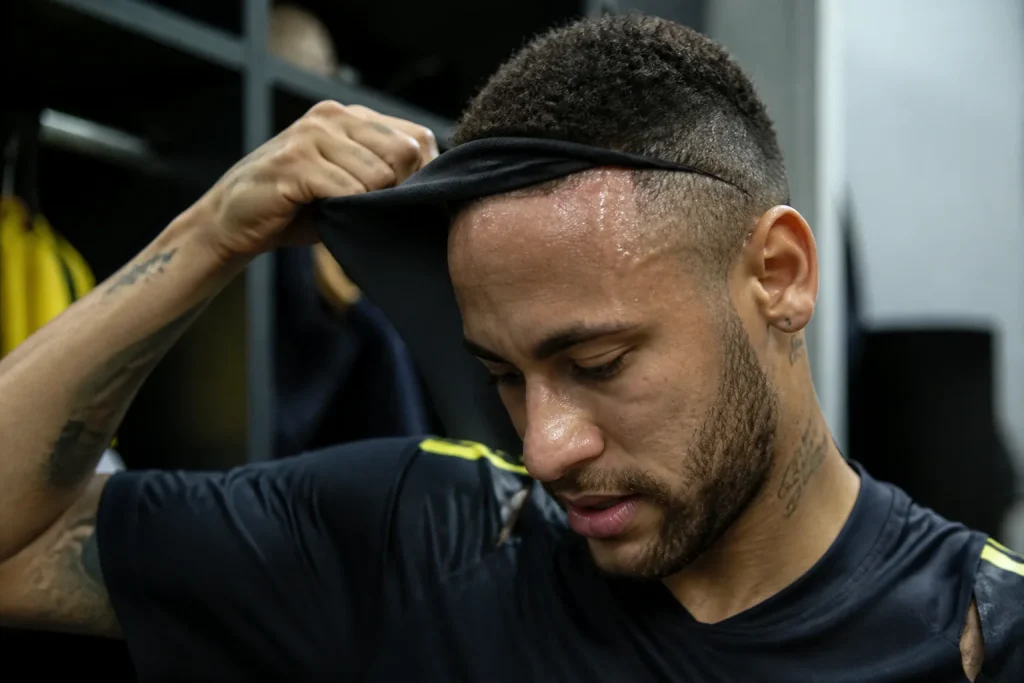
For many players, the more likely effects of training are scalp irritation and damage to the hair shaft rather than permanent follicle loss. Sweat itself does not usually cause hair to fall out, but salt, oil, and product buildup can make the scalp feel itchy or inflamed, especially if sweat remains trapped under a cap or headband.
Repeated rubbing can also weaken hairs. Headbands, hats, helmets, and tight protective equipment may pull against the hairline or create pressure in the same areas during frequent sessions. Tight hairstyles worn underneath them can add further tension. Over time, this may contribute to hair breakage, where strands snap along their length, rather than true shedding from the root. Broken hairs can make density appear reduced even when the follicles remain active.
Evidence that ordinary soccer gear directly causes permanent hair loss is limited. The risk is more plausible when equipment fits poorly, friction is constant, or the scalp becomes persistently irritated. Choosing breathable, well-fitting gear, loosening hairstyles, washing the scalp after heavy sweating, and avoiding aggressive brushing while hair is wet can reduce unnecessary stress. If shedding continues away from soccer or the scalp develops marked redness, pain, scaling, or sores, another cause may be involved and should be assessed clinically.
How to Tell Sports-Related Shedding From Common Hair Loss Conditions
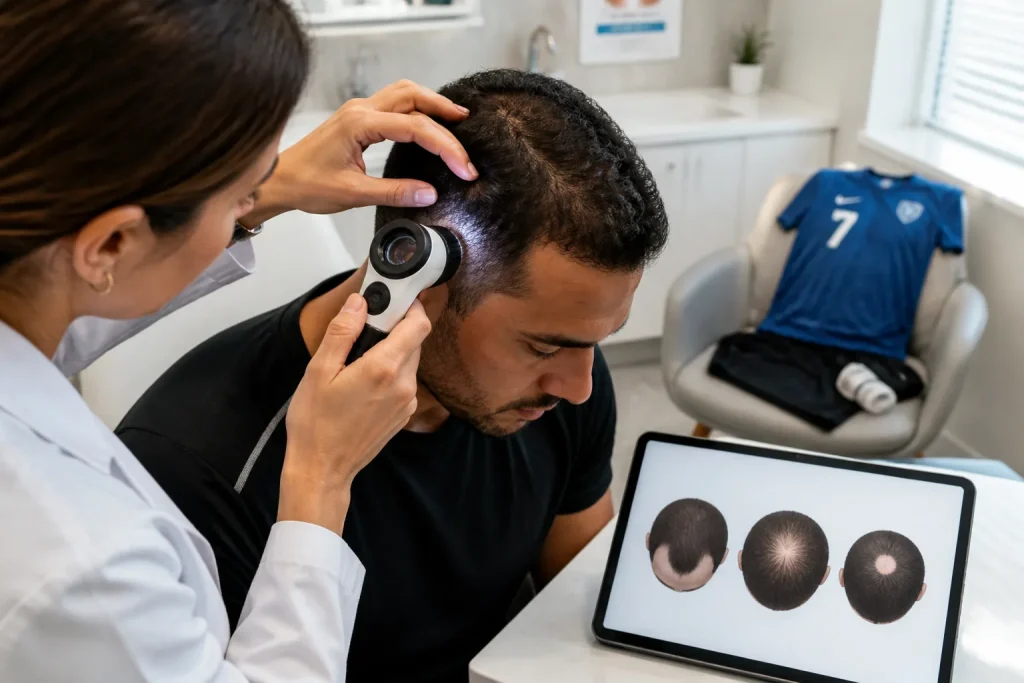
The pattern of shedding often provides more useful clues than the fact that hair loss appeared after playing soccer. Sports-related changes may begin after repeated rubbing, tight equipment, or a clear period of irritation and may improve once the trigger is removed. Hair loss that continues independently of training, however, can point to an underlying condition.
The distribution of hair loss is especially informative. Hereditary hair loss commonly develops gradually at the temples, hairline, or crown, while overall density may slowly decrease. Telogen effluvium usually causes diffuse shedding across the scalp, often noticed several weeks to months after physical or emotional stress, illness, dietary changes, or another trigger. It may not be limited to soccer days.
Alopecia areata can produce relatively smooth, round or oval patches rather than uniform thinning. Sudden loss in defined areas deserves careful assessment, particularly if eyebrows or other body hair are also affected. Scalp disorders may cause scaling, redness, tenderness, itching, crusting, or inflammation along with shedding, which is less typical of simple hair breakage.
Keeping dated photographs and noting when shedding began, where it occurs, and whether it changes during breaks from soccer can help reveal a pattern. These observations cannot establish a diagnosis, so persistent, progressive, or unclear loss should be evaluated by a qualified medical professional.
When Should You See a Doctor About Hair Loss After Playing Soccer?
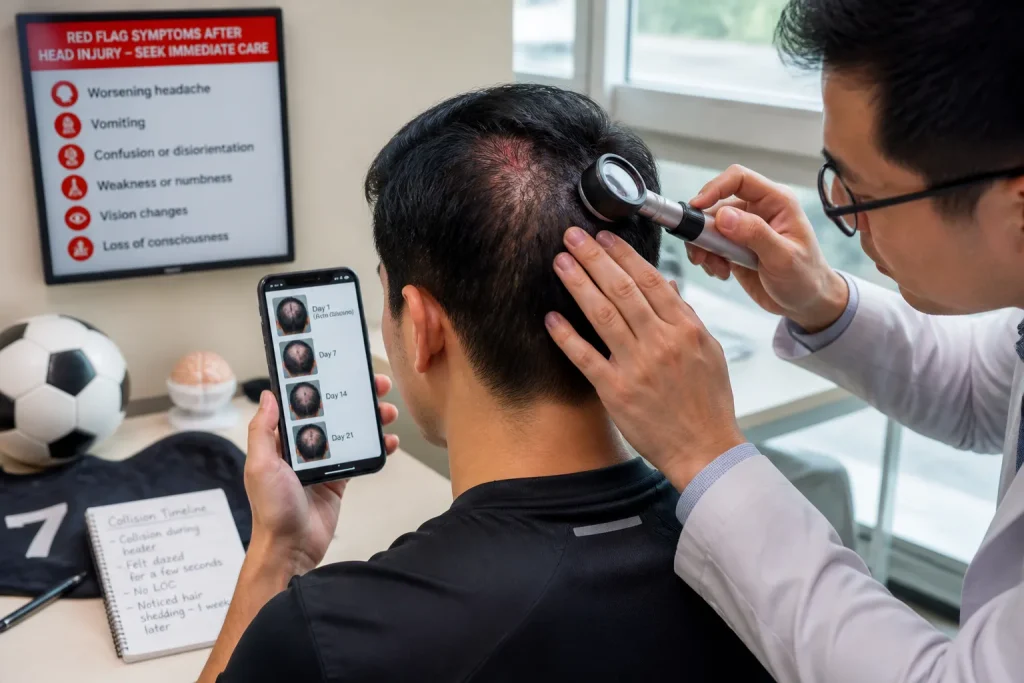
Seek medical advice if hair shedding continues for several weeks, becomes noticeably worse, or appears in sharply defined patches. Prompt evaluation is also appropriate when the scalp is painful, swollen, persistently red, crusted, bleeding, unusually tender, or develops smooth, shiny areas that could suggest scarring. These changes should not automatically be attributed to soccer equipment or training.
After a significant blow to the head, seek urgent care for symptoms such as loss of consciousness, repeated vomiting, worsening headache, confusion, weakness, vision changes, seizures, or unusual drowsiness. Hair loss may not be the immediate concern after a head injury, and these symptoms require medical assessment regardless of any scalp changes.
Before an appointment, record when shedding began, whether it followed a collision or scalp wound, and how quickly it is progressing. Note changes in training volume, tight hairstyles, helmets or headbands, hair products, recent illness, medications, and family history. Photos taken under similar lighting can help track changes over time.
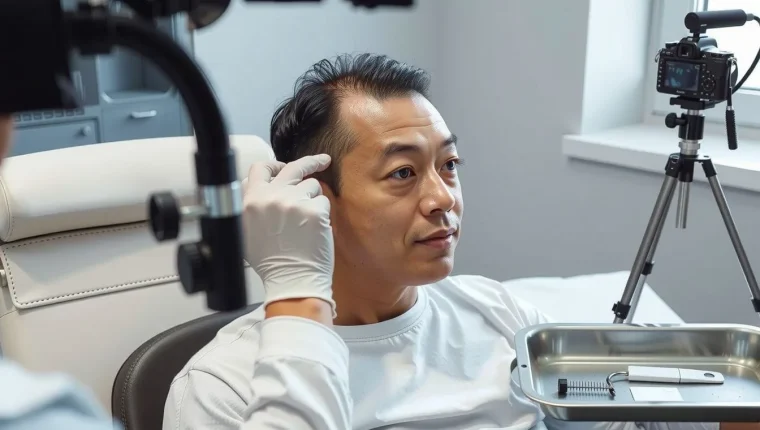
A clinician can examine the scalp and hair follicles to distinguish breakage, temporary shedding, inflammation, or injury-related damage. Depending on the findings, they may recommend blood tests, scalp testing, dermatology referral, or a hair-restoration consultation. Early evaluation is especially useful if density is declining rapidly or the affected area is becoming scar-like.
FAQs
Can wearing a soccer helmet or headband contribute to hair thinning?
Wearing a soccer helmet or headband does not usually cause permanent hair thinning or damage healthy hair follicles. However, tight or poorly fitted headwear may create friction, trap sweat, or repeatedly pull on the hairline, potentially causing temporary breakage or traction-related hair loss. Choose a breathable, comfortable fit, avoid tying hair tightly underneath, and see a dermatologist if thinning continues or affects the hairline.
Does heading the ball damage hair follicles?
Heading a soccer ball or similar object does not usually damage hair follicles or cause permanent hair loss. However, repeated forceful impacts can injure the scalp, causing bruising, inflammation, or temporary shedding in rare cases. Seek medical advice after significant head trauma, especially if you notice persistent scalp pain, bald patches, bleeding, or increased hair loss.
Can stress from intense training cause temporary hair shedding?
Yes. Intense training can place physical stress on the body and, especially alongside inadequate calories, protein, iron, or recovery, may trigger temporary telogen effluvium, causing increased shedding several weeks to months later. Hair growth usually normalizes after the underlying stress is addressed, but persistent, sudden, or patchy hair loss should be evaluated by a healthcare professional.