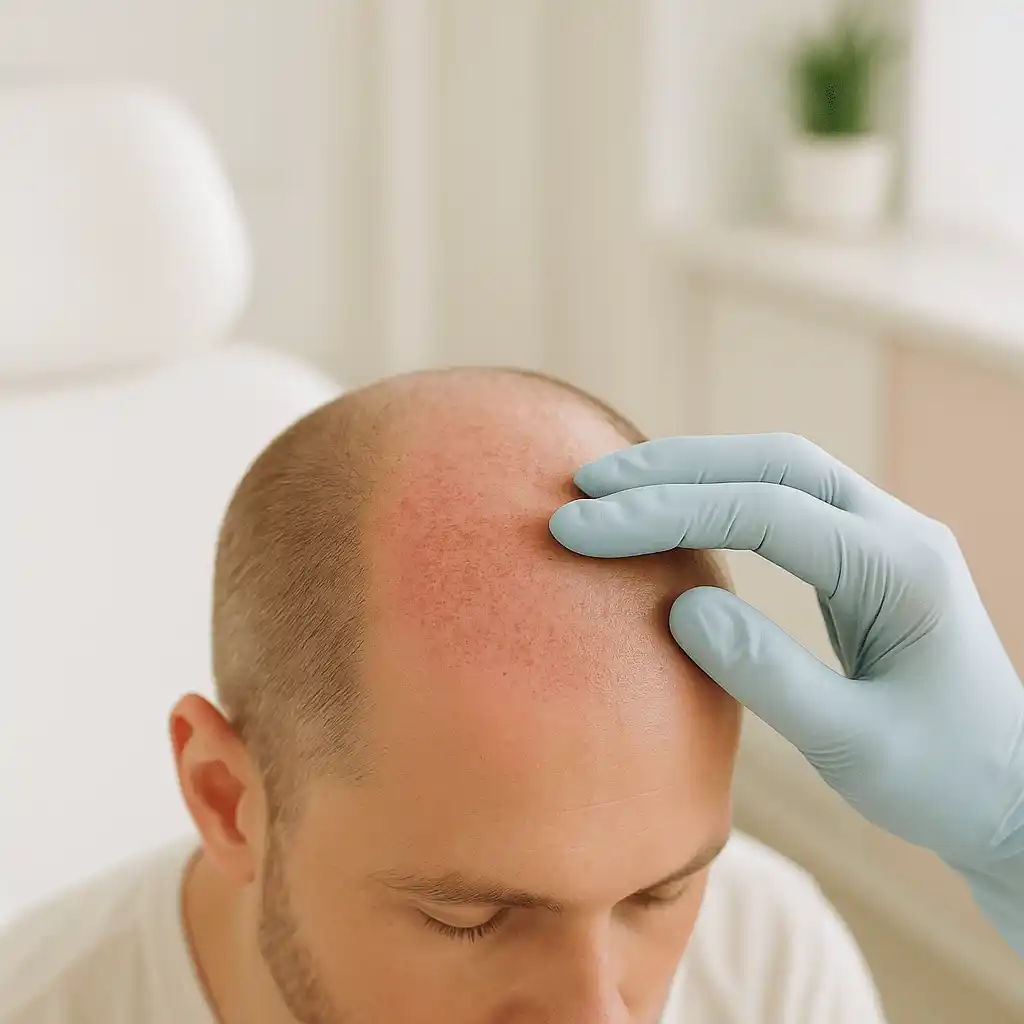
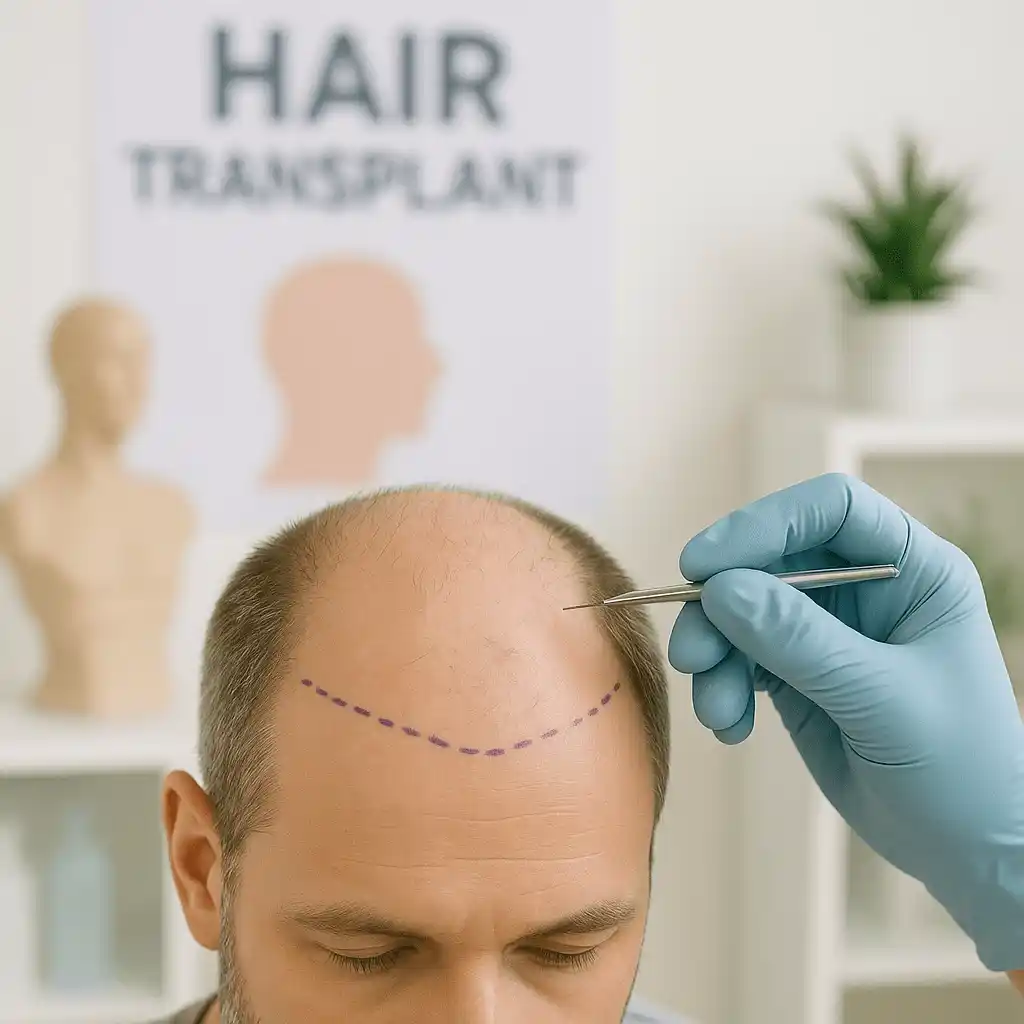
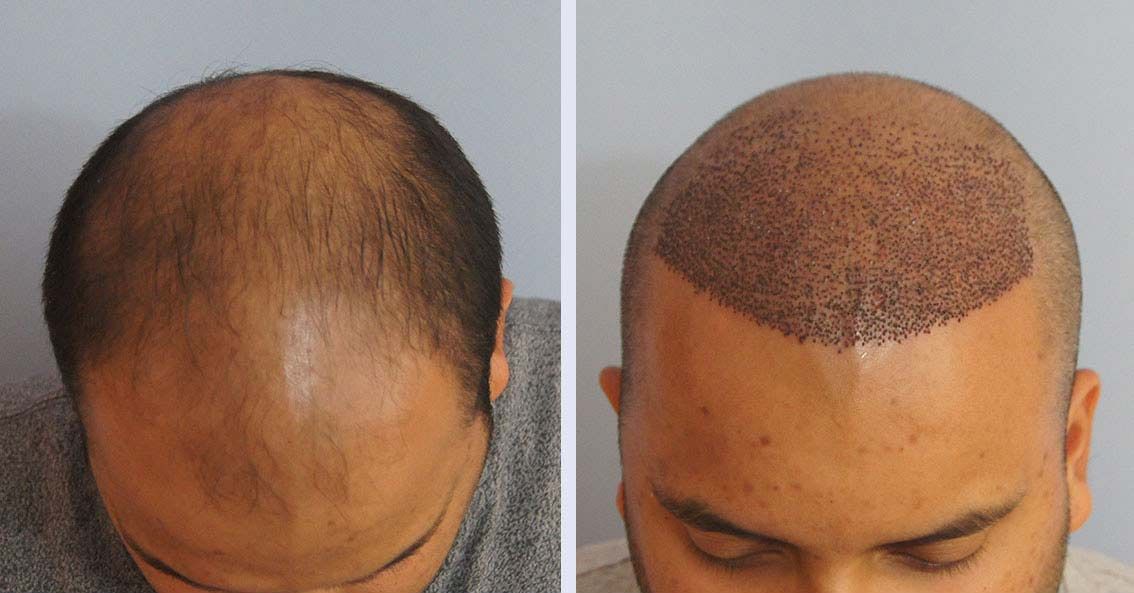
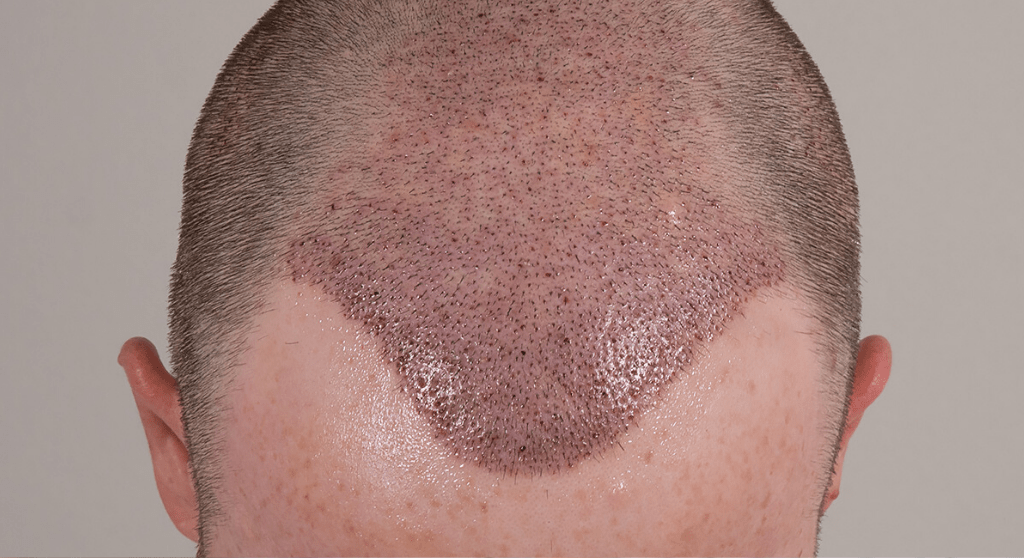
People often ask, “How do hair follicles die?” when thinning hair or a bald area appears permanent. However, a follicle that stops producing a visible hair is not always dead. It may be producing finer strands, resting temporarily, or affected by changes that reduce hair growth. In other cases, inflammation, infection, injury, or scarring can damage the follicle more severely. The difference between miniaturized hair follicles, dormant follicles, and irreversible follicle loss matters because each situation has different implications for hair restoration and treatment. This article explains what happens inside a follicle as hair production declines, why pattern hair loss can progress, and why permanent damage cannot be confirmed from appearance alone without proper clinical assessment.
What Happens Inside a Hair Follicle Before It Stops Producing Hair?
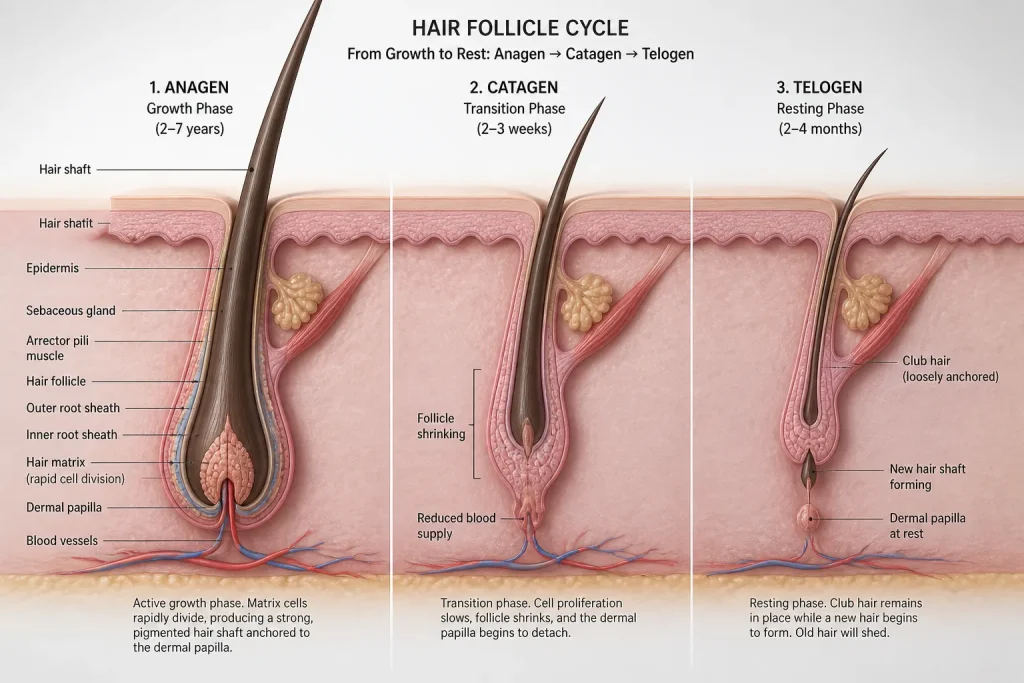
Hair production changes gradually as a follicle moves through its normal growth cycle. During anagen, the active growth phase, cells in the bulb divide rapidly and produce the hair shaft. The length and thickness of the hair depend partly on how long this phase continues and how effectively the follicle remains active.
Next, the follicle enters catagen, a short transition phase in which growth slows and the lower follicle contracts. During telogen, the follicle rests, and the completed hair may eventually shed. A new anagen phase can then begin, allowing another hair to develop from the same follicle. Temporary shedding may occur when more follicles than usual enter telogen, but the underlying structures can remain capable of producing hair.
With progressive follicle weakening, each new growth cycle may produce a finer and shorter shaft. This process, called miniaturization, can make hair look less dense and less visible before production seems to stop altogether. The follicle may still be alive, but its growth period is shorter and its output is reduced.
A follicle that temporarily sheds a hair is therefore not automatically damaged or permanently lost. Structural destruction is a different process and cannot be determined from shedding alone. Persistent thinning, patchy loss, scalp changes, or a clear reduction in hair density should be assessed by a qualified medical professional, who can distinguish a disrupted cycle from lasting follicle injury.
How Do Hair Follicles Die From Genetic Hair Loss?
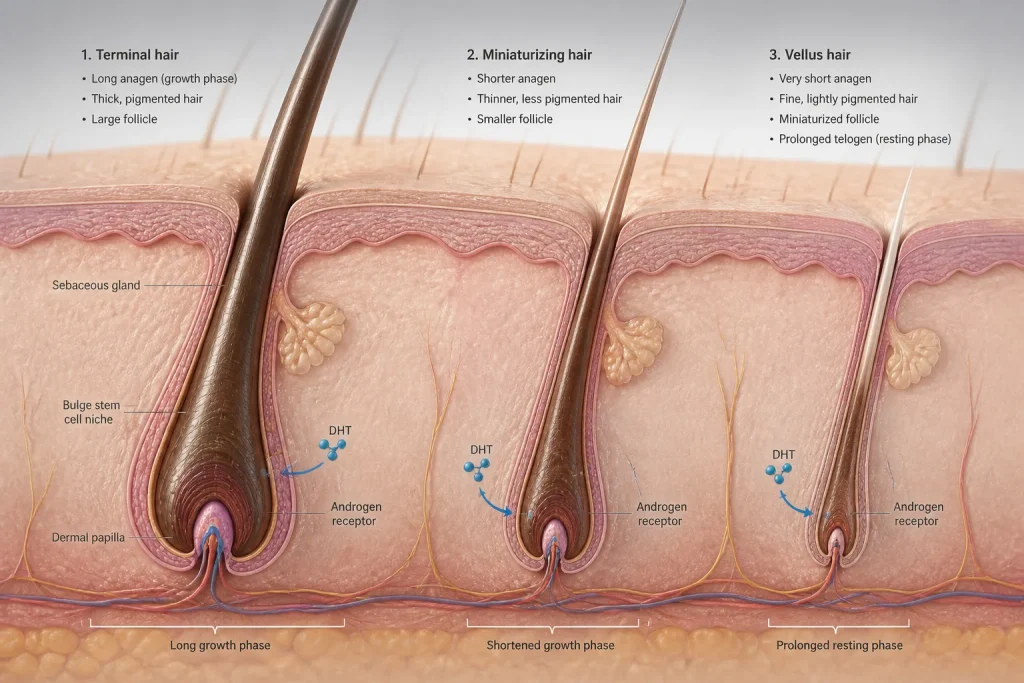
Genetic hair loss usually does not destroy a follicle suddenly. In pattern hair loss, inherited sensitivity to androgen signals—especially dihydrotestosterone (DHT)—gradually alters how the follicle cycles and produces hair. The follicle becomes less able to maintain a thick, long-lasting growth phase, so each new strand may be finer and shorter than the one before it.
This process is called follicle miniaturization. The follicle’s active growth period becomes shorter, while the resting interval may become more noticeable. Over time, terminal hairs can resemble soft, lightly pigmented vellus hairs, reducing visible density across the scalp. The follicle may still be biologically active, but its output is too weak to create normal coverage.
Inherited susceptibility varies between people and may affect different scalp areas at different rates. Hair around the temples, frontal hairline, and crown is often more sensitive, while follicles in the donor area may remain relatively resistant. That difference explains why some grafts can retain their characteristics when used in hair restoration, although outcomes depend on individual factors and proper medical assessment.
Without evaluation and appropriate management, prolonged miniaturization can reduce the likelihood of meaningful regrowth from an affected follicle. This does not mean every thin or missing hair is permanently lost. A follicle may be miniaturized, inactive, or affected by another condition, and these possibilities cannot be distinguished reliably by appearance alone.
Can Scalp Conditions or Inflammation Permanently Damage Follicles?
Scalp disease can threaten a follicle through pathways that differ from inherited hair loss. Conditions such as seborrheic dermatitis, psoriasis, fungal infections, and alopecia areata may cause shedding or temporary suppression of growth without destroying the follicle. Once the underlying problem is controlled, some affected follicles may resume producing hair, although recovery depends on the diagnosis and the duration of inflammation.
A more serious pathway occurs with scarring alopecia. In these disorders, persistent inflammation targets the follicle and replaces its normal structure with scar tissue. A damaged follicle may then lose its ability to regenerate hair, making the loss permanent in that specific area. Infections, severe folliculitis, burns, trauma, and some autoimmune scalp diseases can also produce this type of irreversible damage.
Warning features can include ongoing redness, pain, tenderness, intense itching, scaling, pustules, crusting, or smooth areas that look unusually shiny or scar-like. These signs do not identify one condition by themselves, but they suggest that the scalp needs careful clinical assessment. A dermatologist may examine the skin and follicular openings and, when necessary, use testing or a biopsy to determine whether inflammation, infection, miniaturization, or scarring is present.
The cause should be established before discussing hair restoration, grafts, or long-term treatment. Transplanting into an actively inflamed or scarred recipient area may require a different prognosis and treatment strategy than ordinary pattern hair loss.
Are Dormant Hair Follicles Truly Dead or Still Recoverable?
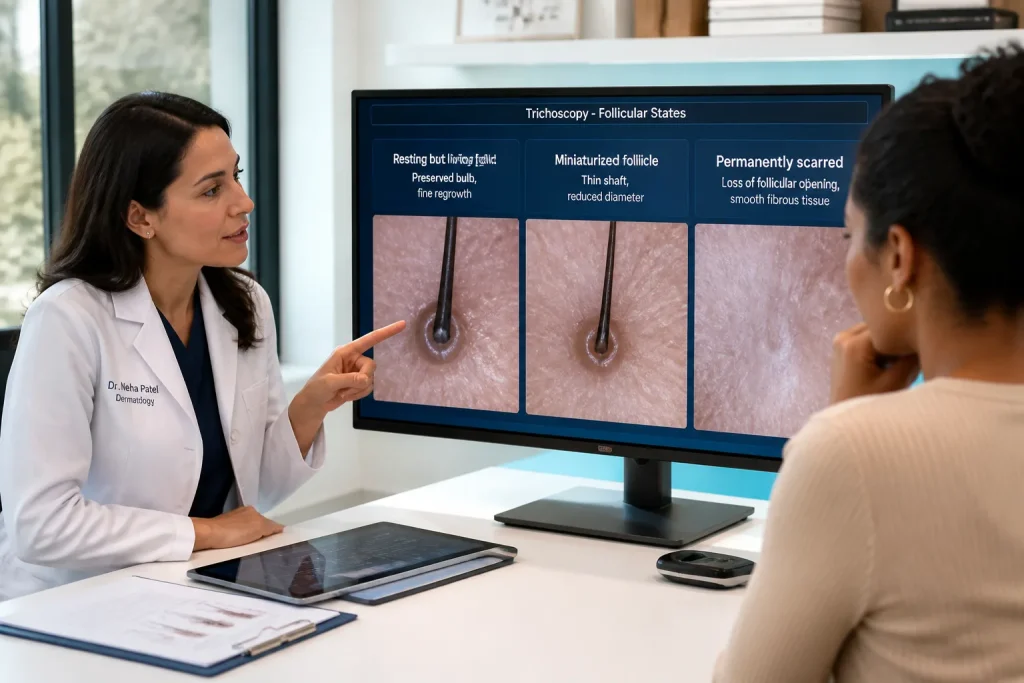
An inactive-looking follicle is not automatically a dead follicle. Hair may be temporarily absent because the follicle has entered a resting phase, because shedding followed a physical or hormonal trigger, or because production has become so weak that only very fine hairs are visible. In these situations, the follicle may still contain living structures capable of producing hair.
Follicle dormancy describes reduced or absent visible growth rather than confirmed permanent destruction. Regrowth potential depends on the cause, how long the follicle has remained inactive, and whether the surrounding tissue is preserved. A miniaturized follicle may respond differently from one affected by scarring, where normal follicular structures have been replaced by scar tissue.
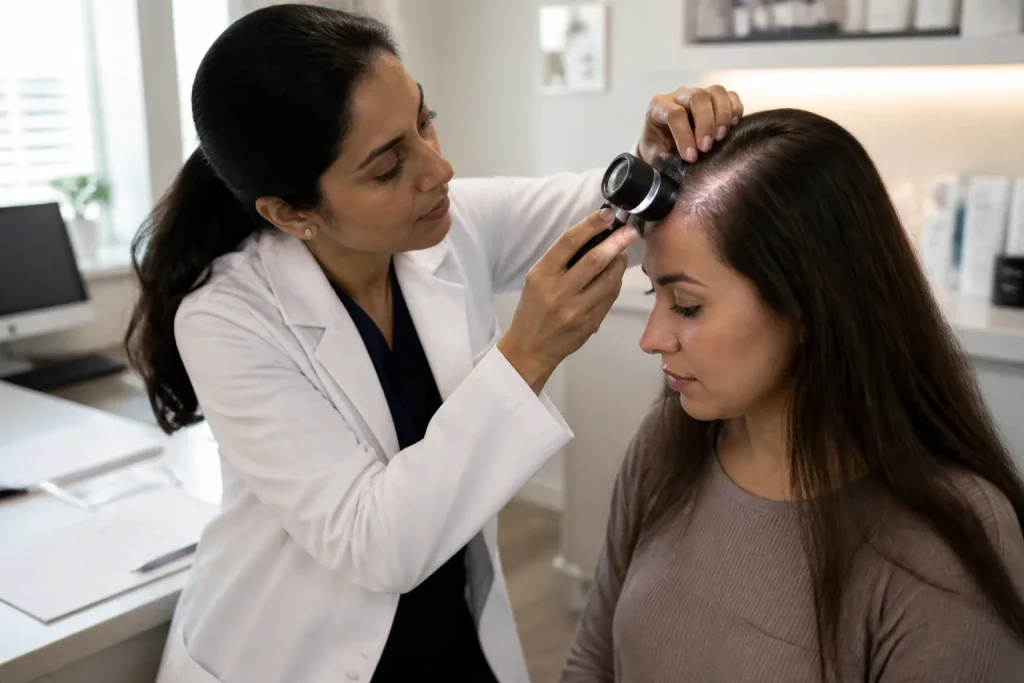
Appearance alone cannot reliably distinguish these conditions. A clinician may review the timing and pattern of shedding, examine the scalp, and use dermoscopy to assess hair shaft thickness, follicular openings, and signs of inflammation or scarring. Selected blood tests or other investigations may be appropriate when a nutritional, hormonal, autoimmune, or systemic trigger is suspected.
Some follicles recover after the underlying trigger resolves, while others remain progressively weakened or permanently damaged. Early assessment is therefore more informative than judging regrowth potential from a smooth or sparsely haired area alone. Treatments for hair restoration or hair loss should be considered only after the likely cause and tissue condition have been evaluated.
When Should You Seek Medical Advice for Permanent Hair Loss?
Seek medical advice if hair loss is sudden, rapidly worsening, or appearing in clearly defined patches. Prompt evaluation is especially important when the scalp is painful, intensely itchy, red, swollen, scaly, draining, or developing smooth, shiny areas that may indicate scarring. Eyebrow or eyelash loss, scalp tenderness, and hair shedding after a new medication or illness also deserve professional review.
A clinician may assess the timing and pattern of shedding, family history, recent illnesses, medications, nutrition, and hormonal factors. Examination of the scalp and hair shafts, sometimes supported by blood tests or a small biopsy, can help distinguish temporary shedding, inherited thinning, inflammatory disease, and scarring alopecia. Early diagnosis may protect remaining follicles and guide appropriate treatment.
If substantial permanent loss is suspected, a specialist can also assess donor and recipient areas before discussing hair restoration options such as FUE or DHI. Suitability depends on diagnosis, scalp health, available grafts, and whether ongoing loss is controlled; no procedure can reliably restore follicles that have been irreversibly destroyed.
FAQs
Can dead hair follicles grow hair again?
Truly dead hair follicles cannot produce new hair because they have been permanently destroyed or replaced by scar tissue. However, dormant or miniaturized follicles may regrow hair if the underlying cause is treated, using options such as medication or hair restoration surgery with grafts from a healthy donor area. A dermatologist can determine whether the follicles are inactive or permanently lost.
How can I tell whether a follicle is dormant or permanently damaged?
A dormant follicle may still produce fine, light-colored hairs and can sometimes respond to treatment, while a permanently damaged follicle usually shows no visible growth for a long period and may leave smooth, shiny skin. However, appearance alone cannot confirm follicle viability; a dermatologist or hair restoration specialist can assess the scalp with dermoscopy and review your hair-loss history. If follicles are irreversibly scarred, they cannot regrow hair, although hair restoration options such as grafts may be considered.
Can hair loss treatment protect weakened follicles?
Hair loss treatment may help protect weakened follicles by slowing miniaturization, reducing inflammation, or improving scalp health, depending on the cause. Treatments such as minoxidil or prescription medications can support existing hair, but they cannot revive follicles that have permanently stopped producing hair. A dermatologist can identify the cause and recommend suitable treatment before considering hair restoration options.