An uneven hairline rarely appears overnight. You may notice it gradually in photos, with one side sitting higher than the other or the front edge looking jagged rather than smooth. In some cases, the difference is genetic and harmless. In others, it signals traction alopecia, hormonal shifts, or a condition like frontal fibrosing alopecia that needs medical attention.
The shape of your hairline also depends on how you style and treat your hair daily. Tight ponytails, repeated braiding, and chemical relaxers can pull or damage follicles unevenly, causing one area to thin faster than the rest. Once you understand what is driving the asymmetry, treatment becomes far more targeted — from simple styling changes and topical treatments to procedures such as hair transplants or scalp micropigmentation. The sections below explain the common causes and the realistic options for restoring a more balanced look.
What Causes an Uneven Hairline?
An uneven hairline can stem from several distinct mechanisms, and identifying which one applies is the first step toward meaningful treatment. One of the most common drivers is androgenetic alopecia, a genetically influenced sensitivity to dihydrotestosterone (DHT) that gradually miniaturizes follicles along the frontal hairline. Because this process rarely advances at an identical rate on both sides, one temple often recedes faster than the other, producing visible asymmetry.
Beyond genetics, inflammatory and autoimmune conditions play a significant role. Frontal fibrosing alopecia, introduced earlier, destroys follicles through permanent scarring, and its band-like pattern frequently leaves one side more depleted than the other. Alopecia areata can also create patchy loss that disrupts the natural contour.
Environmental and behavioral factors matter as well. Repeated tension from tight hairstyles, trichotillomania (compulsive pulling), and even habitual side-sleeping can thin one region disproportionately. Nutritional deficiencies in iron, zinc, or vitamin D may slow regrowth unevenly, while thyroid imbalances and stress-related telogen effluvium sometimes resolve asymmetrically. Congenital factors, including a naturally uneven hairline present from birth, should also be considered before assuming an acquired cause.
In many cases, the true explanation involves overlapping contributors rather than a single trigger, which is why clinical evaluation remains essential.
How Hormones and Genetics Shape Hairline Symmetry
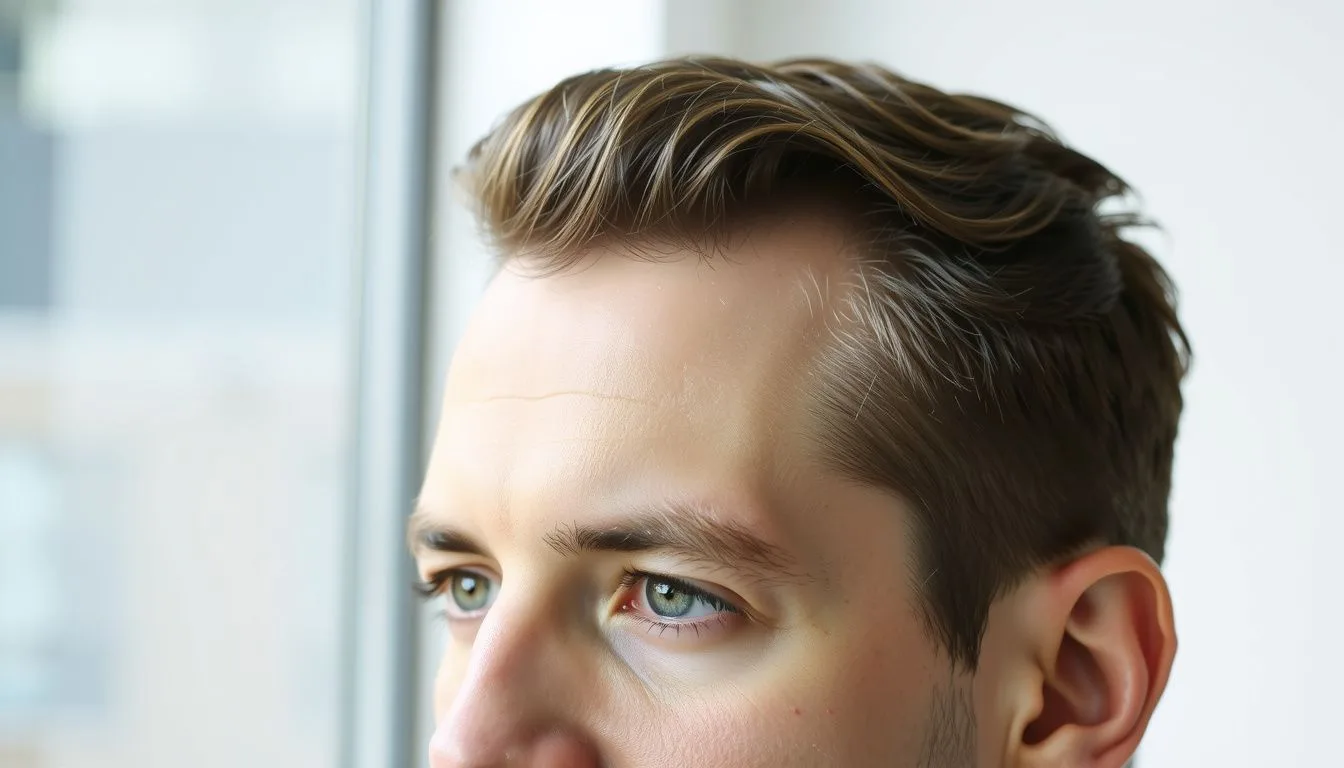
Hairline symmetry is largely written into your biology before styling habits ever come into play. The shape, density, and recession pattern of your frontal hairline are influenced by two powerful forces: hormones and inherited genetics. Understanding how they interact helps explain why one temple often recedes before the other, or why a hairline can look subtly lopsided even without any obvious external cause.
Androgens, particularly dihydrotestosterone (DHT), are the primary hormonal drivers of pattern hair loss. Hair follicles along the frontal hairline can be genetically sensitive to DHT, which gradually miniaturizes them and shortens their growth cycle. Because this sensitivity is not always evenly distributed across the scalp, one side of the hairline may thin or recede faster than the other, producing an asymmetric result.
Genetics determine where those DHT-sensitive follicles sit and how strongly they respond. This inherited blueprint is captured in polygenic predisposition — the combined effect of many genes rather than a single one. It explains why patterns often run in families and why the direction of recession tends to follow a predictable, though rarely perfectly balanced, path.
Hormonal shifts beyond DHT also matter. Thyroid imbalances, fluctuations in estrogen and progesterone, and conditions like polycystic ovary syndrome can alter hair growth cycles and affect the frontal hairline unevenly. When these hormonal influences overlap with a genetic tendency, the asymmetry becomes more pronounced.
Traction and Styling Habits That Worsen Imbalance
Hair is remarkably tolerant of daily handling, but it is not indestructible. When the same strands are pulled in the same direction for months or years, the follicle responds by producing thinner, weaker hair before eventually going dormant. This is the mechanism behind traction alopecia, and it explains why styling choices can quietly reshape a hairline long before any genetic or hormonal factor becomes visible.
Certain routines concentrate tension along the frontotemporal region, where follicles are most vulnerable. The habits below are among the most common contributors to localized thinning and asymmetry:
- Tight ponytails and buns: Pulling all hair back with high tension repeatedly stresses the same edge follicles, often on one side more than the other depending on handedness.
- Braids and cornrows along the hairline: Closely woven rows grip the finest hairs at the perimeter, and the pattern of loss tends to follow the braid lines rather than appearing randomly.
- Weaves, extensions, and glued fronts: Added weight and adhesive trauma can inflame the follicle and accelerate miniaturization, especially when installations are worn continuously.
- Frequent heat styling near the roots: Repeated tension from brushing and pulling against hot tools compounds mechanical damage at the hairline edge.
- Sleeping on tight styles: Overnight friction keeps tension on the same follicles for hours, extending the stress period well beyond waking hours.
Two details shape how much damage these habits cause. The first is duration: a tight style worn once is unlikely to matter, while the same style worn daily for years can produce permanent follicle loss. The second is asymmetry — most people part, braid, or pull their hair slightly unevenly, so one side of the hairline absorbs more force than the other, which is why styling-related thinning so often looks lopsided rather than uniform.
The encouraging part is that traction-related changes are often reversible if the tension stops early enough. Switching to looser styles, rotating parting lines, and giving the hairline regular rest periods can allow follicles to recover before scarring sets in.
Diagnosing the Type and Extent of Hairline Irregularity
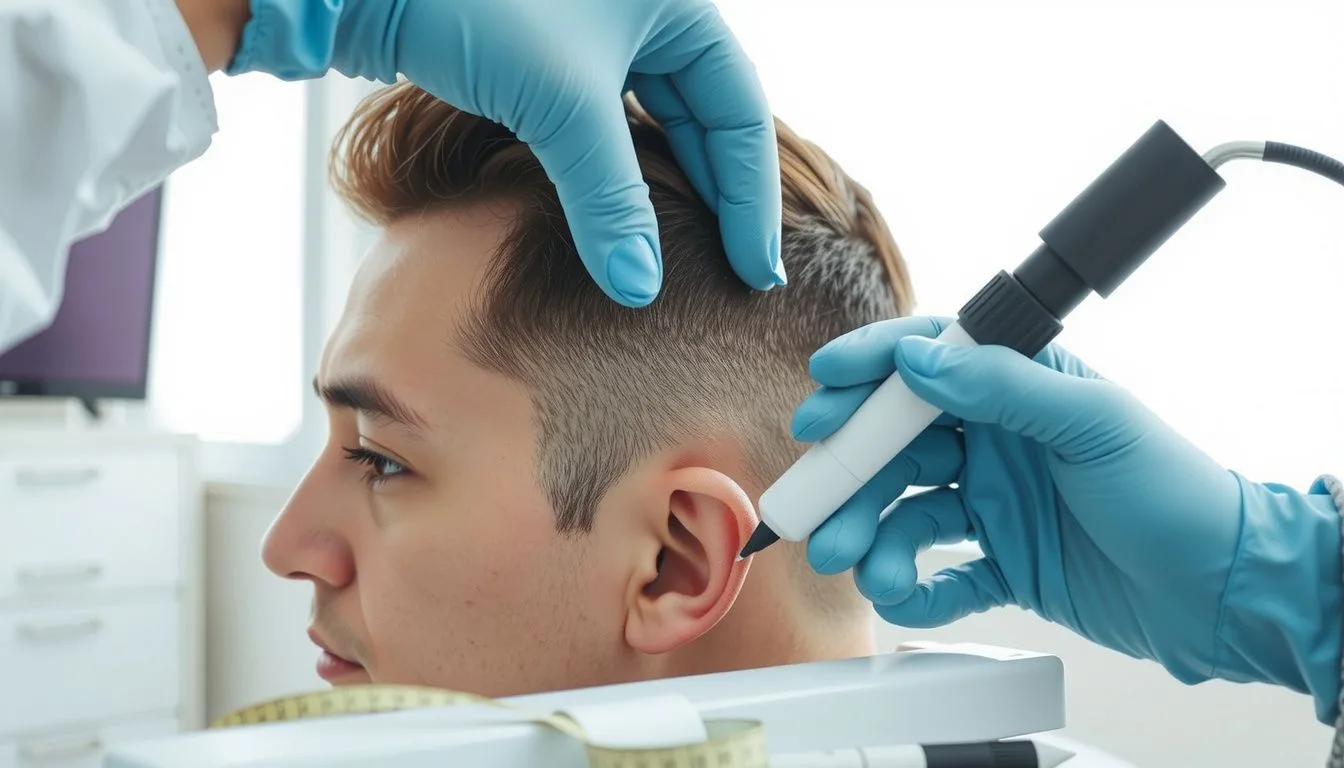
Diagnosis begins with pattern recognition rather than guesswork. A clinician first maps the hairline against a reference line drawn from the mid-pupil to the occiput, which reveals whether recession is diffuse, focal, or asymmetric. The most useful early distinction is between non-scarring and scarring forms of loss: in traction alopecia and androgenetic thinning, follicular openings remain visible, whereas frontal fibrosing alopecia produces smooth, shiny skin with loss of ostia and often a band-like recession that spares the central fringe.
Extent is then graded. Practitioners commonly record recession depth in centimetres at the temporal peaks, the density of hairs per square centimetre along the frontal edge, and the presence of vellus hairs, which signal miniaturisation rather than permanent destruction. A pull test and trichoscopy help separate active shedding from stable loss.
History completes the picture. The distribution of tight styles, the duration of tension, and any accompanying symptoms such as itching, scaling, or tenderness all narrow the differential. Photographic documentation at baseline allows later comparison, so subtle progression does not go unnoticed.
Treatment Options for Restoring a Balanced Hairline
Treatment is matched to the underlying cause, not to the shape of the hairline alone. Where an active inflammatory or scarring condition such as frontal fibrosing alopecia is confirmed, the priority is halting progression with anti-inflammatory therapy, typically topical or intralesional corticosteroids, sometimes combined with oral medications. Only once the disease is stable does surgical restoration become appropriate, since grafting into inflamed tissue risks poor survival.
For traction alopecia, the single most effective step is removing the tension that caused it. Early cases often recover with nothing more than a change in styling habits, though minoxidil may accelerate regrowth. Androgenetic recession responds to medical therapy: topical minoxidil, oral finasteride or dutasteride in suitable candidates, and low-level laser devices as supporting options.
When follicles are permanently lost, surgical hair transplantation redistributes grafts to rebuild a natural, symmetrical front line. A skilled surgeon designs the hairline around existing density, facial proportions, and future loss patterns. Platelet-rich plasma and microneedling can complement these approaches by improving graft take and supporting weaker follicles. Because the right sequence varies so much between individuals, a dermatologist should confirm the diagnosis before any treatment begins.
FAQs
What causes an uneven hairline to develop over time?
An uneven hairline most often develops because of androgenetic alopecia, a hereditary condition in which dihydrotestosterone (DHT) gradually miniaturizes hair follicles in a pattern that is rarely symmetrical. This recession typically affects the temples first and progresses at different rates on each side, producing an irregular or uneven hairline over time. Other contributing factors include traction alopecia from tight hairstyles, frontal fibrosing alopecia, and hormonal shifts, all of which can thin or recede hair unevenly across the front of the scalp.
Can an uneven hairline be corrected without surgery?
Yes, an uneven hairline can often be corrected without surgery through non-invasive options such as topical minoxidil, prescription medications like finasteride, and customized hair styling or coloring techniques. Less invasive procedures, including platelet-rich plasma (PRP) injections and low-level laser therapy, may also promote more even growth in thinning areas. For mild asymmetry, these approaches can improve appearance, though significant or scar-related unevenness may still require surgical hair transplantation for the most predictable result.
Which treatments work best for restoring a receding or uneven hairline?
For an uneven or receding hairline, treatments range from topical minoxidil and oral medications like finasteride to in-office procedures such as platelet-rich plasma injections and hair transplantation. The best option depends on the underlying cause, whether the unevenness stems from traction alopecia, frontal fibrosing alopecia, or androgenetic hair loss. A dermatologist can confirm the diagnosis and combine therapies, since early intervention typically preserves more hair than treatment started later.