Choosing a breast lift in Istanbul requires more than comparing advertised prices or viewing before-and-after photos. For US patients, the decision also involves evaluating surgeon qualifications, facility standards, communication, treatment planning, follow-up care, and the practical demands of traveling abroad for surgery. Use this framework to assess those factors before making a commitment. Approach consultations, compare surgical options, assess whether your goals are realistic, and plan responsibly for care outside the United States. By looking beyond marketing claims, you can ask better questions and identify the information needed to make a more informed decision about breast lift treatment in Istanbul.
Why US Patients Choose Istanbul for Breast Lift Surgery
Istanbul may appeal to US patients because it offers access to internationally oriented private clinics, a broad range of cosmetic surgery services, and consultation options that can often be arranged remotely before travel. Some patients also compare clinic availability, surgeon experience, accommodation support, and the overall treatment environment with the options available near home.
These potential advantages should be assessed together rather than treated as guarantees. A competitive quoted fee, for example, does not by itself confirm appropriate standards, qualified care, or suitable follow-up. Patients should ask how communication will be handled before and after surgery, who will provide emergency advice, and whether postoperative concerns can be addressed once they return to the United States. Clear English communication and written treatment information can make planning more reliable.
The main practical benefit is often the opportunity to coordinate consultations, surgery, and recovery support through one clinic, but this depends on the provider’s actual organization. Travel time, time away from work, companion arrangements, and the need for in-person monitoring must also fit the patient’s circumstances. Istanbul may be a strong option when continuity of care is clearly planned and verified, rather than assumed from online reviews or package descriptions alone.
Are You a Suitable Candidate for a Breast Lift?
A breast lift may be appropriate when sagging, loss of upper-breast fullness, downward-pointing nipples, or stretched skin affects your shape and confidence. The procedure reshapes and raises existing breast tissue; it does not automatically increase breast size. If you want more fullness, an implant or fat transfer may be discussed separately, depending on your anatomy and goals.
Good candidates are generally in stable health, close to a maintainable weight, and able to tolerate surgery and recovery. Significant weight changes can alter the result, so reaching a stable weight before surgery is usually advisable. Pregnancy and breastfeeding plans also matter: future changes in breast volume or skin may affect the outcome, making it worth discussing timing carefully with your surgeon.
Smoking and nicotine use can reduce blood flow and interfere with wound healing. Your surgeon may require you to stop before and after surgery, including avoiding nicotine-containing products. Medical conditions, medications, previous breast procedures, and family or personal breast-health history should also be reviewed honestly.
Individualized assessment matters more than matching a general checklist. A qualified plastic surgeon must examine your breast shape, skin quality, tissue position, and expectations before confirming whether a lift alone or a combined approach is suitable.
How to Choose a Qualified Istanbul Plastic Surgeon
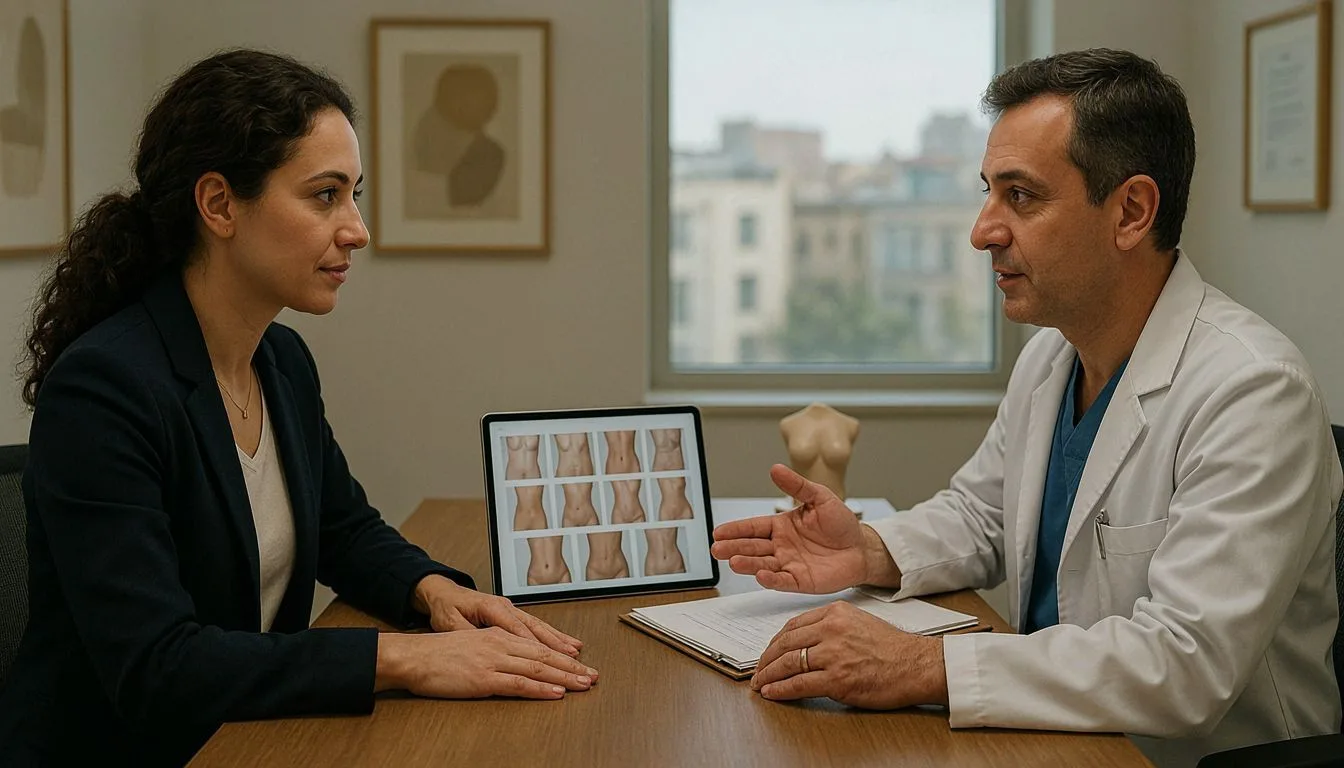
Choosing a surgeon abroad requires evidence that goes beyond polished clinic websites or reassuring online reviews. For US patients, the goal is to verify who will perform the operation, where it will take place, and whether the surgeon’s experience matches the demands of breast surgery.
- Credentials and licensing: Confirm the surgeon’s medical registration, specialist training in plastic surgery, and current authorization to practice in Türkiye. Ask whether breast lifting is a substantial part of the surgeon’s ongoing practice.
- Relevant surgical experience: Request consistent before-and-after photographs of patients with anatomy and goals similar to yours. Images should show results over time when possible, not only carefully selected early photographs.
- Complication management: Discuss how the surgeon handles wound-healing problems, infection, asymmetry, bleeding, or the need for revision. A responsible surgeon should explain risks clearly and describe available support if a problem develops.
- Facility and anesthesia standards: Ask which hospital or operating facility will be used, whether it is appropriately accredited or licensed, and who provides anesthesia. Confirm that qualified staff and suitable monitoring are available throughout the procedure.
- Care responsibilities and communication: Establish who conducts the consultation, performs the surgery, manages postoperative reviews, and answers urgent questions. You should know whether communication is direct with the surgeon or primarily through a coordinator, and how language support is provided.
Before paying a deposit, check that the surgeon’s identity, facility, treatment plan, and aftercare arrangements are documented consistently across consultations and written materials. Direct, realistic communication is a stronger indicator of professional care than promises of perfect results or unusually low pricing.
What Happens During the Consultation and Surgical Planning?
The consultation should turn your expectations and medical information into a practical, individualized surgical plan. Before meeting the Istanbul plastic surgeon, prepare a complete health history, details of previous breast procedures, current medications and supplements, allergies, smoking status, and any relevant breast imaging or medical reports. Recent photographs may support an initial discussion, but they do not replace an in-person examination.
During the assessment, the surgeon may evaluate breast volume, skin quality, asymmetry, nipple position, tissue distribution, and chest shape. These findings influence the likely incision pattern and the extent of lifting required. They also determine whether an implant discussion is relevant, although specific technique and implant choices should be considered separately after the anatomy has been assessed.
Ask how the proposed plan addresses your goals, what changes may be limited by your existing tissues, and which alternatives are available. The consent discussion should cover scarring, asymmetry, altered sensation, healing problems, revision surgery, and other material risks in clear language. You should also understand which outcomes cannot be guaranteed.
Before scheduling, clarify who will perform each part of your care, which clinician is available for questions, and how follow-up is organized after you return home. Confirm the consultation and surgery timeline, required tests, and the process if examination findings or your preferences lead to a change in plan. Good communication and realistic expectations are essential parts of informed consent.
Breast Lift Techniques and Implant Options Explained
The extent of breast sagging and the amount of loose skin strongly influence the lift pattern a surgeon can safely use. A mild lift may be possible through a periareolar incision around the nipple, while greater skin excess may require a vertical, or “lollipop,” scar. Significant drooping can call for an inverted-T pattern, which adds a horizontal fold-line incision. More extensive patterns may create longer scars, but they can provide better control of breast shape and skin removal.
A lift reshapes and elevates existing breast tissue; it does not reliably increase upper-pole fullness or cup size. An implant can add volume and projection, but it also introduces considerations such as implant size, profile, position, and the amount of tissue available to cover it. Larger implants may create a fuller appearance but can place greater weight on lifted tissues, potentially affecting long-term shape. Implant placement above or below the muscle is selected according to anatomy, tissue thickness, activity, and aesthetic goals.
Breast lift technique should therefore be matched to the patient’s anatomy rather than chosen from a standard menu. Patients should discuss scar visibility, possible changes in nipple sensation, asymmetry, capsular contracture, implant rupture, and the potential need for revision. Implants also require long-term monitoring and may eventually need replacement or removal, even when the initial result is satisfactory.
Recovery, Aftercare, and When to Return to the US

Recovery planning should begin before surgery because healing continues after you leave Istanbul. Early swelling, bruising, tightness, altered nipple sensation, and moderate discomfort can occur, while the final breast shape develops gradually. Your surgeon should give written instructions tailored to the procedure, your health, and any implant used.
- Wound care: Keep incisions clean and follow dressing instructions precisely. Do not apply creams, remove steri-strips, or soak the wounds unless your surgical team permits it.
- Support garments: Wear the recommended surgical bra as directed. It can reduce movement and support comfortable healing, but it should not feel excessively tight or compromise circulation.
- Medication: Take prescribed pain relief and antibiotics exactly as instructed, and confirm which usual medicines or supplements should be paused or restarted.
- Activity limits: Gentle walking is generally encouraged, but lifting, strenuous exercise, driving, and raising the arms may be restricted until your surgeon approves them.
- Warning signs: Increasing one-sided swelling, worsening pain, fever, spreading redness, drainage, wound separation, shortness of breath, or chest pain requires prompt medical advice or urgent local care.
Arrange a postoperative assessment before flying. The surgeon should confirm that your wounds are stable, pain is controlled, and no early complication makes travel unsafe. Ask for operative notes, medication details, photographs when appropriate, and a direct contact method for the surgical team.
After returning to the US, share these records with your primary-care clinician or a qualified local plastic surgeon. Continuity of care matters if healing changes, a dressing problem develops, or you need an in-person examination after international travel.
Costs, Safety, and Travel Planning for US Patients

Budgeting for surgery abroad requires a wider view than the advertised procedure fee. Ask for an itemized quotation and confirm every inclusion in writing before paying a deposit. Total treatment cost may involve the surgeon, hospital or clinic, anesthesia, preoperative tests, medications, compression garments, transfers, accommodation, and follow-up appointments.
| Planning area | Questions to confirm | Potential out-of-pocket issue |
|---|---|---|
| Quoted fee | Are surgeon, facility, anesthesia, tests, garments, medications, and follow-up included? | Separate hospital, pharmacy, or testing charges |
| Payment terms | Which currency applies, when is payment due, and what is the cancellation policy? | Exchange-rate changes or nonrefundable deposits |
| Revision policy | How are treatment for complications or revision procedures handled? | Travel, anesthesia, facility, and recovery costs may remain separate |
| Travel and safety | Are passport, entry, transport, accommodation, companion support, and emergency contacts arranged? | Extra nights, rebooking, or local emergency care |
Check passport and entry requirements early, choose accommodation that supports rest, and arrange reliable local transport. A companion can help with communication, meals, and practical needs during the first days. Avoid scheduling a rushed return flight; travel timing should follow the surgical team’s advice and your clinical progress.
Ask your US insurer what, if anything, applies to overseas surgery, complications, emergency treatment, or medical evacuation. Before departure, obtain operative records, medication details, contact numbers, and a clear plan for contacting the Istanbul team and coordinating with a US clinician if concerns arise.
FAQs
What should US patients know about choosing a qualified breast lift surgeon in Istanbul?
US patients should verify that the Istanbul surgeon is board-certified or formally credentialed in plastic surgery, experienced in breast lift procedures, and licensed to practice in Türkiye. Review before-and-after results, confirm the clinic’s accreditation and safety standards, and ask who will provide anesthesia and postoperative care. Request a detailed quote covering the procedure, hospital fees, medications, follow-up, and arrangements for managing complications after returning to the US.
How long should breast lift Istanbul US patients plan to stay for surgery and follow-up care?
US patients should generally plan to stay in Istanbul for about 7–10 days for a breast lift, including the procedure, initial recovery, and follow-up appointments. Many surgeons schedule the first check within a few days and remove drains or assess healing before clearance to fly. Your surgeon may recommend a longer stay if healing is slower or combined procedures are performed.
What are the main risks, recovery requirements, and total costs of a breast lift in Istanbul?
The main risks include bleeding, infection, scarring, asymmetry, altered nipple sensation, poor wound healing, and the possibility of revision surgery. Most patients need about one to two weeks before returning to desk work, should avoid strenuous activity for four to six weeks, and may need several months for swelling and scars to settle. In Istanbul, the total cost typically ranges from €2,500 to €5,000, depending on the surgeon, hospital, technique, anesthesia, aftercare, and whether travel and accommodation are included.