Considering a breast lift in Istanbul as a Canadian patient involves more than comparing procedure prices. You need to understand how the surgery will be assessed, how to verify the surgeon and facility, and how travel may affect preparation and recovery. This guide explains the practical questions to consider before making a decision, from sharing accurate medical information to planning accommodation, flights, and follow-up care. It does not replace a consultation or provide individualized medical advice. Instead, it offers a clear framework for evaluating whether treatment abroad is appropriate for you and whether your chosen provider can support you before, during, and after surgery. The details you check now may shape both your experience and your results.
Why Canadian Patients Choose Istanbul for Breast Lift Surgery
Istanbul appeals to many Canadian patients because it combines established medical tourism infrastructure with access to clinics accustomed to coordinating care for international visitors. English-language assistance, airport transfers, accommodation arrangements, and consolidated appointment scheduling may make the experience more manageable, particularly for patients travelling from regions with limited access to elective plastic surgery services.
Another consideration is perceived value. Treatment fees may appear competitive compared with private surgical options in Canada, but price alone does not demonstrate comprehensive quality of care. Patients should compare the surgeon’s qualifications, facility standards, anaesthesia arrangements, implant or medical-device policies where relevant, and the clarity of communication before deciding.
Travel also introduces important trade-offs. A flight, time-zone changes, postoperative restrictions, and the possibility of needing care after returning to Canada all require planning. International patient support can improve convenience, but it cannot replace independent medical assessment or reliable follow-up arrangements. Istanbul may be appealing when these practical and clinical factors align with a patient’s needs, expectations, health status, and ability to remain abroad long enough for early recovery.
Are You a Suitable Candidate for a Breast Lift?
Breast lift candidacy is usually considered when breast shape has changed through pregnancy, breastfeeding, weight fluctuations, aging, or natural tissue development. Common concerns include sagging, downward-pointing nipples, stretched skin, and differences in breast position or volume. A surgeon will also assess skin elasticity and asymmetry, since these factors influence the likely result and the technique required.
A lift reshapes and raises existing breast tissue; it does not primarily add fullness to the upper breast. Patients seeking more volume may need to discuss implants or fat transfer separately, while those wanting a smaller breast may require a reduction combined with the lift. The most suitable approach depends on anatomy rather than preference alone.
Good general health, a relatively stable weight, and realistic expectations support safer planning. Smoking or nicotine use can impair wound healing, so patients may be asked to stop before and after surgery. Pregnancy plans also matter because future breast changes may affect the result. Medical conditions, previous breast operations, abnormal mammograms, allergies, and medicines such as blood thinners or supplements require individual review.
Individual surgical assessment is essential: photographs or an online questionnaire cannot confirm candidacy or determine the final technique. During an examination, the surgeon should evaluate breast tissue, skin quality, nipple position, asymmetry, and overall health before recommending a plan. Patients should also disclose any new breast symptoms and clarify whether their goals concern lifting, volume, size, or symmetry.
How to Choose a Qualified Istanbul Surgeon and Clinic
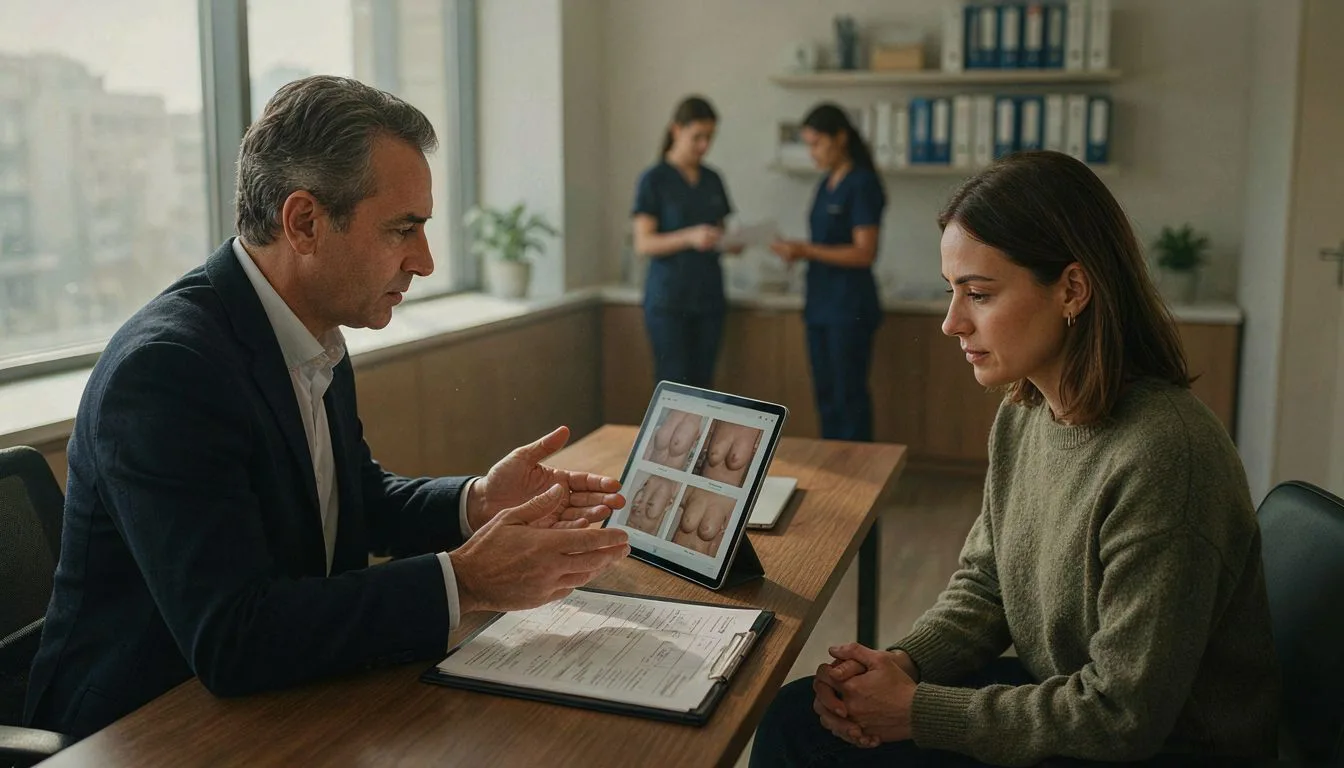
Choosing a provider abroad requires more than comparing prices or reviewing polished clinic websites. Begin by confirming the surgeon’s medical license, board certification or equivalent specialist credentials, and specific experience with breast lift procedures. Ask how frequently they perform mastopexy surgery and whether they have experience with patients whose breast shape, skin quality, or previous surgery resembles yours.
Review before-and-after photographs critically. Look for patients with comparable anatomy and images taken from consistent angles, lighting, and time points. A trustworthy gallery should show a range of outcomes rather than only highly selected results. You may also ask whether the photographs represent the surgeon’s own patients and whether permission has been obtained for their use.
The facility deserves the same scrutiny as the surgeon. Verify whether surgery takes place in a properly licensed hospital or accredited surgical center, who provides anesthesia, and what monitoring is available during recovery. Ask about the clinic’s emergency arrangements, hospital access, and support if a complication occurs after you return to Canada. Accreditation and emergency capacity are especially important because package marketing cannot substitute for appropriate clinical infrastructure.
Communication is another practical quality marker. You should receive clear answers about the surgeon’s identity, facility, inclusions, and limitations without pressure to book quickly. Check information independently through official medical registers, hospital records, professional associations, and reliable patient feedback. Testimonials can provide useful insight into communication and organization, but they should support—not replace—verification of qualifications and clinical standards.
What to Expect During the Consultation and Treatment Plan

The consultation should give you a clear understanding of how your anatomy, goals, and medical history will shape the proposed breast lift. The surgeon may ask about changes after pregnancy or weight loss, breast asymmetry, smoking, medications, allergies, previous operations, and any plans for future pregnancy. Bring relevant medical records, including mammogram or ultrasound results when applicable, and provide accurate details about earlier breast procedures.
During the examination, the surgeon may assess skin quality, breast volume, nipple position, asymmetry, and the amount of tissue descent. Measurements and clinical photographs help guide the discussion, but they do not guarantee an identical visual result. The consultation should explain whether a lift alone is appropriate or whether adding an implant, fat transfer, or another procedure would better address loss of volume.
Ask how the proposed incision pattern may affect scar placement, breast shape, nipple position, sensation, and future revision needs. Risks such as bleeding, infection, delayed healing, changes in sensation, asymmetry, and the possibility of further surgery should be discussed in understandable language. You should also clarify anesthesia, the planned facility, expected operative timing, monitoring, and what would happen if the surgical plan needs to change.
A written individualized treatment plan should reflect the examination findings rather than present a standard package. Before consenting, make sure it identifies the recommended technique, inclusions, limitations, likely recovery requirements, and questions that still need answers. This gives you a more realistic basis for deciding whether the proposed surgery is appropriate for you.
How to Prepare for Breast Lift Travel from Canada

Start preparing several weeks before departure by asking the clinic which medical records it requires. These may include your medication list, allergy history, previous surgical reports, breast imaging, and recent laboratory or health-screening results. Disclose all prescription medicines, supplements, nicotine use, and relevant medical conditions accurately; some treatments may need adjustment, but only under instructions from your doctor or surgical team.
Confirm the clinic’s preoperative instructions in writing, including fasting requirements, permitted medications, arrival time, and what to bring. Ask whether you need specific compression garments and wound supplies, whether they will be provided locally, and which products are suitable after surgery. Clarify how to contact the team if your flight is delayed or your health changes before departure.
Check that your passport remains valid for the required period and review travel insurance carefully, since elective surgery and related complications may be excluded. Arrange accommodation close to the clinic, reliable airport transfers, and language support if needed. A companion can be valuable during the first days, particularly if you are anxious, have limited mobility, or are travelling alone.
Build flexibility into your itinerary rather than scheduling an immediate return or demanding activities. Reserve enough time in Istanbul for the operation, early clinical review, and any surgeon-directed assessment before flying. Before booking, ask specifically about airline restrictions, airport assistance, lifting luggage, and what happens if the planned schedule changes.
Recovery, Follow-Up Care, and Returning Home
Recovery after a breast lift usually involves manageable discomfort, swelling, bruising, and a feeling of tightness across the chest. Your surgeon may advise wearing a support garment, keeping the incisions clean and dry as directed, and avoiding pressure on the breasts while sleeping. Light walking is encouraged to support circulation, but lifting, pushing, pulling, and strenuous upper-body movement should remain restricted during the early healing period.
Before leaving Istanbul, attend the planned examination so the surgical team can assess your wounds, swelling, dressings, and general progress. Ask for written aftercare instructions, medication guidance, and a clear contact method for questions after you return to Canada. Ongoing communication may include photographs or virtual reviews, although an in-person assessment is preferable when healing is uncertain.
Contact the surgical team promptly if you develop increasing redness, worsening pain, fever, unusual drainage, wound separation, sudden swelling, or shortness of breath. Severe breathing difficulty, chest pain, or fainting requires urgent local medical care rather than waiting for an overseas reply.
Many patients need around one to two weeks before returning to desk-based work, while physically demanding jobs may require longer. Walking can usually increase gradually, but exercise and heavy lifting should resume only when cleared. Long-distance travel should follow your surgeon’s advice. Scars continue to mature for many months, and additional reviews may be needed if healing is delayed or wound complications arise.
Costs, Safety, and Practical Considerations for Breast Lift Istanbul Canadian Patients
The advertised procedure fee is only one part of the financial picture. Ask whether the quotation includes the surgeon, facility, anesthesia, preoperative tests, medications, accommodation, airport transfers, compression garments, and scheduled reviews. Clarify which services are optional, what happens if the operation is postponed, and whether revision surgery or additional treatment would involve new fees.
Safety also depends on arrangements that may not appear in a package description. Confirm that the operation will take place in an appropriately equipped, accredited facility with clear emergency access and a named plan for managing complications. Ask how urgent care is coordinated during your stay and which clinician remains responsible after you return to Canada. Travel and medical insurance may exclude elective surgery abroad, related complications, or revision treatment, so obtain written confirmation rather than relying on assumptions.
Before booking, compare the complete Istanbul pathway with the expected Canadian pathway, including consultation access, testing, time away from work, travel costs, and follow-up responsibilities. A lower quoted price does not necessarily represent equivalent coverage or continuity of care. Proceed only when the consent documents explain material risks, expected scarring, limitations, and alternatives, and when you have a realistic budget for unexpected care. You should also know exactly whom to contact if healing does not follow the anticipated course.
FAQs
What should Canadian patients expect from the breast lift Istanbul consultation and surgical process?
Canadian patients should expect a detailed consultation covering their goals, breast shape, skin quality, medical history, and suitable lift technique, often with photos and a personalized surgical plan. The process typically includes preoperative tests, clear information about anesthesia, risks, recovery, costs, and follow-up, followed by surgery under general anesthesia. Afterward, patients usually wear a support bra, manage swelling and discomfort, and attend follow-up appointments, with arrangements recommended for postoperative care before returning to Canada.
How long should breast lift Istanbul patients plan to stay for recovery and follow-up?
Patients should plan to stay in Istanbul for about 7–10 days after a breast lift to allow for the initial recovery period and follow-up appointments. The surgeon typically reviews healing within the first few days and again before approving air travel. Exact timing depends on the procedure, healing progress, and the surgeon’s advice.
What travel, surgeon, and clinic credentials should Canadians verify before choosing a breast lift in Istanbul?
Canadians should verify the clinic’s Ministry of Health authorization, the surgeon’s recognized plastic-surgery board certification, current license, breast-lift experience, hospital privileges, and independently verifiable before-and-after results. Confirm that the quoted package clearly covers consultations, anesthesia, facility fees, medications, follow-up care, revisions, and emergency treatment, and obtain a written surgical plan and consent documents. Check the clinic’s infection-control standards, complication and revision policy, medical-record access, and arrangements for airport transfers, accommodation, postoperative monitoring, and safe flying after surgery. Ensure travel insurance covers medical complications abroad and plan follow-up with a Canadian physician before returning home.