If you’re an American considering a Brazilian Butt Lift in Turkey, you’ve probably seen the price tags—often a fraction of U.S. quotes—and wondered whether the savings are real or too good to be true. This guide helps you answer that question.
The honest answer isn’t a simple yes or no. For many patients, the decision comes down to three factors: cost, safety, and logistics. Each one can tip the scale differently depending on your priorities and health profile.
What this guide will do is give you practical planning guidance—what drives the pricing, how to vet clinics, what recovery abroad actually looks like, and the risks you shouldn’t ignore. What it won’t do is make the final call for you. That part is yours.
Why Americans Are Choosing Turkey for Brazilian Butt Lift Surgery
Turkey’s rise as a BBL destination didn’t happen by accident. It’s the result of several factors converging at once: significantly lower surgical costs, all-inclusive medical packages that bundle surgery with hotel stays and transfers, and clinics that perform these procedures at a remarkably high volume. When a surgeon does several BBLs a week rather than a few a month, technique and consistency tend to improve.
For American patients, the math is hard to ignore. Even after adding international flights and a recovery stay, the total cost of having the procedure in Istanbul often comes in well below what a U.S. surgeon charges for the operation alone. Package deals remove much of the planning friction too—many clinics assign a patient coordinator who handles airport pickup, accommodation, and follow-up appointments.
It’s worth being clear about something, though: Turkey’s popularity is context, not a guarantee. High patient volume and attractive pricing tell you where the demand is, not necessarily who operates best. The sections that follow break down the actual numbers and, more importantly, how to verify a surgeon’s credentials before committing.
Cost Comparison: BBL Prices in Turkey vs. the United States

Let’s start with the headline numbers. In the United States, a Brazilian Butt Lift typically runs between $8,000 and $15,000, and in major metros like Miami or Los Angeles, top surgeons can charge well beyond that. In Turkey, the same procedure generally costs between $3,500 and $6,500 — a difference that is largely the all-inclusive package model, where the surgical fee usually bundles hospital costs, anesthesia, medications, compression garments, and follow-up visits into a single price.
That headline gap is real, but smart patients compare total trip costs, not just the surgeon’s quote. Here’s what to factor in on both sides:
For a Turkish BBL, add round-trip flights from the U.S. (often $700–$1,200 depending on season and departure city), hotel stays of 7–10 nights, local transportation, and any extra nights if your surgeon recommends extending your stay. Even with these added, most Americans land somewhere between $5,000 and $8,000 all-in — still roughly half the U.S. surgical fee alone.
Stateside, the math looks deceptively simple: no flights, no passport. But you’ll still pay for time off work, post-op supplies, and possibly a caretaker, and many U.S. quotes exclude anesthesia, facility fees, and garments.
One thing is certain in both countries: insurance will not cover this. A BBL is elective cosmetic surgery everywhere, so you’re paying out of pocket either way. The realistic comparison isn’t “free vs. cheap” — it’s two different total budgets, and Turkey’s typically comes in 40–60% lower even after travel expenses. Verify current quotes directly with clinics, as prices shift with exchange rates and demand.
How to Choose a Safe and Qualified Surgeon in Turkey
The savings we covered in the last section only matter if the hands holding the cannula are qualified. Because you’ll be booking from thousands of miles away, vetting a Turkish surgeon requires a more deliberate process than a local referral from your dermatologist — but it’s entirely doable if you know what to verify before a deposit changes hands.
Start with a vetting checklist you apply to every clinic equally, so you’re comparing surgeons on substance rather than Instagram aesthetics:
- Board certification and licensure: Confirm the surgeon is certified by the Turkish Board of Plastic, Reconstructive and Aesthetic Surgery and ask for their Turkish Medical Association registration number, which you can cross-check.
- International accreditations: Look for clinics holding JCI (Joint Commission International) accreditation or membership in ISAPS, both of which signal audited standards rather than marketing claims.
- Before/after portfolios: Request unedited photo sets of patients with your body type, taken from consistent angles, and be wary of clinics that only share filtered or staged images.
- Hospital privileges: Ask where the surgery will actually be performed; a full-service hospital is a safer setting than a standalone office operating room.
- Transparent, itemized pricing: A legitimate clinic will break down surgeon fees, anesthesia, facility costs, and compression garments. A price dramatically below the market range usually means corners are being cut somewhere — often in anesthesia or aftercare.
Once your shortlist is down to two or three names, book video consultations and come prepared with specific questions: how many BBLs the surgeon performs monthly, their fat reabsorption and revision rates, and who handles your post-op care. How a clinic communicates under direct questioning tells you as much as its credentials — evasive answers, pressure to book within 48 hours, or reluctance to connect you with the surgeon directly are all reasons to walk away. The good ones welcome scrutiny; they’ve built their reputation on it.
What the BBL Procedure and Recovery Timeline Look Like Abroad
Understanding what the surgery itself involves helps demystify the experience. A Brazilian Butt Lift uses your own fat: the surgeon performs liposuction to harvest fat from areas like the abdomen, flanks, or thighs, purifies that fat in a centrifuge, then carefully injects the healthy fat cells into the buttocks in layered, strategic passes. Because it’s your own tissue, results look and feel natural when done well, and you get body contouring in the donor areas as a bonus.
The recovery timeline is where medical tourists need to plan carefully. The first two weeks are the most restrictive: no sitting or lying directly on your buttocks, since pressure can kill the newly transferred fat cells. Most Turkish clinics provide a special BBL pillow and detailed aftercare instructions, and patients typically spend the first days resting in their hotel with a nurse visit or two arranged by the clinic. Swelling in the liposuctioned areas peaks early and subsides over weeks, while final results take around three to six months to fully settle as fat survival stabilizes.
Here’s the honest reality: Turkish clinics are used to international patients, so they compress pre-op testing, surgery, and early follow-ups into a 7-to-10-day window. What you won’t have is your surgeon nearby for months afterward, which makes choosing a clinic with structured virtual follow-up and clear complication protocols essential.
Travel and Accommodation Tips for Medical Tourists
Once your surgery dates are set, the logistics around them deserve just as much planning as the procedure itself. Many medical tourists focus so heavily on choosing the right surgeon that they underestimate how much comfort and timing during the trip affect their overall outcome. The all-inclusive packages covered earlier usually include transfers and hotel nights, but knowing how those pieces fit around your recovery window helps you avoid costly mistakes like booking a return flight too early. Accommodation choices, travel companions, and buffer time in your itinerary all play a direct role in how smoothly your recovery unfolds, so it is worth thinking through each element carefully before finalizing any reservations.
The following practical tips cover the essentials that experienced medical tourists consistently highlight:
- Plan a 7 to 10 day stay. Most Turkish clinics recommend remaining in the country for at least a week so your surgeon can monitor the early healing phase and clear you for flying, since cabin pressure and prolonged sitting matter after liposuction-based procedures.
- Book surgery-compatible accommodation. Choose a hotel with elevators, a walk-in shower, and space to move comfortably. Many medical tourists prefer apartments or clinic-partnered hotels near the facility rather than standard tourist districts.
- Bring a companion if possible. Someone to help with meals, medication schedules, and moving around during the first days makes a noticeable difference, though many clinics offer nurse support if you travel alone.
- Build in buffer days. Schedule your initial consultation and final post-operative check with a spare day on either side, in case your surgeon adjusts the timeline based on how you’re healing.
Each of these points exists because patients who skip them frequently run into avoidable complications, from uncomfortable hotel stays to rushed departures that put strain on healing incisions. Confirm with your clinic which nights the package actually covers before you book anything yourself, and ask them to coordinate flight timing with your final follow-up. Flying home too soon is one of the most common self-inflicted setbacks, and a few extra days in Istanbul is a small price for peace of mind. With transfers, accommodation, and follow-up appointments aligned around your recovery, the entire journey becomes far less stressful and lets you focus entirely on healing.
Understanding the Risks and How Turkey's Clinics Manage Them
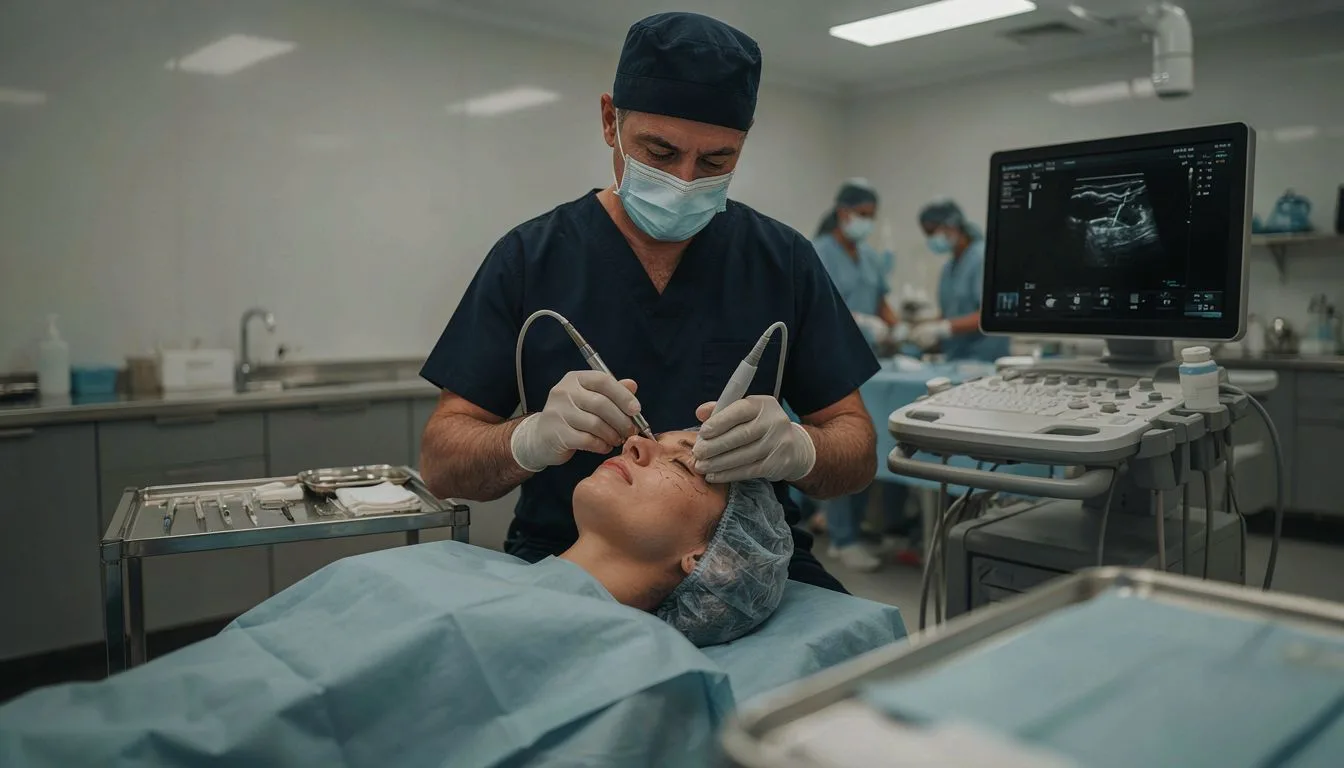
No surgery is risk-free, and the Brazilian Butt Lift deserves a particularly honest conversation. The procedure’s history is the reason: fat that enters a vein during injection can travel to the lungs, causing a fat embolism. This complication is what made BBLs controversial in the first place, and it’s why the technique has been significantly refined over the past several years. Today, experienced surgeons avoid injecting fat into or beneath the gluteal muscle—the intramuscular injection is the single most dangerous part of the older technique—and perform fat transfer only into the subcutaneous layer.
When evaluating clinics in Turkey, two safety standards should be non-negotiable in your mind. First, ask whether the surgeon uses ultrasound-guided fat injection, which allows real-time visualization of the cannula’s position and dramatically reduces embolism risk. Second, confirm the procedure takes place in a fully accredited hospital or surgical facility with intensive care access—not a back-office clinic operating room.
The other honest issue is continuity of care. If a complication appears after you fly home, your U.S. surgeon isn’t the one who operated on you, and follow-up can get complicated. Reputable Turkish clinics mitigate this by scheduling in-person checkups before your departure, providing detailed operative reports you can hand to an American physician, and offering remote follow-up channels. Ask specifically what their post-operative support looks like before you book—weak answers here are a genuine red flag.
Patient Experiences: Is a BBL in Turkey Worth It for Americans?
Patient reviews from Americans who’ve had a Brazilian Butt Lift in Turkey tend to cluster around a few recurring themes. The most consistent is value: patients frequently describe the experience as feeling like a “five-star package” — surgeon consultations, hotel stays, transfers, and follow-up visits bundled into one price. Communication quality is another common highlight, with many clinics assigning English-speaking patient coordinators who stay in touch before and after surgery.
The trade-offs are just as real. Recovering far from home means no family doctor nearby if complications arise, long-haul flights add risk during the recovery window, and legal recourse across borders is more complicated than with a U.S.-based surgeon. Some patients also note that aftercare once they land back home depends heavily on their own local providers.
The verdict is personal. If maximizing savings matters most and you’ve vetted your clinic thoroughly, Turkey can deliver excellent outcomes. Weigh these factors against your own priorities — and discuss your plans with your own doctor before booking.
FAQs
Is a Brazilian butt lift in Turkey safe for American patients?
A Brazilian butt lift in Turkey can be safe for American patients when performed by a board-certified plastic surgeon in an accredited, well-equipped facility. Turkey has a large, internationally active cosmetic surgery sector, and many clinics serve international patients with English-speaking staff and transparent care packages. Safety depends less on the country than on the surgeon's qualifications, fat injection technique, and post-operative monitoring, so Americans should verify credentials and accreditation carefully. Patients should also plan for an adequate recovery stay before flying back to the US.
How much can Americans save by choosing a Brazilian butt lift in Turkey compared to the U.S.?
Americans typically save 50% to 70% on a Brazilian butt lift by having the procedure in Turkey, with costs ranging from roughly $3,500 to $6,000 there compared to $8,000 to $15,000 or more in the United States. These savings are driven largely by lower operational and labor costs rather than reduced quality, as many Turkish clinics hold international accreditations. Even after adding airfare and accommodation, patients usually save several thousand dollars overall.
Do U.S. health insurance plans cover complications from surgery abroad?
Most U.S. health insurance plans, including Medicare, generally do not cover medical care received outside the United States, so complications from surgery abroad are typically not covered. A few exceptions exist, such as Medicare covering care in Canada or Mexico when a foreign hospital is closer than the nearest U.S. facility or in certain emergency situations. If you have travel medical insurance or a specialized international health policy, it may cover post-surgical complications, so review your policy details or contact your insurer before traveling. Because treating complications can be very expensive, many medical travelers purchase dedicated medical tourism or travel insurance that specifically includes coverage for complications.