Choosing the right Brazilian butt lift clinic in Turkey can feel overwhelming—dozens of clinics promise dramatic results, but not all prioritize your safety. A BBL is serious surgery, and the surgeon’s experience, clinic accreditation, and aftercare standards matter more than a discounted price. This guide explains what to look for: surgeon qualifications, hospital standards, before-and-after evidence, transparent pricing, and red flags you should never ignore. By the end, you’ll know how to separate genuinely trusted clinics from clever marketing and make a confident, informed decision about your procedure abroad.
Why Turkey Has Become a Leading Destination for Brazilian Butt Lift Surgery
Turkey’s rise as a hub for cosmetic surgery didn’t happen by accident. Over the past decade, the country has invested heavily in private healthcare infrastructure, and today Istanbul alone hosts dozens of hospitals and surgical centers that rival their European counterparts in technology and comfort. Many Turkish plastic surgeons complete international fellowships in the United States or Western Europe, bringing back refined techniques in fat grafting and body contouring that directly benefit BBL patients.
Cost is the most obvious draw. A Brazilian butt lift in Turkey typically costs 50–70% less than in the UK or the US, largely because of favorable exchange rates and lower operational expenses — not lower standards. This price difference is why the concept of medical tourism has become so closely associated with the country, with hundreds of thousands of health travelers arriving each year.
Accessibility also plays a major role. Istanbul sits within a four-hour flight of most European capitals, and Turkish Airlines connects the city to more countries than almost any other carrier. Most clinics package the experience end-to-end: airport transfers, accommodation, pre-operative testing, surgery, and follow-up appointments, so international patients can complete the entire journey in roughly a week.
There’s also genuine volume-driven expertise. High patient demand means Turkish surgeons perform BBL procedures far more frequently than many of their Western peers, and complication rates at reputable, accredited facilities reflect that experience. This popularity is exactly why careful vetting matters — with so many options available, quality varies considerably, and knowing how to separate the excellent clinics from the merely convenient is the skill this guide will help you build.
Key Factors That Define the Best Brazilian Butt Lift Clinic Turkey
Once you’ve decided that Turkey is the right place for your surgery, the real work begins: separating genuinely excellent clinics from cleverly marketed ones. The difference rarely shows up on a website’s homepage — it shows up in the details. Understanding what separates a truly qualified BBL provider from an average one is the single most valuable skill you can build before booking any consultation.
Experienced medical tourism patients tend to evaluate clinics across a consistent set of criteria:
- Surgeon credentials and specialization — The procedure should be performed by a board-certified plastic surgeon who performs BBLs regularly, not a general practitioner who occasionally offers them. Ask how many BBLs the surgeon performs per year.
- Honest patient selection — A responsible clinic will tell some candidates “no” or recommend a different approach. If every inquiry turns into an instant yes, treat that as a warning sign rather than good service.
- Transparent fat grafting technique — The safest modern methods use ultrasound or manual fat transfer into the subcutaneous layer only. Clinics that can’t explain exactly where and how fat is injected should be crossed off your list.
- Realistic before-and-after galleries — Photos should be consistent in lighting and angle, include multiple patients, and show results that look natural rather than uniformly extreme.
- Comprehensive aftercare planning — Recovery support, follow-up communication after you fly home, and clear instructions on sitting restrictions matter as much as the surgery itself.
One practical tip that patients often overlook: contact the clinic with detailed, slightly difficult questions before committing to anything. How quickly and how specifically they answer tells you more about their actual standards than any brochure. A clinic confident in its surgical team, its facility, and its safety protocols will welcome scrutiny — and that openness is often the most reliable indicator you’ll find.
How to Verify Surgeon Qualifications and Certifications
A clinic’s website can say almost anything, which is exactly why independent verification of your surgeon’s credentials is the most important step you’ll take before booking a BBL in Turkey. A truly qualified BBL provider will never resist this process — in fact, the best clinics expect it and hand over documents willingly.
Start with the surgeon’s core qualification: they must be a board-certified plastic surgeon, meaning they completed medical school, a full residency in plastic, reconstructive, and aesthetic surgery, and passed the exams of the Turkish Society of Plastic, Reconstructive and Aesthetic Surgeons (TPRECD). You can confirm this membership directly on the association’s official website, and Turkey’s Ministry of Health maintains records of licensed physicians as well.
Beyond certification, dig into specialization. Ask how many Brazilian butt lifts the surgeon performs per year, whether fat grafting is a primary focus or an occasional add-on, and whether they have published or presented work on gluteal augmentation. A surgeon who does two BBLs a month carries a very different risk profile than one who performs them weekly.
Practical verification steps include:
Requesting the surgeon’s full name as it appears on their diploma, then cross-checking it against the TPRECD registry and the clinic’s official Ministry of Health authorization documents.
Video-calling the surgeon before committing — if a clinic only offers sales coordinators, treat that as a serious warning sign.
Asking which hospital operating rights the surgeon holds, since operating privileges at a reputable hospital involve additional credential checks.
Finally, verify that the named surgeon is the one who will actually perform your procedure. Some high-volume clinics delegate key steps to assistants, so get written confirmation of who operates, who makes incisions, and who manages your aftercare.
What to Look for in Before-and-After Photos and Patient Reviews
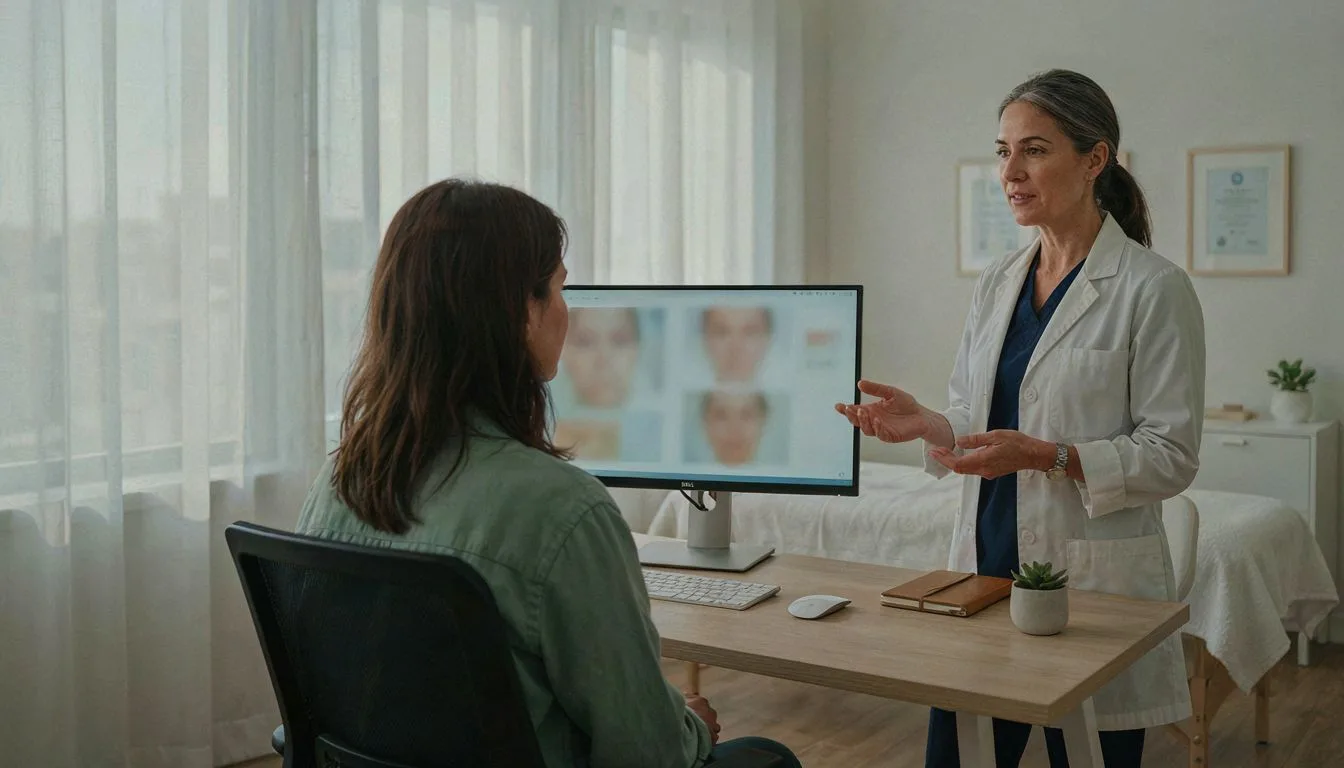
Before-and-after photos are often the first thing you’ll browse on a clinic’s website, but they only tell the truth if you know how to read them. Start by checking whether the images show consistent lighting, camera angles, and distance — a reliable gallery keeps these constant, while manipulated lighting can dramatically exaggerate results. Look for photos taken at least six months after surgery, since swelling in the early months can make a Brazilian butt lift look better than the long-term outcome will be.
Variety matters just as much as quality. A trustworthy gallery should include patients with different body types and starting points, not a handful of the surgeon’s most flattering cases. If you recognize the same body type repeated with slightly different backgrounds, treat that as a warning sign.
Patient reviews add a second layer of evidence. Focus on reviews that describe the full journey — communication before surgery, the hospital experience, follow-up care, and how the clinic handled complications. A review that mentions a specific concern and how it was resolved is far more valuable than a string of generic five-star comments. Independent platforms and moderated forums give a more balanced picture than testimonials hosted on the clinic’s own site, where negative feedback rarely survives.
One of the strongest signs of an honest clinic is transparency: willingness to connect you with real former patients or to show unedited, timestamped images. Clinics confident in their results rarely have anything to hide, and asking for this is a completely reasonable request.
Understanding Costs: What a Fair BBL Price in Turkey Should Include
Price is often the deciding factor when patients compare clinics, yet it is also the area where the least reputable operators hide their advantage. A noticeably cheap quote can look attractive until you realize it excludes things you assumed were covered. Before you sign anything, you need to know what a complete, honestly priced package looks like.
A fair BBL price in Turkey is not a single number for “surgery” — it is the total of every service required to perform the procedure safely and support your recovery. When you request quotes, ask each clinic to break the price down so you can compare like with like:
- Surgeon and anesthesia fees — the operating surgeon’s fee and the anesthesiologist’s fee should both appear separately, not bundled into an anonymous “hospital cost.”
- Hospital or clinic facility charges — the operating room, your overnight stay, nursing care, and standard medications used during admission.
- Pre-operative testing — blood work, ECG, and the consultations that determine whether you are even a safe candidate for the procedure.
- Compression garments and aftercare supplies — faja, BBL pillows for sitting, and follow-up dressing kits you will genuinely need after surgery.
- Post-operative follow-up — at least one or two in-person checkups before you fly home, plus a clear channel for contacting the clinic during recovery.
- Transfers and accommodation, if offered — many packages include airport pickup and hotel nights; verify the hotel’s location and quality rather than accepting it at face value.
Once you have itemized quotes, compare the total, not the headline. A package that seems €1,000 cheaper may exclude anesthesia or aftercare, and you will pay for those separately or, worse, go without them. It is also reasonable to ask what happens if complications arise — whether the clinic covers revision surgery costs and under what conditions.
Be cautious of deals that feel too good to be true, especially those booked through intermediaries or social media DMs with little verifiable information. Legitimate clinics explain their pricing openly and put it in writing. If a provider refuses to give an itemized breakdown before payment, treat that as a serious warning sign rather than a negotiation tactic.
Accreditation, Safety Standards, and Surgical Facility Quality
Beyond a surgeon’s credentials, the physical environment where your Brazilian butt lift takes place is one of the most important — and most overlooked — markers of a quality provider. A BBL performed in a properly equipped, fully licensed facility carries significantly lower risks than one done in a converted office space, so it’s worth digging into exactly where your surgery will happen.
The clearest indicator to look for is international accreditation from a recognized body such as JCI (Joint Commission International). JCI-accredited hospitals in Turkey undergo rigorous, recurring inspections covering surgical safety protocols, anesthesia standards, infection control, and emergency preparedness. Turkish Ministry of Health licensing is the legal baseline every facility must meet, but accreditation goes well beyond that minimum.
When you evaluate a clinic’s facility, here’s what genuinely matters:
A dedicated operating theater with proper ventilation and sterilization systems, rather than a multi-purpose room.
On-site intensive care or a documented emergency transfer agreement with a full-service hospital — critical if a complication arises during or after surgery.
Certified anesthesiologists who are present for the entire procedure, not merely supervising on paper.
Current licenses for the facility itself, which reputable clinics will happily share when asked.
Don’t hesitate to ask direct questions: Where exactly will my surgery be performed? Who will administer anesthesia? What is your protocol if something goes wrong? A confident, established clinic answers these without hesitation. Evasive or vague responses should be treated as a serious warning sign.
It’s also smart to verify that liposuction and fat grafting will happen in the same accredited setting rather than being split across locations, as some budget providers do to cut costs. In your video consultations, ask for a virtual tour of the operating facilities, and cross-check any accreditation claims directly on the certifying body’s official website rather than trusting logos placed on marketing materials.
Preparing for Travel: Planning Your BBL Journey to Turkey Step by Step

Once you’ve chosen your clinic and confirmed your price, the final piece is logistics — and this is where many patients underestimate the work involved. A BBL is real surgery, and traveling abroad for it means building a timeline that gives your body room to heal before you fly home. Thoughtful pre-operative preparation is what turns a stressful medical trip into a smooth, manageable experience.
Start by mapping your dates around recovery, not just the operation. Most surgeons ask you to arrive in Turkey two to three days before surgery for consultations, bloodwork, and final planning. After the procedure, plan to stay at least seven to ten days. Flying too soon after a BBL carries real risks, including blood clots, and you won’t be able to sit directly on your buttocks for the first couple of weeks — a detail that affects everything from your flight home to your daily routine.
Next, arrange the practical details. Confirm whether your package includes airport transfers, accommodation, and a companion, or whether you need to book these yourself. Choose a hotel with a comfortable, supportive setup, since you’ll be resting frequently and moving carefully. Ask the clinic exactly which documents to bring: passport, prior medical records, current medication list, and any recent lab results.
Medical readiness matters just as much. In the weeks before departure, stop smoking as directed, avoid blood-thinning supplements, and follow any fasting or medication instructions your surgeon provides. Pack loose, front-opening clothing, your compression garment if it’s not supplied, and comfortable pillows for the journey. If you take regular prescriptions, carry them in original packaging in your hand luggage.
Finally, prepare your return. Arrange time off work, help at home for the first week, and a follow-up plan — many Turkish clinics offer remote consultations and written aftercare instructions so your recovery continues safely once you’re back. Confirm who to contact if you have questions or concerns abroad, and keep all surgical documentation for your doctor at home. With every step planned in advance, your trip becomes less about logistics and more about a confident, well-supported recovery.
FAQs
How do I verify a Brazilian butt lift clinic in Turkey is safe and properly accredited?
Verify that the clinic operates within a licensed hospital or fully accredited private hospital with an intensive care unit, since Brazilian butt lift carries specific risks such as fat embolism. Check that your surgeon is certified by the Turkish Society of Plastic, Reconstructive and Aesthetic Surgery (TSPRAS) or holds an equivalent board certification recognized by ISAPS, and confirm their membership through those organizations' official directories. Ask the clinic directly for their Ministry of Health medical tourism authorization, the surgeon's specific BBL experience and complication rates, and complete before-and-after portfolios. Finally, read independent patient reviews on platforms like RealSelf and arrange a video consultation before committing to surgery.
What qualifications should the surgeon have when comparing the best Brazilian butt lift clinic Turkey options?
The surgeon should be a board-certified plastic surgeon with specific training in body contouring procedures, ideally holding membership in organizations such as ISAPS or the Turkish Society of Plastic, Reconstructive and Aesthetic Surgery. Look for documented experience performing a high volume of Brazilian butt lift surgeries annually, along with before-and-after photos of actual patients and verifiable patient reviews. It is also important that the surgeon operates in a fully accredited hospital or licensed surgical facility with proper safety protocols, particularly because fat embolism risk makes BBL a technique-sensitive procedure requiring advanced skill. Confirm that the surgeon is transparent about complication rates and offers clear follow-up care after surgery.
How much does a BBL cost in Turkey compared to the UK or US, and what is usually included in the price?
A BBL in Turkey typically costs between $2,500 and $4,500, compared to roughly $8,000–$15,000 in the UK and $10,000–$20,000 in the US. Turkish package prices usually cover the surgeon's fee, anesthesia, hospital costs, compression garments, medications, blood tests, and often hotel accommodation, transfers, and follow-up consultations. The lower price reflects reduced operating and labor costs rather than lower standards, as many Turkish clinics perform high volumes of BBL procedures. Travel and accommodation costs are generally included, making the total saving compared to the UK or US significant.