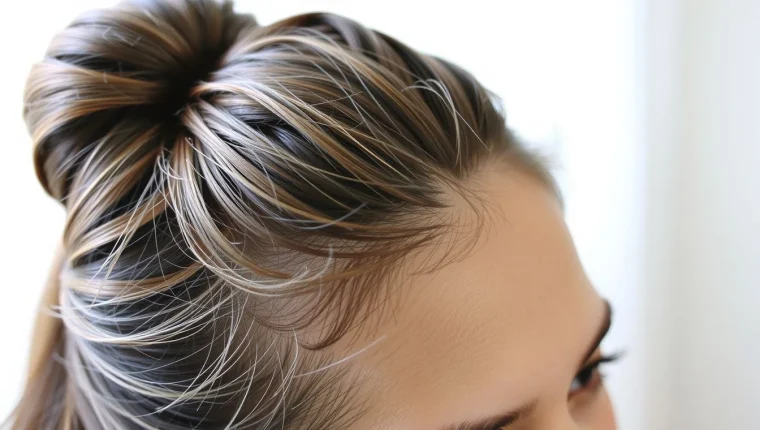
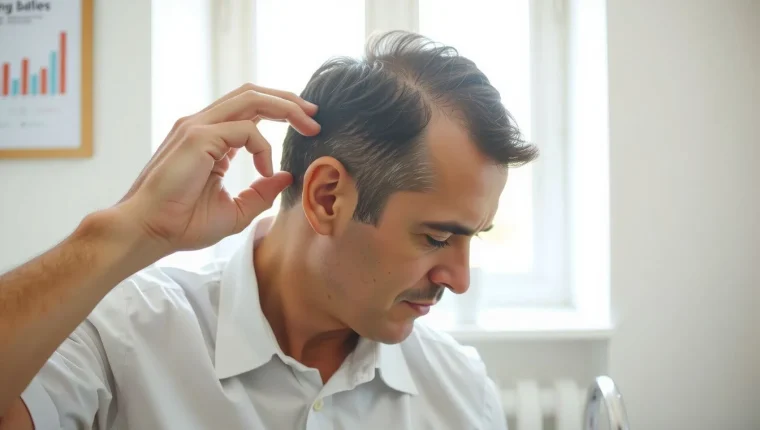
A thinning crown is one of the most common reasons men start paying close attention to their hairline from above. The change is usually gradual: a small patch of scalp becomes visible at the back of the head, then widens over months or years. This pattern is not random shedding. In most cases, genetics and hormones drive male crown balding, which follows a different course from stress-related or medical hair loss. Understanding the cause, recognizing the pattern early, and comparing proven treatments helps you decide what to do next.
Understanding Male Crown Balding and Its Root Causes
Crown balding refers to hair loss concentrated at the vertex, the circular region at the top-back of the scalp. Unlike a receding hairline, which moves the frontal boundary backward, crown thinning typically begins as a diffuse density loss that widens outward from a single point, often forming a circular or oval patch. Because the crown is less visible in a mirror than the hairline, many men notice it only after significant miniaturization has already occurred.
The reason hair loss clusters here comes down to follicle sensitivity to dihydrotestosterone (DHT). DHT is a potent androgen converted from testosterone by the enzyme 5-alpha reductase. In genetically predisposed men, androgen receptors in susceptible scalp follicles bind DHT more readily, triggering a gradual shortening of the growth phase and progressive miniaturization of the hair shaft. Crown follicles appear to carry a higher density of these sensitive receptors than follicles elsewhere on the scalp, which is why thinning concentrates at the vertex rather than spreading evenly.
This vulnerability is inherited, not acquired. The genetic predisposition determines which follicles are sensitive, at what age the process begins, and how quickly it advances. Hormones supply the trigger; genetics set the blueprint. Together they explain why crown balding follows such a predictable, localized pattern in men who are susceptible.
How Androgenetic Alopecia Differs From Other Types of Hair Loss
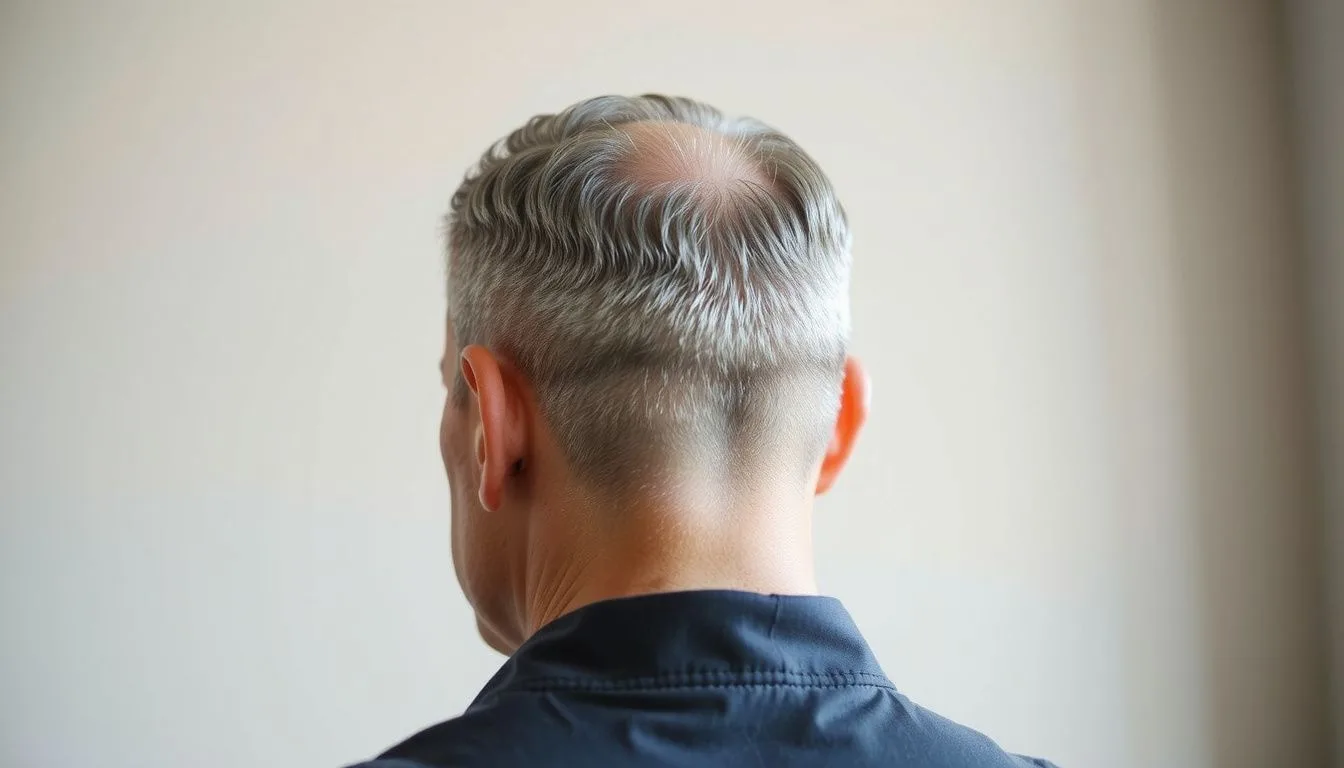
Androgenetic alopecia is not the only reason a man can lose hair, and the differences between conditions matter because they point to different treatments. The key feature of androgenetic alopecia is its patterned progression: loss follows a recognizable shape, typically beginning at the crown or temples and expanding gradually over months and years. The scalp itself usually looks normal — no redness, scaling or itching — and shedding tends to be slow rather than dramatic.
Other causes behave differently. Telogen effluvium, often triggered by illness, stress or medication, produces diffuse thinning across the whole scalp rather than a defined patch, and it usually begins weeks after the trigger. Alopecia areata creates smooth, round bald patches with sharply defined edges. Scarring alopecias may involve inflammation, tenderness or visible scalp changes. Timing is another clue: androgenetic loss is progressive and persistent, while many other forms are sudden or temporary.
This distinction changes the treatment path. A patterned, hormone-driven condition responds to therapies aimed at the underlying mechanism, whereas diffuse or patchy loss may require a different approach entirely — sometimes treating the trigger rather than the hair itself.
Recognizing Early Signs and Tracking Crown Thinning Progress
Early crown thinning rarely announces itself with a dramatic shed. Instead, it often begins as a subtle change in density that is easy to dismiss: a slightly wider part near the whorl, more scalp visible under bright overhead light, or a scalp that feels cooler and more exposed than it used to. Because the crown sits at the back of the head, most men only notice it through photos or a second mirror, which is exactly why the earliest cues are so frequently missed.
The most reliable way to judge whether thinning is advancing is to make comparisons meaningful rather than impressionistic. Take photos from the same angle, distance, and lighting conditions, ideally with damp hair and a consistent part, at monthly intervals. Photographic tracking removes the guesswork that memory introduces and reveals gradual changes that a single glance cannot capture. Pay attention to whether the scalp becomes more visible across the whorl, whether the surrounding hair feels finer, and whether the bald spot widens rather than deepens.
Progression over time matters because it signals an active, ongoing process rather than a stable cosmetic concern. A crown that is visibly larger after six to twelve months indicates that the underlying mechanism is still driving hair loss and that the window for preserving remaining follicles is narrowing.
FDA-Approved Medications for Treating Crown Hair Loss

Two medications carry FDA approval for androgenetic hair loss, and both can act on a thinning crown. Minoxidil, applied topically to the scalp, prolongs the growth phase of the hair cycle and widens the follicle, improving blood flow and nutrient delivery to the dermal papilla. It is available over the counter as a liquid or foam and is typically applied twice daily, though once-daily foam is common for convenience. Finasteride, taken as a once-daily oral tablet, works differently: it inhibits type II 5-alpha-reductase, the enzyme that converts testosterone into dihydrotestosterone (DHT). By lowering DHT at the follicle, it slows the miniaturization that drives crown thinning.
The trade-offs differ in kind. Minoxidil’s main drawback is application burden and the need to keep using it; stopping reverses gains. It can cause scalp irritation or, less often, unwanted facial hair. Finasteride is easier to take but carries sexual side effects in a small percentage of men, including reduced libido and erectile difficulty, which usually resolve after discontinuation. It is not recommended for men trying to conceive.
Response varies widely. Some men see visible regrowth in the crown within three to six months; others see only slowed loss. Consistent long-term use is what underpins results, and combining both medications is common when one alone proves insufficient.
Advanced Procedures and Long-Term Maintenance Strategies
For men whose crown loss has stabilized and who want more than medication alone can deliver, surgical and procedural options can rebuild density in the thinning area. Hair transplantation remains the most established route: follicular unit grafts are harvested from the donor zone at the back and sides of the scalp and relocated into the crown. The crown is technically demanding because grafts must be angled to follow the natural whorl pattern, and results take twelve to eighteen months to mature fully. Candidates do best when their loss has been stable for at least a year, since transplanting into an actively expanding bald spot can leave gaps as surrounding hair continues to recede.
Other procedures play a narrower role. Platelet-rich plasma injections may modestly thicken existing hair, and low-level laser therapy has some supporting evidence, but neither replaces medication. The critical point is that no procedure protects the hair around the transplanted area. Without ongoing medical therapy, the native hair behind and beside the grafts can keep miniaturizing, eventually isolating the transplanted tufts.
A durable plan therefore pairs any procedure with consistent maintenance, typically continuing the medication that stabilized the loss in the first place. Realistic expectations matter: procedures redistribute existing hair rather than creating new follicles, and maintenance is a long-term commitment, not a one-time fix.
FAQs
What are the main causes of male crown balding?
Male crown balding is primarily caused by androgenetic alopecia, a genetic sensitivity that makes hair follicles on the crown shrink in response to dihydrotestosterone (DHT). This inherited trait typically follows a predictable pattern, starting with thinning at the vertex before spreading outward. Age, hormonal changes, and family history are the strongest contributing factors, though stress or certain medical conditions can accelerate the process.
How does androgenetic alopecia differ from other types of hair loss?
Androgenetic alopecia is a genetically driven, progressive form of hair loss caused by the sensitivity of scalp follicles to dihydrotestosterone (DHT), which distinguishes it from temporary or patchy conditions such as telogen effluvium, alopecia areata, or traction alopecia. In the context of male crown balding, this condition typically follows a predictable pattern, thinning at the crown and receding hairline while leaving the sides and back relatively intact. Unlike other types of hair loss that may resolve with nutritional correction, stress management, or medical treatment of an underlying illness, androgenetic alopecia requires targeted therapies like minoxidil, finasteride, or hair transplantation to slow or reverse its progression.
Which treatments are most effective for male crown balding?
For male crown balding, the most effective treatments are FDA-approved medications such as finasteride and minoxidil, which can slow hair loss and promote regrowth when used consistently. Finasteride typically produces stronger results for crown thinning because it addresses the underlying androgenetic cause, while minoxidil works topically to stimulate follicles. For more advanced crown balding, platelet-rich plasma (PRP) injections or a hair transplant focused on the crown can provide additional coverage. Combining treatments often yields better outcomes than using any single option alone.