You notice more hair in the drain after a shower, or a photo from a few years ago shows that your hairline has changed. The question is whether this is ordinary shedding that will correct itself or the beginning of early male pattern baldness. Most men lose 50 to 100 hairs a day, and that number rises with stress, illness, or seasonal change. Pattern loss behaves differently: it follows a predictable route, thins specific zones, and does not fully recover. Recognizing those signs early gives you time to act before the change becomes permanent.
What Early Male Pattern Baldness Actually Looks Like
Early pattern loss rarely announces itself with a dramatic bald patch. Instead, it shows up as small, repeatable changes you can see in the mirror and feel with your fingertips. The most common first signal is a gradual thinning along the temples and the front of the hairline, where individual hairs become finer and shorter before they disappear. You may also notice that your part looks wider, your scalp catches more light, or styling products no longer hold the same volume. Another telltale sign is a shift in hair texture: strands that once felt coarse and thick start to feel soft and wispy.
What separates this from ordinary shedding is pattern. Normal shedding is diffuse and temporary, often tied to stress, illness, or seasonal cycles, and it recovers on its own. Early male pattern baldness, by contrast, follows a predictable geography: it concentrates at the temples and crown while the sides and back remain dense. If you pull a few hairs and they come out evenly from all over, that points to shedding. If the loss clusters in specific zones and the remaining hairs there are miniaturizing, that is the signature of pattern loss.
How Hairline Changes Differ From Normal Maturation
A receding hairline is not automatically a sign of loss. Most adult men experience some degree of hairline maturation, a gradual and largely predictable shift that begins in the late teens or twenties. The hairline moves back slightly at the temples, forming a subtle M or V shape, and then stabilizes. This process is slow, symmetric, and typically stops well before the mid-hairline recedes deeply. In short, a mature hairline is a normal adult feature, not a diagnosis.
The key question is where normal maturation ends and something more progressive begins. Signs that exceed the baseline include a hairline that keeps retreating year after year rather than settling, a receding edge that becomes noticeably asymmetric, or thinning that extends beyond the temples into the mid-frontal zone. You may also notice the frontal hairline losing density rather than simply shifting position, with finer, shorter hairs appearing along the edge.
Timing and direction matter as much as the shape itself. A hairline that changes quickly over months, or that continues moving backward without plateauing, is more consistent with an active, patterned process than with ordinary maturation. Tracking the same angle with photos every few months is more reliable than memory. The underlying drivers of that process are covered in a later section.
Why Crown Thinning Often Goes Unnoticed First

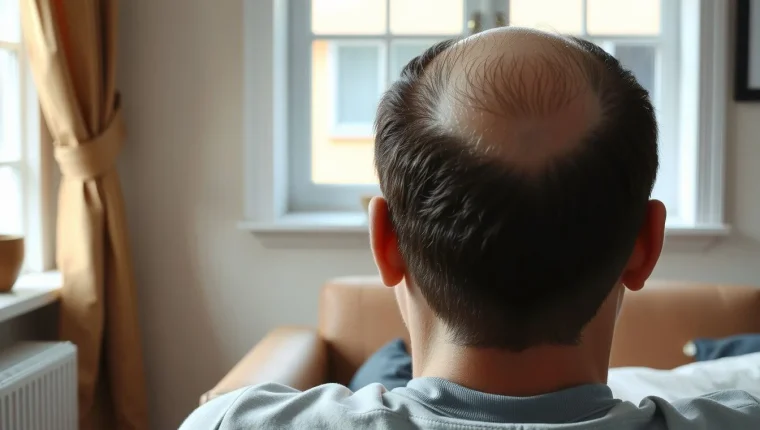
The crown sits outside your normal field of view. You see the front of your hair in the mirror every morning, but the back of the head is only visible with a second mirror or a deliberate turn. That blind spot means crown thinning can progress for months before it registers.
Daily habits hide it further. Hair grows outward from the crown in a spiral, so early diffuse thinning blends into surrounding density instead of forming a clear edge. Overhead lighting and camera angles rarely expose the back of the head, and a slightly longer style can cover a widening part for a long time.
To check reliably, use a handheld mirror in front of a wall mirror and look at the crown under bright, direct light. Take a dated photo from the same angle every few weeks; comparison reveals gradual change that a single glance cannot. You can also feel for a softer, less dense patch, or ask someone you trust to photograph the area. Catching the change early gives you more room to act.
The Role of Genetics and Hormones in Early Hair Loss
The changes you see in the mirror begin long before they surface. What you inherited is not hair loss itself, but a sensitivity: certain hair follicles on your scalp respond differently to hormones that circulate in every man’s body. This inherited trait is the reason pattern loss tends to run in families, though it can appear even when no close relative shows obvious thinning. The timing and severity vary widely, but the underlying mechanism is remarkably consistent.
The key hormone is dihydrotestosterone, or DHT, a byproduct of testosterone. In genetically susceptible follicles, DHT binds to receptors and gradually shortens the hair growth cycle. Each cycle produces a thinner, shorter strand until the follicle stops producing visible hair altogether. This process, known as follicular miniaturization, explains why the changes you notice are gradual rather than sudden.
Where those susceptible follicles sit determines the shape of the loss. Follicles along the hairline and crown are typically the most sensitive to DHT, which is why receding temples and crown thinning appear first. Hair on the sides and back of the scalp usually carries less sensitivity, which is why those areas often remain intact. Understanding this mechanism clarifies why the pattern looks the way it does and why early recognition matters.
When to See a Specialist and What Treatment Options Exist
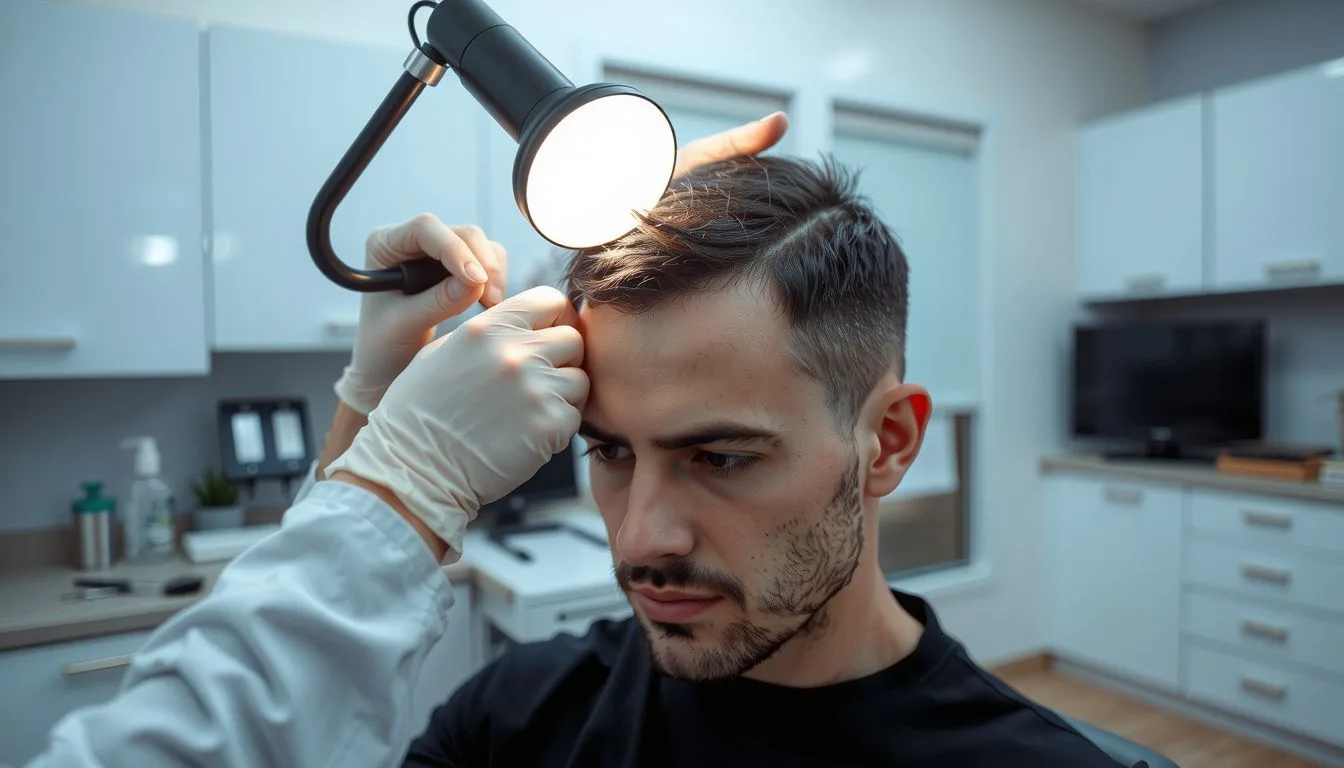
The decision to see a specialist usually comes down to one question: is this stable, or is it progressing? A single receding patch or a slightly thinner crown is not automatically a reason to book an appointment, but documented change over time is. If you are comparing photos and seeing the same area worsen across six to twelve months, or if you notice shedding alongside itching, pain, or patchy smooth spots, those are signals that self-monitoring has reached its limit. A dermatologist or hair restoration physician can examine the scalp directly, confirm whether the pattern fits androgenetic loss, and rule out conditions that mimic it. Early evaluation matters because treatment response tends to be better while follicles are still active rather than fully miniaturized.
Treatment categories generally fall into a few broad groups, and none of them promise a specific outcome for any individual:
- Topical medications are applied directly to the scalp and are often the first-line option discussed for early-stage thinning.
- Oral medications work systemically and require a prescription and ongoing medical supervision.
- Procedural options such as platelet-rich plasma or low-level laser therapy are sometimes used alongside medication rather than instead of it.
- Hair transplantation redistributes existing follicles and is generally considered for stable, defined areas of loss.
- Supportive measures like treating underlying scalp conditions or nutritional deficiencies address factors that can worsen shedding.
Which option fits depends on your pattern, age, health history, and how you weigh cost against commitment, since most treatments require continued use to maintain results. That calculation is personal, and it is exactly the kind of decision a qualified professional is positioned to help you make rather than one to settle from a search result.
FAQs
What are the earliest signs of male pattern baldness to watch for?
The earliest signs of male pattern baldness typically appear as a receding hairline at the temples or a thinning crown, though some men first notice increased shedding on the pillow or in the shower. You may also observe that individual hairs are becoming finer and shorter along the front and top of the scalp, a process known as miniaturization. These changes often begin gradually in your twenties or thirties and can be easy to dismiss early on, so tracking them with photos over time helps confirm a pattern.
How fast does early male pattern baldness usually progress?
Early male pattern baldness typically progresses slowly, with many men losing hair gradually over several years rather than all at once. The rate varies widely depending on genetics, age, and overall health, but noticeable thinning often advances at a steady pace once the first signs appear. Some men may see faster progression during their twenties or thirties, while others experience a more gradual shift over decades.
Can early male pattern baldness be reversed or slowed down?
Early male pattern baldness cannot be fully reversed once a hair follicle has stopped producing hair, but it can often be slowed down or partially regrown if treatment begins early. FDA-approved options such as minoxidil and finasteride are most effective at the first signs of thinning, when follicles are still active. Without treatment, the condition typically progresses over time, so early intervention gives the best chance of preserving existing hair.