You part your hair in the mirror and notice what you saw last month: your hairline sits farther back than it used to. For many women in perimenopause or menopause, an early receding hairline arrives as an unwelcome surprise, often years before they expected any major change. It is a real, recognized shift, not vanity and not something to panic about. Hairline changes during this transition connect to hormonal shifts, genetics, and age-related factors that affect how hair grows and sheds. Understanding what is happening and what can be done starts with looking closely at the pattern.
Understanding Early Receding Hairline in Women
A receding hairline is often pictured as a man’s problem, which is why many women dismiss the change they see in the mirror as something that simply does not apply to them. In reality, women can develop a receding hairline too, and when it starts earlier than expected, it usually reflects a distinct female pattern rather than a male one. Instead of a deep, sharp recession at the temples, women more often notice a gradual thinning along the frontal hairline, a widening part, or a slight softening and setback at the temples that becomes harder to disguise over time.
What makes this pattern worth naming is its timing. When a receding hairline appears during perimenopause or the menopausal transition, it tends to develop slowly and subtly, which is exactly why it is so easy to overlook or attribute to stress, styling, or age alone. Recognizing it as a real pattern, rather than a temporary phase, is the first step toward understanding what may be driving it and why it deserves attention instead of dismissal.
How Hormonal Shifts During Menopause Affect Hair Growth
Hair growth depends on a cycle that hormones help regulate. Estrogen and progesterone support the anagen, or growth, phase and keep follicles active longer. As menopause approaches, levels of both hormones decline, and the balance between them shifts. The result is a shorter growth phase and more follicles resting or shedding, which can leave the scalp looking thinner over time.
At the same time, the ratio of androgens to estrogen changes. Even when androgen levels stay steady, falling estrogen leaves them relatively unopposed. Androgens can miniaturize follicles, and those most sensitive to them often sit along the frontal hairline. This is why thinning may appear first at the front of the scalp, creating a receding pattern that feels early for a woman’s age.
These mechanisms do not act overnight. Follicle miniaturization builds gradually across cycles, so the visible change often trails the hormonal shift by months. That delay helps explain why some women notice an early receding hairline during perimenopause, before periods have even stopped.
Why Hair Thinning Accelerates in Midlife
Menopause is not the only force acting on your hair in midlife. Even before estrogen and progesterone begin their decline, the hair follicle itself is aging. With each passing decade, the growth phase shortens and more follicles spend longer in rest, so the same hormonal shift can produce a thinner result in a 50-year-old scalp than it would have at 35. This is why two women with similar hormone levels can see very different degrees of thinning.
Layered on top of that are the ordinary pressures of midlife. Chronic stress pushes follicles into a shedding phase, and poor sleep or a demanding caregiving role can sustain that stress for months. Nutrient gaps matter too: low iron stores, insufficient vitamin D, and inadequate protein all limit the raw material hair needs to build a strong shaft. Thyroid changes, which become more common around this age, can mimic or worsen menopausal shedding.
Styling and scalp health add another layer. Years of tight pulling, frequent heat, or harsh chemical treatments can leave the hairline permanently thinner, while conditions like seborrheic dermatitis inflame the follicle environment. None of these factors replaces the hormonal explanation—they overlap with it, compounding the effect so that midlife hair loss often looks faster and more stubborn than the hormonal timeline alone would predict.
Distinguishing Normal Shedding From Progressive Hair Loss
Everyone sheds hair daily, and 50 to 100 strands is a normal range. The difference lies in what happens over time. Normal shedding replaces itself, so your overall density stays stable. Progressive loss does not replace what falls, and the change becomes visible in specific patterns.
Watch for a widening part, a thinner ponytail, or more scalp showing along the front of your hairline. These shifts suggest follicle miniaturization is outpacing regrowth. A receding hairline that moves steadily over months, rather than fluctuating with stress or seasons, is a stronger signal of progressive loss than any single day of shedding.
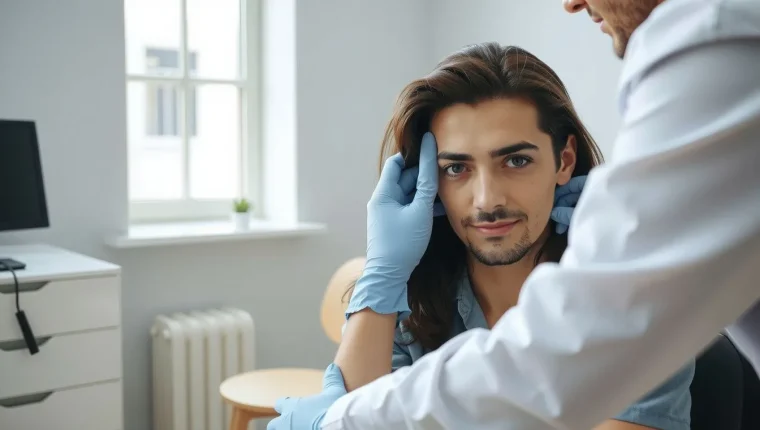
If you notice these patterns, photograph your hairline monthly in similar lighting to track change objectively. Bring those images to a clinician rather than self-diagnosing, since thyroid issues, iron deficiency, and other conditions can mimic menopausal hair loss. Confirmed progressive loss opens a different conversation about treatment, which the next section addresses.
Treatment Options for Menopausal Hair Regrowth
Hair can grow back, but the extent depends on how much of the follicle is still active. Once you and your clinician have confirmed that the change is progressive rather than temporary shedding, treatment is usually chosen by how it reaches the follicle: applied to the scalp, taken systemically, adjusted through hormones, or addressed with a procedure.
Topical treatments such as minoxidil are the most familiar starting point. They are applied directly to the thinning area, are available without a prescription in some forms, and may slow loss while supporting regrowth over several months. Results vary, and consistent use matters more than any single application.
Oral options may be considered when topical treatment is not enough or is poorly tolerated. These require a prescription and a review of your health history, because blood pressure, liver function, and pregnancy status can all affect whether they are appropriate. Some oral medications used for hair loss are prescribed off-label in women, which makes a clear conversation with your clinician essential.
Hormonal approaches address the underlying shift. For some women, adjusting or stabilizing estrogen and progesterone levels through menopausal hormone therapy improves hair density, though this depends on your symptoms, risk profile, and timing. Hormone therapy is not a hair treatment on its own and should never be started for that reason alone.
Procedural options, including platelet-rich plasma injections and light-based therapies, are offered in some clinics. Evidence for these is mixed, and they are often used alongside, not instead of, medical treatment. Hair transplantation can restore density in specific areas but does not stop ongoing loss elsewhere.
No single option suits every woman. Suitability depends on your medical history, medications, and how your hairline has changed over time. Bring your questions to a clinician who can review the full picture and help you choose a safe, realistic path.
FAQs
Does an early receding hairline actually predict when menopause will begin?
An early receding hairline does not reliably predict the timing of menopause. While both hair thinning and menopause are influenced by hormonal shifts, particularly changes in estrogen and androgen levels, no established clinical evidence shows that a receding hairline can forecast when menopause will begin. Hairline changes in women may reflect underlying hormonal activity, but they are not a validated marker for menopause onset, so they should not be used as a predictor.
Can menopause make an early receding hairline worse or slow its progress?
Menopause can accelerate an early receding hairline rather than slow it down, because falling estrogen and progesterone levels leave the effects of androgens like DHT less counterbalanced. This hormonal shift often increases shedding and can speed up miniaturization of hair follicles along the front of the scalp. For women already showing an early receding hairline, that means menopause may make the thinning more noticeable, though the pace varies from person to person.
Which treatments are safe for an early receding hairline during perimenopause and menopause?
Minoxidil is the most commonly recommended topical treatment for an early receding hairline during perimenopause and menopause, and low-level laser therapy may support it as a non-drug option. Spironolactone and some oral contraceptives can help when androgen excess contributes to hair loss, but they require a prescription and medical supervision. Because hormone shifts during this stage vary widely, a doctor or dermatologist should confirm the cause before you start any treatment.