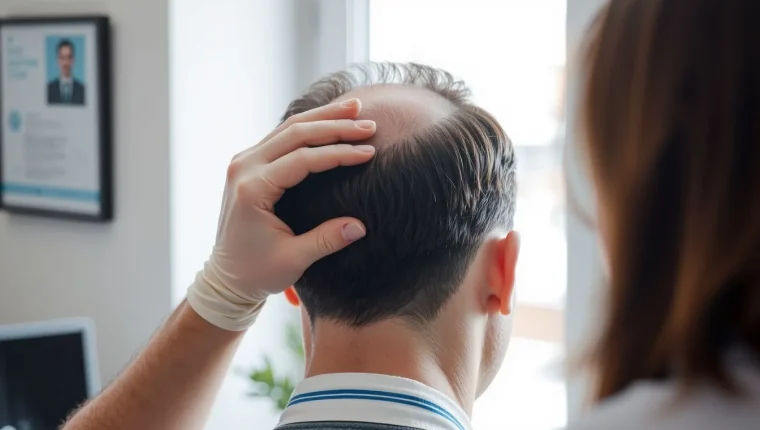
You notice it in a photo before the mirror confirms it: the corners of your hairline sit a little further back than they used to. For most adults, that moment raises a practical question rather than a vanity one — is this normal, or the start of something worth acting on? Hair receding rarely happens overnight. It develops slowly and often invisibly, so the early stage matters most. What you do in the first months and years, while follicles remain active, matters more than anything you try later. Understanding the causes, how to check your own pattern, which daily habits add pressure, what early treatments can realistically do, and when to involve a professional gives you a clear basis for deciding.
Why Hair Thinning Starts Earlier Than You Think
What you see in the mirror is not the beginning of the story. It is closer to the end of a chapter that has been unfolding quietly for months, sometimes years. Long before a hairline looks thinner, the follicles along the front of the scalp have already begun to change.
Hair grows in cycles: a growth phase, a brief transition, then a resting phase before the strand sheds and a new one takes its place. In a healthy follicle, each new hair emerges roughly as thick and pigmented as the last. But in follicles sensitive to hormonal signals, that cycle gradually shortens, and the replacement hair comes back thinner, shorter, and lighter. This shrinking process is called follicle miniaturization.
Here is why the timeline matters. Miniaturization does not remove hair overnight. A follicle can cycle through several progressively weaker hairs before it stops producing a visible strand at all. By the time enough follicles in one area have miniaturized, the scalp shows a change — a wider part, a softer temple, a hairline that no longer sits where it used to. The visible result lags far behind the underlying shift.
That gap is not a reason to panic. It is a reason to pay attention early, while the process is still slow and the follicles are still active. Awareness at this stage gives you room to observe patterns, ask better questions, and make informed decisions rather than reacting to a change that already looks settled.
How to Tell Normal Shedding from Real Hair Receding

Finding loose hairs in the shower drain or on your pillow can be alarming, but shedding is a normal part of the hair growth cycle. Most people lose somewhere between 50 and 100 hairs a day, and this number can rise with seasonal changes, stress, or after washing hair that hasn’t been brushed in a while. The key difference is distribution: normal shedding is spread across the whole scalp, while early hair receding concentrates at the hairline and temples.
To judge your own situation, look for patterns rather than single events. Take photos of your hairline in the same lighting and angle every few weeks. Notice whether the density at the temples is visibly decreasing over months, not days. You can also run your fingers through your hair and compare how many strands come loose from the front versus the back. If the front consistently releases more, that’s a signal worth tracking.
Another useful check is the pull test: gently tug a small section of hair near the hairline and see how many strands come away. One or two is typical; four or more from the same spot repeatedly suggests excessive shedding rather than normal turnover. Persistent thinning along the temples, a widening part, or a receding hairline that keeps moving back are the patterns that deserve attention.
If your observations point to a consistent change, keep a simple log of what you see and when. That record will make any future conversation with a professional far more productive.
Daily Habits That Quietly Accelerate Follicle Miniaturization
Genetics may load the gun, but daily behavior often decides how quickly the trigger gets pulled. If you are already noticing early hairline changes, the habits below can add steady pressure to follicles that are genetically sensitive to DHT, nudging them toward miniaturization faster than they otherwise would.
Some habits act directly on the scalp and hair shafts, while others work from the inside by disrupting the environment follicles need to function:
- Constant tension: Tight ponytails, heavy braids, or snug hats pull on the hairline for hours, stressing follicles at their weakest anchor points.
- Heat and chemical overload: Frequent blow-drying, flat-ironing, and repeated dye or relaxer treatments weaken the hair shaft and irritate the scalp.
- Aggressive scalp habits: Hard scratching, harsh shampoos, or skipping washing after heavy sweating can leave inflammation simmering near the follicle.
- Nutritional gaps: Low iron, poor protein intake, or crash dieting starves follicles of the raw materials they need to build strong hair.
- Sleep and stress load: Chronic poor sleep and unmanaged stress raise cortisol, which can push more follicles into a shedding phase.
You do not need to overhaul everything at once. Start with the adjustments that are easiest to sustain: loosen tight styles, cut back on heat tools, and protect sleep. These small shifts reduce cumulative strain on follicles that are already under pressure, giving any future treatment a better foundation to work with.
Treatment Options Worth Starting in the Early Stages
The early stages of a receding hairline are the period when your options are widest, because follicles that are miniaturizing but not yet dormant can still respond to treatment. Once a follicle stops producing visible hair for long enough, it becomes far harder to revive. That is why the treatments below are framed around what they do and what they ask of you, not around promised outcomes.
Topical minoxidil is the most accessible starting point. It is applied directly to the scalp, typically once or twice daily, and works by extending the growth phase of the hair cycle and improving blood flow to the follicle. It requires consistent, indefinite use; stopping usually reverses any benefit within months.
Prescription oral medications such as finasteride work differently. They target the hormone conversion that drives follicle miniaturization in genetically sensitive men, slowing or partially reversing the process at the root. Because they act systemically, they carry potential side effects and require a medical assessment before use.
Low-level laser therapy and similar device-based options sit in a milder category. They are non-invasive and can be used alongside topicals, but the evidence for them is more modest and results tend to be gradual.
None of these are interchangeable, and none are self-prescribed decisions. What suits you depends on your pattern, your health history, and how much daily commitment you can realistically sustain. A clinician can help you match the approach to your situation rather than guessing.
When to See a Specialist Before the Pattern Becomes Permanent
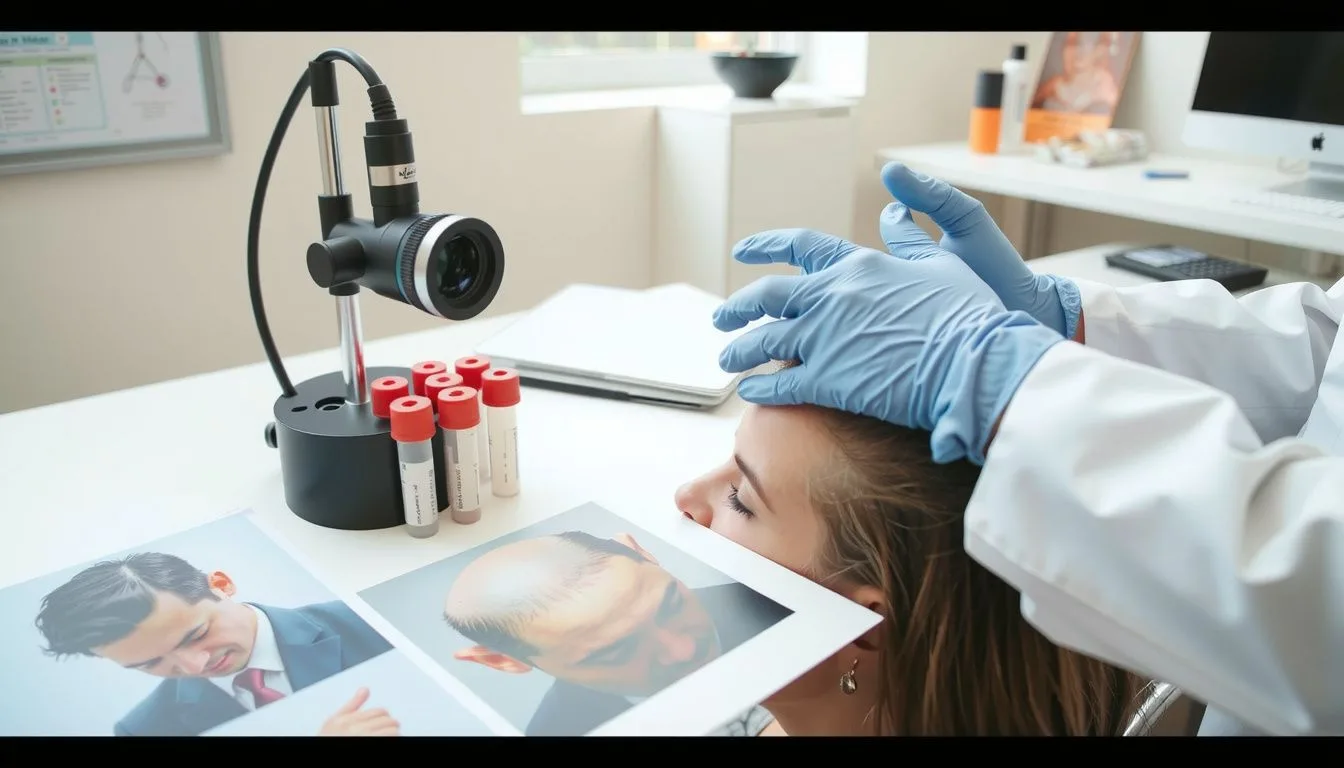
Self-monitoring has limits, and the honest question is when watching and waiting stops being enough. Book an appointment if you notice rapid change — a hairline that shifts noticeably over a few months rather than years — or a pattern that does not match typical male or female thinning, such as patchy loss, a widening part with no family history, or shedding paired with scalp pain, itching, or scaling.
Sudden diffuse shedding after illness, major stress, or a new medication also deserves a professional look, since it can signal a treatable trigger rather than a permanent pattern.
A specialist evaluation adds what self-checks cannot: magnification of the scalp, bloodwork for thyroid, iron, and vitamin issues, and a diagnosis that separates true pattern loss from conditions that mimic it. Earlier assessment keeps more options open, because follicles that are still present respond better than areas that have already scarred over.
FAQs
At what point does a receding hairline stop being normal and become something worth treating?
A receding hairline becomes worth treating when the loss is clearly progressive rather than a stable mature hairline, typically showing noticeable thinning at the temples or a receding pattern that advances over months. Early intervention matters because treatments like minoxidil or finasteride work best on hair that is thinning but not yet permanently lost. If you are unsure whether your hairline is maturing or actively receding, a dermatologist can assess the pattern and recommend whether treatment is appropriate.
Can simple changes to your daily routine actually slow down hair receding, or do you need medication?
Simple changes like gentle hair care, a balanced diet, and stress management can help reduce breakage and support overall scalp health, but they rarely reverse or significantly slow genetic hair receding on their own. For pattern hair loss driven by hormones, proven treatments such as minoxidil or finasteride are typically far more effective. The best approach is to combine healthy daily habits with evidence-based medication if you want meaningful results.
Which treatments work best in the early stages of hair receding before the loss becomes permanent?
In the early stages of hair receding, topical minoxidil and prescription oral finasteride are the most evidence-backed treatments for slowing loss and supporting regrowth. These work best when started as soon as thinning appears, since they help preserve existing follicles rather than restore hair that is already permanently lost. A dermatologist can also recommend low-level laser therapy or ketoconazole shampoo as supportive options.