Noticing that your part looks wider in photos or that your crown feels thinner than it did a year ago is unsettling, and it is easy to assume the change is permanent or simply part of getting older. In many women, this gradual thinning follows a recognizable pattern and has a name: female pattern baldness, also called androgenetic alopecia. It is a common condition with a known hormonal and genetic basis, not a random loss. The sections cover early signs, why androgen sensitivity thins hair, how to distinguish it from other causes, treatment options, and long-term management.
Recognizing the Early Signs of Female Pattern Baldness
Early female pattern hair loss rarely announces itself with a dramatic shed. Instead, it unfolds slowly, which is why so many women dismiss the first changes as stress, seasonal shedding, or simply getting older. The most reliable early clue is a widening part. Where your part once looked crisp and narrow, it gradually appears broader, and the scalp becomes more visible along its length.
Alongside this, the crown area may feel thinner when you gather your hair, and ponytails can seem noticeably less full than they once did. What makes this pattern distinctive is where the thinning does not appear: the frontal hairline usually stays intact, so you are not seeing a receding line so much as a diffuse thinning across the central scalp.
This diffuse central thinning is the signature of the condition. Because the change is gradual, it often goes unnoticed until photographs or a mirror at an unfamiliar angle reveal how much density has quietly shifted.
How Hormonal Shifts and Genetics Drive Hair Thinning in Women

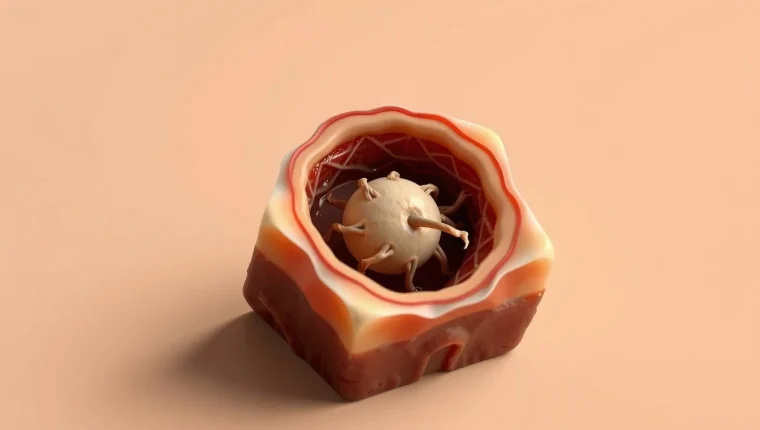
Hair thinning in women rarely comes down to a single cause. Instead, it reflects a conversation between hormones and inherited traits. Androgens, including testosterone and its more potent form DHT, circulate in every woman’s body. What differs is how sensitive a given hair follicle is to them. Follicles genetically programmed to be androgen-sensitive respond to these hormones by gradually shrinking, a process called miniaturization. Over successive growth cycles, each strand becomes finer, shorter, and less pigmented until it no longer breaks the scalp surface.
This inherited sensitivity explains why thinning can run in families and why some women notice it while others with similar hormone levels do not. Hormonal shifts across life stages then influence how quickly that predisposition plays out. Puberty, pregnancy, postpartum months, perimenopause, and menopause all alter the hormonal environment, and each change can accelerate or slow follicle miniaturization.
Genetics and hormones are therefore not competing explanations but combined drivers. A genetic susceptibility sets the stage, and hormonal fluctuations determine the pace at which visible thinning progresses.
Distinguishing Androgenetic Alopecia from Other Causes of Hair Loss
Not every widening part signals androgenetic alopecia, and the differences matter because each cause responds to different care. The central, diffuse thinning described earlier — a gradual widening along the part with preservation of the frontal hairline — is the hallmark pattern. Other conditions tend to behave differently. Telogen effluvium, often triggered by stress, illness, or childbirth, causes sudden, heavy shedding across the whole scalp rather than slow central thinning. Alopecia areata appears as smooth, sharply defined patches of complete hair loss, sometimes with “exclamation point” hairs at the edges. Traction alopecia follows tight hairstyles and concentrates along the hairline and temples, while nutritional deficiencies such as low iron or thyroid imbalance can thin hair diffusely without a clear pattern.
Certain clues point away from androgenetic alopecia: rapid onset, patchy or asymmetric loss, scalp itching, burning, or scaling, and shedding that affects the sides and back as much as the top. Scarring alopecia, a less common but serious cause, involves visible scalp inflammation and permanent follicle damage, so it requires prompt attention.
Because these patterns overlap and self-diagnosis is unreliable, see a clinician for evaluation — typically including history, scalp examination, and blood tests — before assuming your thinning is androgen-driven.
Treatment Options for Androgen-Driven Hair Loss in Women

Treatment for androgen-driven hair loss works on two fronts: reducing the androgen signal that pushes susceptible follicles into miniaturization, and supporting the follicles that are still capable of producing normal hair. Because the underlying mechanism is hormonal and genetic, the goal of most therapies is to slow or stabilize thinning rather than to restore a full head of hair overnight.
Topical minoxidil is usually the first-line option. Applied directly to the scalp, it prolongs the growth phase and can improve density over several months, though results vary and stopping it typically reverses any gain. Topical androgen-blocking agents are sometimes used as an adjunct, particularly when the pattern suggests strong androgen sensitivity.
Oral options include androgen-blocking medications such as spironolactone, which reduce the effect of androgens on the follicle, and low-dose oral minoxidil, which offers a systemic route for patients who struggle with topical application. These require a prescription and monitoring, and they are not appropriate for everyone, especially women who may become pregnant.
Procedural approaches, including platelet-rich plasma injections and light-based therapies, aim to stimulate follicle activity and are often used alongside medication rather than instead of it. Hair transplantation can redistribute existing follicles but does not stop ongoing loss, so it is generally considered only after the pattern has stabilized.
Response to any treatment is individual, and no option reliably reverses miniaturization without consistent, ongoing use. A clinician can help match the approach to your pattern, health history, and goals.
Building a Long-Term Plan to Manage Progressive Hair Thinning
Because androgen-driven thinning is progressive, treatment is not a one-time decision but an ongoing commitment. A single course of any therapy rarely holds results indefinitely; the underlying sensitivity to androgens continues, so benefits depend on consistent use over months and years. This is why the most effective long-term plans pair a treatment you can realistically maintain with a schedule for regular review, rather than chasing quick fixes.
Monitoring matters as much as treating. Photographing your part and hairline under similar lighting every few months gives you an objective record that memory alone cannot provide. If shedding increases, regrowth stalls, or side effects appear, that is a signal to reassess with a clinician rather than to abandon or double your routine on your own. Your needs can also shift with age, menopause, or new medications, so periodic professional check-ins keep the plan aligned with your current situation.
Above all, set realistic expectations. Most women stabilize and partially regrow rather than restore a full head of hair, and progress is measured in months, not weeks. Patience, consistency, and honest communication with your clinician form the foundation of sustainable care.
FAQs
What are the earliest signs of female pattern baldness?
The earliest signs of female pattern baldness usually appear as a gradual widening of the center part and a noticeable thinning along the crown of the scalp. Many women first notice that their ponytail feels smaller or that their scalp is more visible in photos. Unlike men, women typically keep their frontal hairline intact while density decreases over the top of the head.
How does androgenic treatment work for women with thinning hair?
Androgenic treatment for female pattern baldness works by blocking the effects of male hormones (androgens) on hair follicles, which helps slow down the miniaturization process that causes thinning hair. Drugs such as spironolactone or finasteride reduce androgen activity at the follicle level, allowing existing hairs to remain thicker and healthier for longer. These treatments are most effective when started early, and they require ongoing use to maintain results.
Can female pattern baldness be reversed without medication?
Female pattern baldness cannot be fully reversed without medication because the underlying cause is a genetic sensitivity to androgens that gradually shrinks hair follicles over time. Non-medicated approaches such as minoxidil-free volumizing products, gentle hair care, and camouflaging fibers can improve appearance but do not stop or reverse the follicle miniaturization process. The only clinically proven treatments to slow, stop, or partially reverse female pattern baldness are medications like minoxidil and certain hormonal therapies, which require ongoing use to maintain results. Without treatment, the condition typically progresses, so consulting a dermatologist early offers the best chance of preserving hair density.