For Canadians with thinning hair or a receding hairline, choosing a clinic abroad is a significant medical and financial decision—not just a way to lower treatment costs. Hair transplant Turkey for Canadians can seem attractive because many Turkish clinics offer competitive package rates, experienced surgical teams, and treatment plans for international patients. However, the real value depends on more than the quoted fee.
Patients also need to consider the surgeon’s qualifications, the proposed graft plan, clinic standards, communication, travel arrangements, and the quality of aftercare once they return to Canada. Recovery does not end when the flight home begins, and hair growth develops gradually over several months. A clinic that promises fast, dense results without assessing donor supply or long-term hair loss may create unrealistic expectations.
Turkey is not automatically the right choice for every Canadian, just as staying in Canada is not automatically better. The strongest decision comes from comparing medical standards, total costs, practical demands, and expected results with the same care used to evaluate any elective procedure.
Why Canadians Consider Hair Transplant Surgery in Turkey
Canadians often look abroad when local access, scheduling, or treatment costs make hair restoration difficult to pursue. Turkey has become a prominent destination because many clinics routinely serve international patients and offer organized treatment pathways, from remote consultations to airport transfers and post-procedure guidance. This can make the process feel more manageable for someone travelling from Canada, particularly when coordinating time away from work and home responsibilities.
Another motivation is treatment availability. Turkish clinics may provide access to surgeons experienced in techniques such as follicular unit extraction and direct hair implantation, although the exact approach should depend on the patient’s hair loss pattern, donor supply, and long-term goals. A package-based experience may also appeal to patients who prefer having accommodation, transportation, interpretation, and appointments coordinated through one provider. These conveniences are practical advantages, not automatic evidence of superior care or guaranteed savings.
Personal confidence can be equally important. Ongoing thinning may affect how someone feels at work, in social situations, or in photographs, leading them to explore options sooner. However, medical candidacy remains central: a qualified clinician must assess the cause and stability of hair loss, donor-area capacity, scalp health, and realistic expectations before recommending surgery. Travelling for treatment should support that assessment, not replace it.
How Much Does Hair Transplant Turkey for Canadians Cost?

The price quoted for a hair transplant in Turkey can vary widely because clinics do not all include the same treatment scope. The main factors are the number of grafts required, the selected technique, the extent of surgeon involvement, and whether extraction and implantation are performed by the doctor or delegated to technicians. A plan for a limited hairline restoration should therefore not be compared directly with a larger procedure addressing advanced thinning.
Many Turkish clinics advertise package pricing that may include the procedure, hotel accommodation, airport transfers, and basic coordination. Canadians should ask for an itemized quotation and confirm exactly what is included. Important details include consultation fees, medications, blood tests, post-operative supplies, translation support, and the number of nights covered. A low headline price may exclude services that another clinic builds into its estimate.
When comparing a Turkish quotation with a Canadian clinic estimate, use the same graft count, technique, medical supervision, and aftercare expectations. Currency conversion and payment-processing charges can also affect the final amount. Requesting a written treatment plan helps prevent an attractive package from being compared with a more comprehensive Canadian quote.
Build a separate budget for flights, meals outside the package, additional accommodation, prescription or over-the-counter medication, and possible schedule changes. It is also sensible to ask in advance about fees for extended follow-up, treatment of unexpected complications, or a future corrective procedure. Total treatment cost should reflect the procedure and its surrounding commitments, rather than the advertised package alone.
Choosing the Right Turkish Clinic and Surgeon
A careful choice of clinic and surgeon can have more influence on your experience than the destination itself. Canadian patients should look beyond polished websites, package prices, and social media popularity. The aim is to confirm who will assess you, who will perform the key surgical steps, and whether the proposed plan is based on your donor supply and long-term hair pattern.
During the consultation, expect a clear diagnosis rather than an immediate promise of a certain number of grafts. The surgeon should examine your scalp, discuss possible causes of hair loss, design a natural hairline, and explain why a particular technique or graft estimate is appropriate. Surgeon-led planning is especially important when the clinic uses a large treatment team, because the person selling the package may not be the doctor carrying out the procedure.
- Qualifications and registration: Confirm the surgeon’s medical credentials, professional registration, and specific experience with hair restoration. Ask how frequently the surgeon performs comparable cases and which parts of the procedure they personally supervise.
- Relevant case evidence: Review consistent before-and-after photographs showing similar hair loss, hair texture, age, and lighting conditions. Images should demonstrate natural hairlines and density over time, not only immediate post-treatment results.
- Facility and staffing: Ask where treatment takes place, who assists during surgery, and what infection-control standards are followed. The clinic should also explain how urgent medical concerns would be handled.
- Written treatment details: Request an itemised plan covering the technique, estimated graft range, medications, language support, transfers, and follow-up arrangements. Written information makes it easier to identify exclusions or changes after arrival.
Reviews can help reveal communication problems or inconsistent service, but they should support—not replace—clinical verification. Before paying a deposit, make sure you understand the consent process, cancellation terms, contact person, and how progress will be monitored once you return to Canada. A clinic that welcomes detailed questions and gives balanced expectations is generally more reassuring than one relying on urgency or guaranteed results.
What Canadian Patients Should Expect During the Procedure
The procedure usually begins with a final consultation at the clinic. The surgeon reviews your medical history, examines the donor area, confirms the expected graft requirement, and evaluates whether the proposed hairline suits your facial proportions and long-term donor supply. This is the appropriate time to clarify who will perform each stage, how the treatment plan may change, and whether an interpreter or English-speaking coordinator will be present.
On the treatment day, the hairline is typically marked and reviewed with you before local anesthesia is administered. You should understand the planned graft handling process, including how follicles will be extracted, sorted, stored, and implanted. Depending on the technique and graft number, extraction may involve removing follicles individually from the donor area, followed by the creation of recipient sites and placement of the grafts. Ask whether the surgeon personally performs the critical design and implantation stages or delegates them to technicians.
Local anesthesia should numb the treatment areas, although you may feel pressure, movement, or brief injections. Confirm what pain-control options are available, how discomfort will be managed during a long session, and when you should report pain or anxiety. The team should also explain the expected duration, planned breaks, and what happens if the procedure needs to be adjusted.
Before discharge, staff should provide clear written instructions, medication guidance, and contact details for questions. Make sure you understand the immediate restrictions and warning signs, and that your consent covers the actual procedure proposed rather than a generic package. Travel arrangements, flying, accommodation, and the broader recovery timeline should be discussed separately as part of your post-treatment planning.
Travel, Recovery, and Aftercare in Turkey

Planning the trip around surgery is an important part of a successful experience. Canadian patients should avoid treating the appointment as a short city break: recovery needs to be built into the itinerary, with enough flexibility for clinical checks and unexpected changes. Before booking flights, obtain a written schedule from the clinic and confirm who will be available after discharge. Careful preparation can make travel more manageable, reduce avoidable stress, and ensure that practical arrangements support the healing process rather than competing with it.
- Timing and accommodation: Allow time for the procedure, at least one follow-up assessment, and early healing before returning home. Choose clean accommodation near the clinic, preferably with elevator access and a quiet room.
- Transfers and documents: Confirm airport transportation, clinic directions, passport requirements, medical records, medication instructions, and contact details for an English-speaking coordinator before departure.
- Insurance and communication: Ask whether travel insurance covers complications related to elective treatment; many policies exclude them. Keep reliable phone or internet access so the clinic can review photographs and respond to questions remotely.
- Flying and daily activity: Ask the surgeon when flying is appropriate, since advice may depend on the procedure and your health. Swelling can be noticeable during travel, while bending, strenuous exercise, alcohol, smoking, and pressure on the treated area may be restricted.
- Sleep and sun protection: Follow the clinic’s instructions for sleeping with the head elevated and protecting the scalp from direct sun. Do not improvise with hats or topical products unless the medical team approves them.
Before leaving Turkey, make sure you understand the clinic’s remote follow-up protocol, including when to send photographs, which symptoms are expected, and how quickly messages should be answered. Canadian patients should also identify a family doctor, walk-in clinic, or urgent-care service in advance. Increasing pain, spreading redness, fever, heavy bleeding, breathing difficulty, or rapidly worsening swelling requires prompt professional assessment rather than relying only on online advice. Keeping these instructions and contact details accessible can help you respond promptly and maintain continuity of care after returning home.
Results, Risks, and Long-Term Value for Canadians
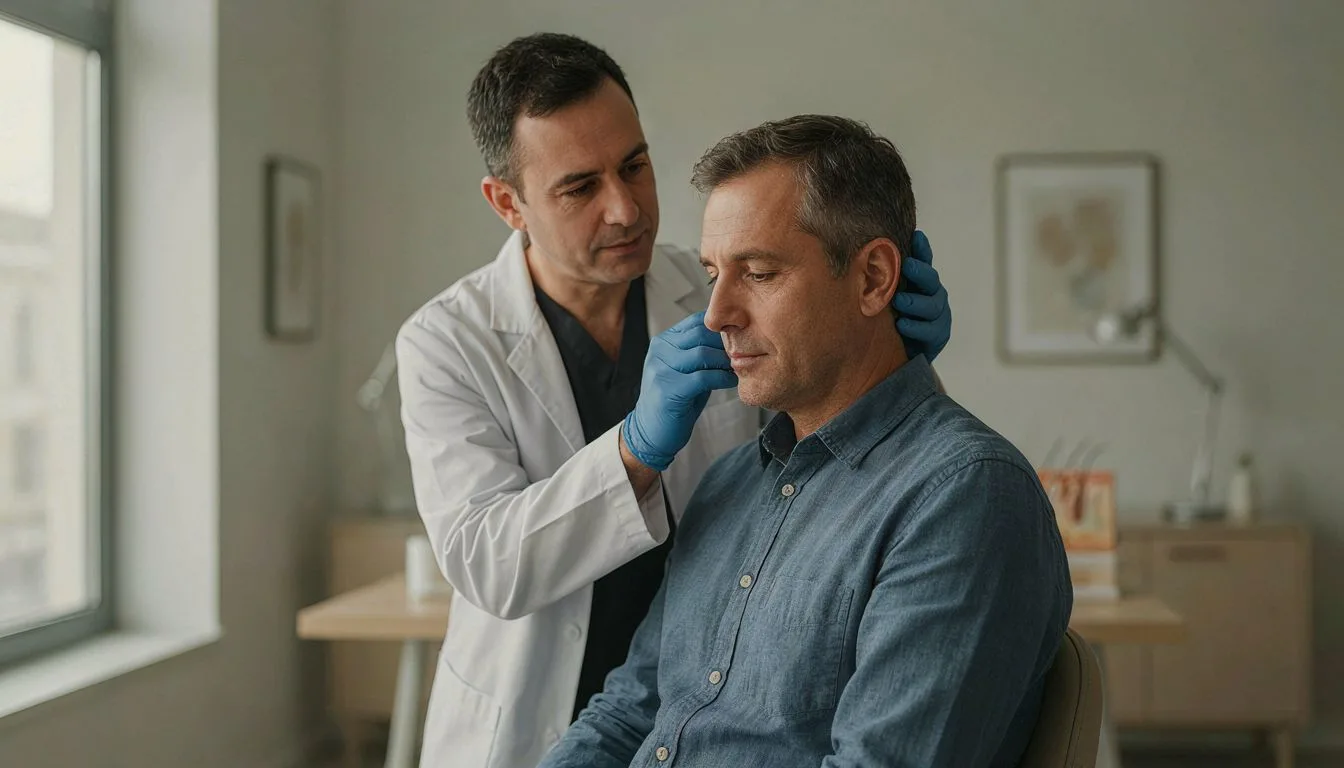
Visible growth after a hair transplant is gradual, so the early appearance should not be used to judge the final result. Transplanted hairs commonly shed before new growth develops, and density may continue improving for many months. The outcome depends on the underlying diagnosis, the quality of the surgical technique, available donor supply, and how well the patient follows aftercare instructions.
As with any surgery, complications are possible. Infection, persistent swelling, noticeable scarring, poor graft growth, an unnatural hairline, and overharvesting from the donor area can affect both appearance and future treatment options. Some patients may also need a revision if the design, density, or growth does not meet a realistic surgical goal. A qualified surgeon should explain these risks in relation to the patient’s scalp, hair characteristics, and medical history rather than offering guaranteed results.
Long-term value also depends on the native hair that was not transplanted. Progressive hair loss can continue after surgery, potentially creating an uneven pattern between transplanted and original hair. A durable plan may therefore include medical treatment, monitoring, and consideration of future procedures where appropriate. Long-term planning should account for donor reserves, likely future loss, and the patient’s preferred appearance—not just the number of grafts placed during one trip.
For Canadians, the fairest assessment is an individualized prognosis from a properly qualified surgeon, supported by realistic timelines and a clear plan for remote follow-up. A lower initial price has limited value if avoidable complications, weak growth, or corrective surgery later increase the total cost.
FAQs
Is hair transplant Turkey for Canadians more affordable than having the procedure in Canada?
Yes, hair transplant Turkey for Canadians is often more affordable than undergoing the procedure in Canada, even after accounting for travel and accommodation. Prices vary by clinic, technique, graft number, and included services, so compare the total package cost and verify the surgeon’s qualifications rather than choosing solely by price.
How safe is it for Canadians to undergo a hair transplant in Turkey?
Hair transplantation in Turkey can be safe for Canadians when they choose a licensed clinic, a qualified surgeon, and an accredited medical facility. Risks include infection, scarring, poor graft survival, and unnatural results, so patients should verify the surgeon’s credentials, confirm what the package includes, and arrange follow-up care before travelling. They should also discuss their suitability and medical risks with a qualified doctor.
What should Canadians check when choosing a Turkish hair transplant clinic?
Canadians should verify the clinic’s surgeon credentials, accreditation, infection-control standards, and experience with the specific hair transplant technique. They should request clear pricing that includes all services, confirm what follow-up care is available after returning home, and review independent patient results rather than relying solely on testimonials. They should also check travel insurance, cancellation terms, and whether the clinic provides a written treatment plan and informed consent documents.