Hair loss shampoos can help create a cleaner, healthier-feeling scalp and make existing hair look fuller, but their effects have clear limits. They may reduce buildup, improve scalp comfort, or support hair that feels weak and fragile. However, shampoo usually does not address the underlying causes of progressive hair loss or restore damaged hair follicles. So, do hair loss shampoos work? The answer depends on the cause of shedding, your scalp condition, and your expectations. This article explains what shampoo can realistically do—and when it may not be enough.
Do Hair Loss Shampoos Work for Every Type of Hair Loss?
Shampoo is more likely to help when shedding is connected to the scalp or when hair is breaking along its length. A product that reduces excess oil, flakes, irritation, or buildup can create a healthier scalp environment and make existing hair look fuller. Gentle cleansing and conditioning may also limit breakage caused by dryness, friction, or rough handling.
However, many forms of hair loss begin deeper within the hair follicles. Hereditary pattern hair loss, for example, is influenced by genetic sensitivity and usually does not respond to shampoo alone. A cleanser may improve the feel and appearance of the hair, but it cannot reliably reverse follicle miniaturization. Similarly, shampoos are unlikely to address scarring conditions that permanently damage follicles.
Inflammatory scalp disorders can be different. If itching, scaling, redness, or excess oil contributes to shedding, a shampoo designed for that scalp problem may reduce irritation and support more comfortable hair growth. Its usefulness depends on the underlying diagnosis and how consistently the condition is managed.
Sudden or temporary shedding may follow illness, major stress, nutritional problems, hormonal changes, or certain medications. In these cases, shampoo may support scalp hygiene but is not usually the factor that corrects the trigger. Because several causes can look alike, persistent, rapid, patchy, or unexplained hair loss may require assessment by a dermatologist or other qualified healthcare professional.
Which Ingredients May Support Hair Growth and Scalp Health?

Ingredient labels can help you judge what a hair loss shampoo may realistically do. Some formulas contain ketoconazole, zinc pyrithione, or selenium sulfide to reduce dandruff-related flaking and help manage excess yeast on the scalp. By improving the scalp environment, these ingredients may reduce itching, scaling, and irritation that can contribute to uncomfortable cleansing or increased breakage.
Other ingredients focus on oil balance and scalp comfort. Salicylic acid can loosen built-up oil and dead skin, while gentle cleansing agents may be preferable for a sensitive or dry scalp. Conditioning ingredients such as panthenol, glycerin, and lightweight botanical oils can improve softness, reduce friction, and make hair appear fuller by limiting dryness and breakage.
These benefits should be separated from evidence of stimulating new hair growth. A shampoo is rinsed away quickly, so even ingredients marketed for thicker-looking hair may mainly improve texture, reduce buildup, or support a healthier-feeling scalp rather than directly reactivate inactive hair follicles. Claims about caffeine, biotin, rosemary, or other growth-focused ingredients should therefore be viewed cautiously unless supported by reliable clinical evidence in a suitable formulation.
Concentration and tolerance also matter. A medicated ingredient may be useful for a specific scalp concern but cause dryness, redness, or irritation if used too often. Check the directions, avoid ingredients that have triggered allergies before, and stop using a product if burning or persistent inflammation develops. A well-tolerated formula is generally more practical than one with an impressive ingredient list that your scalp cannot comfortably handle.
How Long Does It Take to See Results From Hair Loss Shampoo?
Some effects from a hair loss shampoo may be noticeable after the first few washes. Hair can feel cleaner, softer, or fuller because product buildup and excess oil have been removed, while conditioning ingredients may improve texture and reduce the appearance of breakage. These are cosmetic changes rather than proof of new growth.
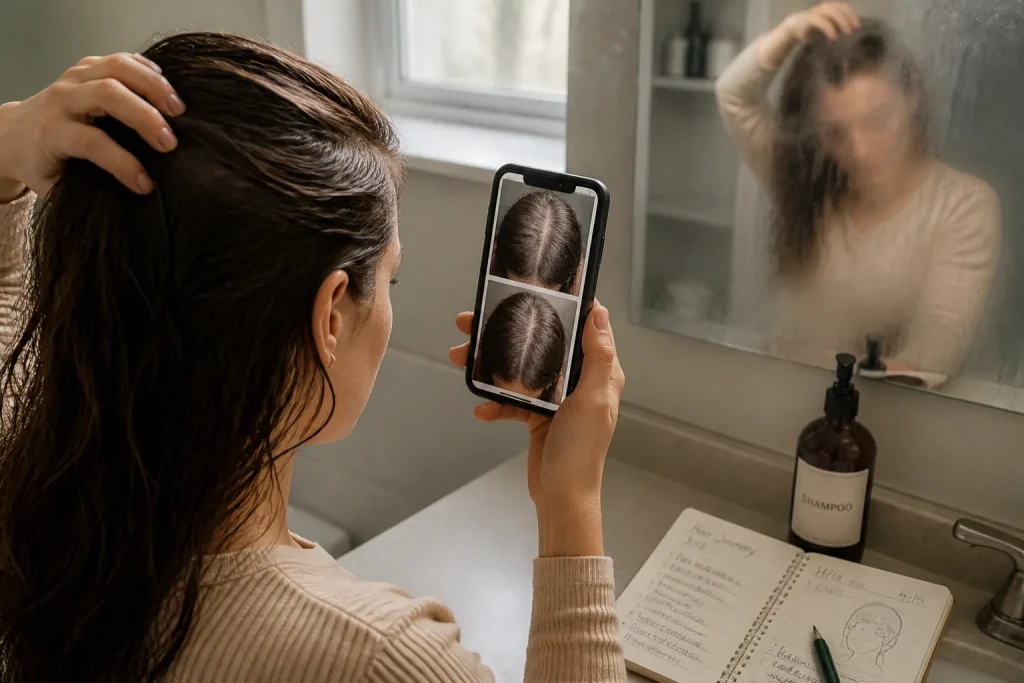
Changes in scalp comfort or flaking may take several weeks of consistent use, depending on the underlying irritation and the formula’s ingredients. A reduction in visible shedding can also be difficult to judge because daily hair loss naturally varies. Take occasional photos in similar lighting and note changes in scalp symptoms, hair texture, and the amount of hair seen during washing.
Actual hair growth follows a much slower cycle. The hair growth cycle means that any improvement in the scalp environment cannot make dormant or weakened follicles produce visible length immediately. New density, if it occurs, generally requires months rather than a typical short shampoo trial, and results vary by cause.
If shedding remains heavy, becomes sudden or patchy, or continues despite a reasonable period of observation, professional assessment is appropriate. A shampoo may support scalp care, but it should not delay investigation of an underlying condition.
What Hair Loss Shampoos Can and Cannot Treat
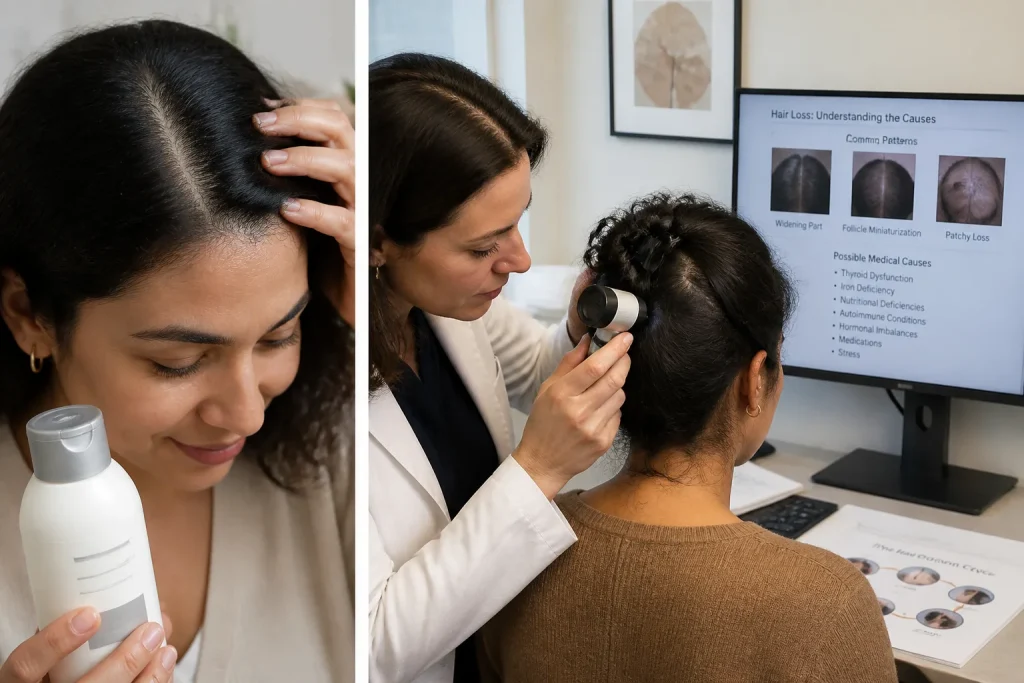
Hair loss shampoo has a limited treatment role. It can cleanse oil, flakes, and irritants from the scalp, reduce breakage caused by dryness or buildup, and make existing hair appear fuller. However, a cleansing product cannot diagnose why shedding is happening or reliably reverse every form of hair loss.
Shampoo is unlikely to restore density when the main problem is follicle miniaturization, in which individual follicles gradually produce finer hairs. It also cannot repair follicles affected by scarring conditions, where permanent damage may prevent new growth. Sudden, heavy shedding may have other causes, including illness, nutritional problems, medication changes, hormonal shifts, or significant physical stress, and requires more than a cosmetic product.
Seek medical advice if hair loss develops rapidly, appears in distinct patches, or leaves a widening part or visibly thinning areas. A painful, burning, intensely itchy, scaly, swollen, or oozing scalp also deserves professional assessment. Other warning signs include loss of eyebrows or body hair, fatigue, unexplained weight changes, or changes in menstrual cycles. In these situations, a dermatologist can examine the scalp, review potential triggers, and recommend appropriate testing or evidence-based hair-loss treatment instead of relying on shampoo alone.
How to Choose a Shampoo for Your Scalp and Hair Type
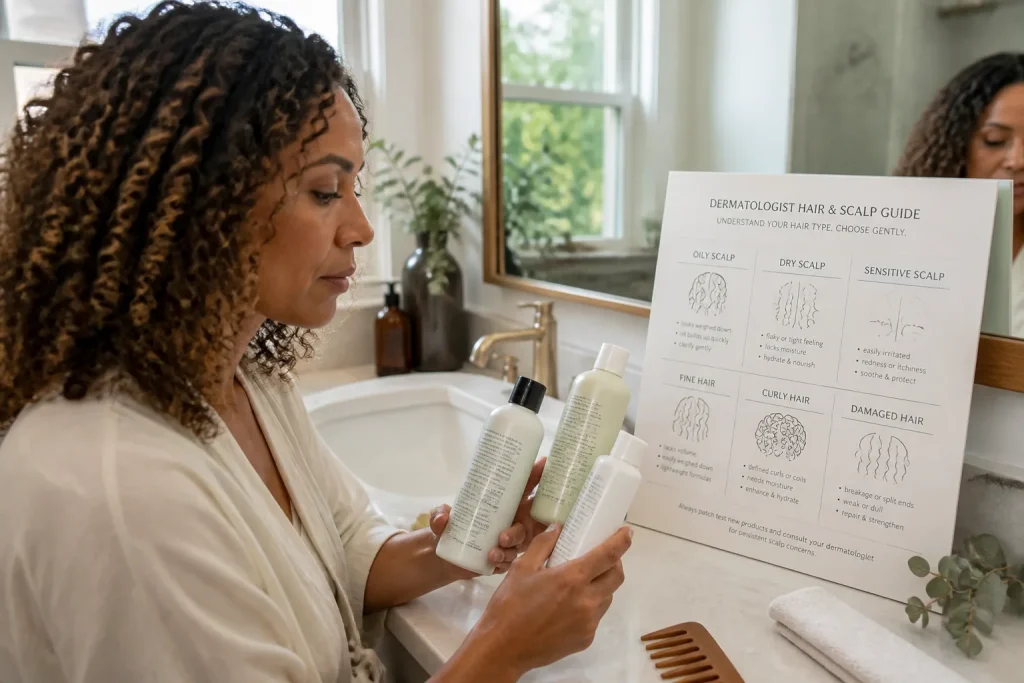
Choose a shampoo by starting with your scalp, then adjust for the needs of your hair lengths. An oily scalp may tolerate a more thorough cleanser, while a dry or sensitive scalp usually benefits from a gentle, fragrance-free formula that does not leave the skin tight or irritated. If flaking, redness, or persistent itching is present, select products carefully and consider professional advice rather than repeatedly changing shampoos.
Hair texture and condition also matter. Curly, coarse, bleached, or heat-damaged hair often needs more conditioning support to reduce tangling and breakage. Fine or easily weighed-down hair may need a lighter formula and less product around the roots. People who wash frequently should generally avoid harsh cleansing that leaves the scalp uncomfortable, while infrequent washing may require better buildup removal.
Check the label for cleansing agents, fragrance, and ingredients that have irritated you before. Patch testing can help if your skin is reactive, but stop using a product if burning, swelling, or worsening redness develops. The best choice is one that maintains a comfortable scalp and minimizes breakage, since scalp tolerance is essential for consistent hair care.
FAQs
Can hair loss shampoo stop shedding completely?
Hair loss shampoos rarely stop shedding completely because they cannot address every underlying cause, such as genetics, hormonal changes, illness, or nutritional deficiencies. Some formulas may reduce scalp irritation, remove buildup, or support healthier-looking hair, but persistent or sudden shedding may require a medical evaluation and targeted treatment.
Is shampoo enough to regrow thinning hair?
Shampoo alone usually cannot regrow thinning hair because it does not reverse most causes of hair loss or restore damaged hair follicles. It may improve scalp health, reduce breakage, or help manage dandruff, but proven treatments depend on the underlying cause and may include minoxidil or prescription medication. Consult a dermatologist if thinning continues, becomes sudden, or appears in distinct patches.
Should I see a doctor about sudden hair loss?
Yes, see a doctor if hair loss begins suddenly, occurs in patches, causes scalp pain or inflammation, or comes with symptoms such as fatigue or unexplained weight changes. Prompt medical evaluation can identify causes such as illness, medication effects, nutritional deficiencies, hormonal changes, or autoimmune conditions and may help prevent further shedding.