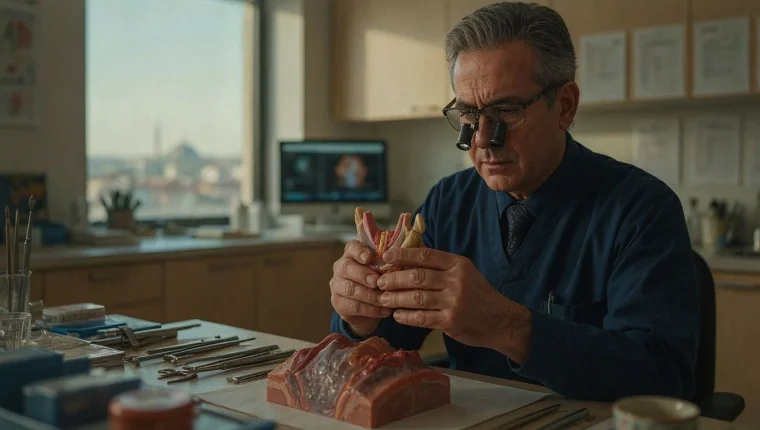
Revision rhinoplasty is one of the most demanding procedures in facial plastic surgery. When a first nose job doesn’t deliver the result you hoped for, choosing the right surgeon for your second operation matters even more than it did the first time. That’s why many patients are researching a revision rhinoplasty surgeon Turkey — the country has become a global hub for complex nasal corrections, with experienced surgeons and more accessible pricing.
But here’s the honest truth: not every clinic is equipped to handle a revision case. Scar tissue, weakened cartilage, and altered anatomy require a specialist who has performed hundreds of these procedures. This guide explains what to look for, which credentials matter most, what to ask before committing, and how to distinguish qualified revision rhinoplasty specialists from clever marketing. Let’s get into the details.
Why Choose Turkey for Revision Rhinoplasty
Turkey has become one of the most sought-after destinations for patients needing a second — or even third — nose surgery, and the reasons go well beyond price. The country performs one of the highest volumes of rhinoplasty procedures in the world, which means Turkish surgeons encounter difficult, scarred, and previously operated noses far more often than many of their international counterparts. That daily exposure to complex nasal anatomy is precisely what revision work demands.
Many revision rhinoplasty specialists in Turkey focus exclusively on secondary cases, often combining structural techniques such as rib cartilage grafting to rebuild support that earlier surgeries removed. Leading surgeons in Istanbul and Ankara frequently hold international certifications, publish in peer-reviewed journals, and present at global facial plastic surgery conferences, giving patients a level of expertise comparable to top Western clinics.
The patient experience also plays a role. International patient departments handle everything from translation and airport transfers to extended follow-up through video consultations, which matters when you are recovering at home thousands of kilometers away. Add modern, fully accredited hospitals and a cost structure that often makes comprehensive care — surgeon fees, hospital, and aftercare — more accessible than in Europe or the US, and the appeal becomes clear. The key, as with any medical journey, is knowing how to identify the surgeon truly qualified for your case.
Qualifications to Look for in a Revision Rhinoplasty Surgeon

Not every surgeon who performs a first rhinoplasty is equipped to handle a second one. Revision work demands more: less usable cartilage, scarred tissue, and anatomy altered by a previous operation. That’s why the single most important qualification is proven specialization in revision cases, ideally demonstrated through a portfolio of before-and-after results in procedures like yours — including complex reconstructions requiring rib cartilage grafting, a technique introduced in the previous section.
Board certification is your baseline. Look for a surgeon certified by a recognized body such as the Turkish Board of Plastic, Reconstructive and Aesthetic Surgery or an international equivalent like EBOPRAS (European Board of Otorhinolaryngology). Membership in organizations such as ISAPS or EAFPS signals ongoing engagement with advanced rhinoplasty techniques and peer standards.
Experience matters in numbers, too. A capable revision specialist typically performs a high annual volume of rhinoplasties, with a meaningful share being secondary procedures — often defined as hundreds of revision cases completed. Ask directly: how many revisions do you perform each year, and how many involved functional correction alongside aesthetic work?
Finally, evaluate communication. A qualified surgeon should explain the limitations of your case honestly, outline realistic outcomes, and never pressure you into surgery. Genuine expertise shows as much in what a surgeon declines to promise as in what they deliver.
How to Verify a Surgeon's Experience with Complex Nasal Cases

Verification separates marketing from reality. A polished Instagram feed tells you nothing about how a surgeon handles a collapsed middle vault or a severely scarred septum, so your job is to dig for concrete, checkable evidence of revision rhinoplasty experience before you commit. The process is straightforward once you know what to ask for, and it begins with gathering documentation directly from the surgeon and their clinic rather than relying on promotional material.
Start by gathering documentation directly:
- Before-and-after photos of revision cases. Ask specifically for secondary surgeries, not first-time noses, and request views that match your own problem — profile, base, and frontal angles.
- Case volume. A surgeon who performs a meaningful number of revision procedures per year will discuss technical details like rib cartilage grafting, fascia grafts, or spreader flaps without hesitation.
- Board certification and hospital privileges. Confirm credentials through official boards and verify that the surgeon holds operating rights at an accredited hospital, not only a private clinic.
- Independent patient reviews. Look beyond clinic testimonials on their own website; forums, review platforms, and video diaries reveal how outcomes hold up months later.
- Willingness to share outcomes honestly. Reputable specialists show imperfect results too and explain how they corrected them — this transparency is a stronger signal than a flawless gallery.
When you review photos, compare breathing-related improvements as well as appearance; a revision should restore function, not just shape. If a surgeon resists providing any of this evidence or answers technical questions vaguely, treat it as a meaningful warning rather than a communication quirk. Surgeons confident in their revision work rarely hide their track record, and taking the time to verify these details will leave you far better positioned to choose wisely.
What to Expect During Your Consultation and Surgical Plan
Your consultation is where you’ll find out whether a surgeon truly understands your nose. A qualified specialist will typically begin with an internal and external examination, often supported by 3D imaging or computer simulation to visualize the structural problems beneath the skin and preview realistic outcomes. Expect questions about your breathing history, previous procedures, and graft materials that may still be present from your first operation.
A thorough consultation should also include a frank discussion of what went wrong the first time. Skilled surgeons explain whether your issues stem from residual cartilage irregularities, collapsed support structures, scar tissue, or inadequate grafting — and they’ll tell you honestly which of these can be corrected and which cannot.
The surgical plan itself should be individualized, never templated. It should specify the approach (open or closed), whether rib cartilage grafting or another graft source will be used, how your airway will be addressed, and the expected healing timeline. Ask the surgeon to walk you through each step and explain the reasoning behind every decision.
Finally, clarify what happens after surgery: follow-up schedules, contact channels for questions during recovery, and revision policies if minor refinements are needed later. A surgeon who provides clear, written answers to these questions before you commit is demonstrating exactly the transparency you looked for during verification.
Costs, Travel, and Aftercare for Revision Rhinoplasty in Turkey
Revision rhinoplasty in Turkey typically costs between $2,500 and $6,000, a fraction of the $15,000–$30,000 often quoted in the US or UK. The lower price reflects reduced operating costs and currency advantage—not lower standards—especially when your all-inclusive package covers hospital fees, anesthesia, medications, and follow-up visits. Complex cases requiring rib cartilage grafting usually sit at the higher end of that range.
Most clinics design packages around international patients, often including airport transfers, hotel accommodation, and a translator. Still, budget for flights separately and build in at least 7–10 days in Turkey, since your surgeon will want to see you before operating and monitor the early healing phase afterward.
Aftercare deserves the same scrutiny as the surgery itself. Ask exactly what follow-up is included: some clinics offer remote video check-ins for months, while others provide almost nothing once you fly home. Also clarify who handles complications if they appear after you return—whether your local doctor coordinates with the Turkish clinic or you’d need to travel back.
Get every cost and aftercare commitment in writing before you pay any deposit. A clinic that documents its promises clearly is showing you how it will behave when something needs attention.
FAQs
How much does revision rhinoplasty cost in Turkey compared to the UK or US?
Revision rhinoplasty in Turkey typically costs between $2,500 and $5,500, while the same procedure usually ranges from $10,000 to $20,000 in the UK and $15,000 to $30,000 in the US. This means patients can often save 50-75% by choosing Turkey, even after factoring in flights and accommodation. The lower prices reflect Turkey's lower operating costs and favorable exchange rates rather than reduced quality, as many Turkish surgeons are internationally trained and perform high volumes of revision cases. Exact pricing varies depending on the complexity of the revision, the surgeon's experience, and the clinic's location.
What qualifications should I look for when choosing a revision rhinoplasty surgeon in Turkey?
Look for a surgeon who is board-certified in plastic surgery or ENT, performs a high volume of rhinoplasty and revision cases specifically, and can show a substantial before-and-after portfolio of secondary nose surgeries. Ideally, choose someone affiliated with a reputable hospital and experienced in both functional (breathing) and aesthetic correction, as revision work demands more technical skill than primary rhinoplasty. Patient reviews, transparent communication about realistic outcomes, and willingness to review your surgical history and imaging before committing are also strong indicators of a qualified surgeon.
How many revision rhinoplasty procedures does the surgeon perform each year?
The surgeon performs approximately 50 to 60 revision rhinoplasty procedures each year, making up a significant portion of his practice. This high annual volume reflects specialized experience in correcting previous nasal surgery outcomes, which is one of the most complex areas of facial plastic surgery. When evaluating a surgeon for revision rhinoplasty, this level of focused caseload is a strong indicator of expertise.