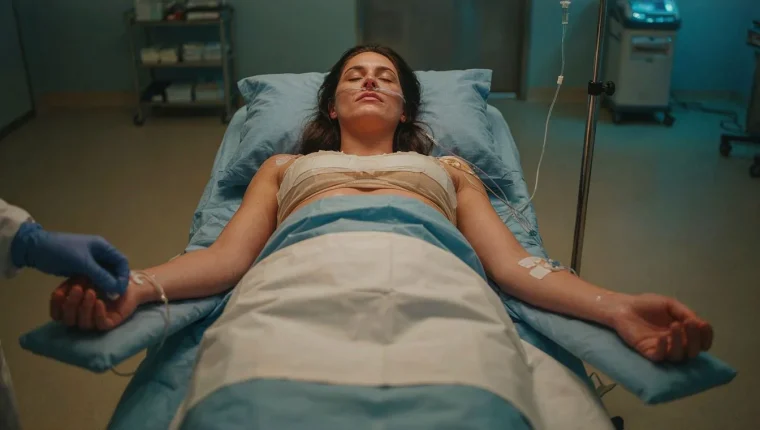
Most patients want to know one thing: when will the breast reduction results actually be visible? The timeline has stages, and each one feels different in the mirror. Swelling changes shape week to week, incisions settle into their final form over months, and scars continue to refine well past the first anniversary. Understanding this arc helps you assess your progress realistically instead of comparing day ten to someone else’s month six.
Early Signs of Healing After Surgery

The first week after surgery is often the most surprising, because your body is doing a lot of quiet work beneath the bandages. Most patients notice small but meaningful shifts: swelling starts to settle, bruising changes color, and the tightness around the incisions slowly softens. These are the earliest signs that healing has actually begun.
Around day three to five, many people feel a gentle reduction in the deep, heavy ache that followed the procedure. Dressings are usually checked or changed during this window, and your surgeon will confirm that the incision lines are calm, clean, and closed. Mild tingling or itching near the scars is a normal part of nerve recovery, not a setback.
By the end of the first week, you’ll likely see the initial reduction in breast volume — even though the final contour is still hidden by post-operative swelling. Movement becomes easier, sleep improves when you’re properly propped up, and small everyday tasks stop feeling like a challenge. None of this means you’re healed, but it does mean the body is on track.
First Month: What Changes Become Noticeable
Around week three, something subtle starts shifting. Most patients stop checking the mirror every hour and begin noticing changes in how their body actually feels day to day. Swelling is still part of the picture, but it behaves differently now than it did during the first week. Instead of feeling tight and uniform across the chest, the swelling softens unevenly, which makes the breast contour look a little lopsided at first. That uneven settling is normal and tends to balance out as the surrounding tissue relaxes.
By the end of the first month, several changes are usually visible enough to read at a glance, and patients often describe them as the first real signal that the new shape is settling in.
- The initial drop in breast volume from surgery becomes more defined, since swelling no longer masks the reduction.
- Nipple sensitivity often returns to a more predictable pattern, even if some numbness along the lower breast crease lingers.
- Incision lines start to flatten and lose their deep red tone, though they are still firm to the touch.
- Bruising fades almost completely, replaced by a mild yellowish tint that disappears within days.
- Light exercise, such as walking or gentle stretching, is generally comfortable again, giving a clearer sense of how the new size moves with the body.
One detail worth watching during this stage is how the incision lines mature. They may look slightly raised or feel thicker than the surrounding skin, and that firmness usually softens gradually over the following months. The first month is really a checkpoint for healing quality rather than a preview of the final contour, so it helps to judge progress by comfort, scar behavior, and the steadier volume change rather than by symmetry alone.
Three to Six Months: Reductions Become More Visible
Somewhere between the third and sixth month, the shape you’ve been waiting for starts to behave like the final result rather than a work in progress. Swelling that lingered around the lower pole and lateral edges finally settles, and the breast begins to feel less like “healing tissue” and more like your own. Most women describe this window as the moment they stop thinking about their chest daily and simply start living in it.
The scar maturation process is also in full swing here. The early pink, slightly raised incision lines flatten, lighten, and fade toward your natural skin tone. Gentle scar care—silicone sheets, massage once cleared by your surgeon, and strict sun protection—starts paying visible dividends during these months. The pattern of your scars becomes predictable, which makes them far easier to disguise under clothing or swimwear.
By the six-month mark, the new volume, the nipple position, and the overall symmetry have usually reached a stable plateau. Breasts respond naturally to movement, posture, and gravity again, and any minor asymmetry that remains is generally something only you would notice in the mirror. This is the stage where patients typically schedule their final follow-up photo and feel confident the changes are theirs to keep.
Long-Term Results and Final Shape
By the time a full year has passed, your breasts have usually settled into what most surgeons consider the final contour. The tissue feels softer, the upper pole fullness looks balanced with the lower curve, and any residual swelling from the early months is long gone. Scars will continue to fade beyond this point, but the size and projection you see around the twelve-month mark are essentially permanent.
One detail patients often overlook is that small asymmetries, a slightly different nipple height or a minor difference in volume between the two sides, can persist even after a technically flawless procedure. Breasts are naturally sisters, not twins, and a tiny degree of asymmetry is within the range of a normal, healthy outcome rather than a sign of trouble.
Long-term satisfaction also depends on habits that have nothing to do with the operating room. Stable weight, good posture, and a well-fitted supportive bra help preserve the new shape for years, while significant weight fluctuations or pregnancy can gradually alter the result.
The emotional side of reaching this stage is worth naming: many people describe a quiet sense of arrival, where the reflection finally matches the picture they held in their mind before ever walking into a consultation.
Factors That Influence Your Personal Timeline
Even when two patients follow nearly identical surgical plans, the way their bodies respond afterward rarely unfolds on the same clock. Understanding individual healing variability helps explain why one person might feel “settled” by month four while another still notices subtle shifts a year later.
- Age and skin quality: Younger skin with stronger elasticity tends to bounce back and redrape more predictably, while mature skin may take longer to settle into the new contour.
- Tissue density and breast composition: Heavier, glandular-dominant breasts place more mechanical stress on incisions, which can extend the early phase of reshaping.
- Surgical technique and incision pattern: The placement and length of incisions directly affect how much tension sits along healing lines, influencing scar maturation timelines.
- Lifestyle factors: Smoking, nutrition, sleep quality, and physical activity all modify circulation and collagen remodeling, accelerating or slowing each visible stage.
- Adherence to aftercare: Consistent compression garment use, scar care, and follow-up appointments shape how smoothly each phase transitions into the next.
Each of these elements does not operate in isolation; instead, they layer onto one another in ways that are difficult to separate after the fact. A younger patient who smokes, for example, may heal more like an older nonsmoker, while excellent nutrition and strict aftercare can meaningfully soften the slower tendencies of mature skin. Recognizing this overlap helps remove the frustration that often comes with comparing one recovery to another, since the variables described above are rarely distributed evenly between any two people. When the influence of age, tissue characteristics, surgical technique, lifestyle, and aftercare is understood as a combined force rather than a checklist, the timeline begins to read less like a countdown and more like a gradual unfolding shaped by personal circumstance.
Rather than comparing your progress to someone else’s story, it is more useful to track changes against your own baseline. Keeping dated photos and noting how clothing fits across the weeks gives you a far clearer picture of how these variables are quietly working together, and when it is reasonable to expect your final shape to feel truly your own.
When to Contact Your Surgeon About Concerns

Even with a smooth recovery, there are moments when something simply does not feel right, and that is exactly when reaching out matters most. Persistent or worsening pain that does not respond to prescribed medication, swelling that grows heavier on one side rather than easing day by day, drainage that turns cloudy or develops an odor, and any sudden change in breast shape or color all deserve a prompt call. A fever above 101.5°F, chills, or a feeling of general unease can also point to an issue that benefits from early attention.
Visible concerns are easier to judge, but subtle shifts matter too. If you notice a developing firmness under the incision, skin that feels unusually warm, or one breast sitting noticeably higher than the other after the first few weeks, these are reasonable triggers to contact your surgeon’s office. Many practices have after-hours lines for exactly this reason, and a quick conversation can save you days of worry. Open communication with your surgical team remains one of the most reliable parts of a safe and confident recovery.
FAQs
When can you expect to see the initial breast reduction results after surgery?
You'll notice an immediate change in breast size right after surgery, though swelling and bruising can temporarily mask the final shape. Most patients see a clear, settled preview of their results within about 4 to 6 weeks as the swelling subsides. The final contour typically refines over the next several months as the tissues fully settle.
How long does swelling typically last before the final breast reduction results become visible?
Most patients notice swelling go down significantly within the first six to eight weeks, but it can take three to six months for the tissues to fully settle and the final breast reduction results to appear. Your breasts will continue to refine subtly for up to a year as residual swelling resolves and scars mature, so patience is key during this stage of recovery.
Will the breast reduction results timeline change if you combine the procedure with a lift?
Combining a lift with your reduction can actually shift your results timeline a bit. You may notice your new shape and position earlier because the lift addresses sagging right away, but full refinement, scar maturation, and settling still follow the usual reduction healing stages. Expect the first several weeks for swelling to fade, a few months for shape to stabilize, and up to a year for scars to soften.