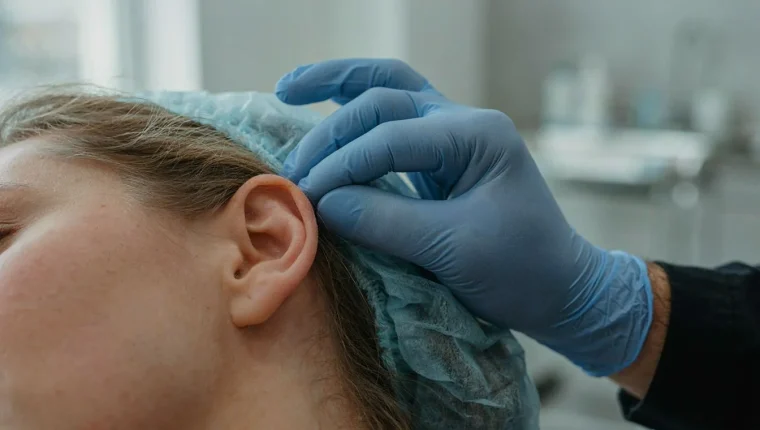
Watching your ears heal after otoplasty can be unsettling. One side looks puffier, your skin feels tight, and numbness sets in, leaving you wondering whether this is normal or worth calling your surgeon about. That uncertainty is why most patients ask about otoplasty side effects in the first weeks.
The good news: the majority of what you’ll experience — swelling, bruising, soreness, and temporary numbness — follows a predictable pattern and is a normal part of recovery. The skill lies in telling the difference between routine healing and the few red flags that genuinely need attention, such as signs of infection or asymmetry that doesn’t settle over time.
This guide walks you through what typical healing actually looks like, day by day and week by week, and points out the warning signs that should never be ignored — so you can recover with confidence instead of constant worry.
Understanding Otoplasty Side Effects: What Is Normal?
Otoplasty works directly on cartilage and skin, which means the body responds exactly as it would to any surgical reshaping: with a predictable inflammatory healing response. This is not a sign that something has gone wrong — it is the mechanism by which tissue repairs itself. Blood flow increases to the treated area, immune cells arrive to clean and rebuild, and the visible result is the swelling, bruising, and tenderness that most patients notice in the first days.
What makes recovery feel confusing is that the same ear can show very different levels of each. Healing varies with age, skin thickness, overall health, and even the surgical technique used, whether cartilage was sculpted, folded, or repositioned with sutures. A slightly slower or more dramatic response in one person is not automatically a complication in another.
The practical way to judge your own recovery is to look at direction rather than intensity. Normal signs follow a pattern: they peak early, then gradually ease over days and weeks. Problems, by contrast, tend to move the opposite way — pain that climbs instead of fades, redness that spreads, or drainage that appears late. Later sections walk through each symptom in detail so you can measure your healing against clear, specific expectations.
Swelling and Bruising in the First Days After Surgery
Swelling after ear surgery is often more dramatic than patients expect, and there’s a good reason for it. The skin over the ear cartilage is thin, the tissue is firm and doesn’t compress easily, and sleeping on your side or lying flat during the first nights directs extra fluid to the area. The result is usually the most pronounced swelling within the first 48 to 72 hours, making the ears look larger, pushed forward, or uneven — a picture that surprises many people who weren’t warned about it.
Expect a fairly predictable rhythm: swelling peaks around day two or three, then gradually softens over the following week. A quirk worth knowing is that swelling often looks worse in the morning, because fluid that drained away overnight while you were lying down reaccumulates in the area when you get up and move around.
Bruising can behave in ways that look alarming but aren’t. It commonly appears as bluish discoloration behind the ear and may spread downward toward the neck or jawline over the first few days. This drifting discoloration is common and simply reflects gravity, not a complication.
Your best comfort tools are simple: sleep with your head elevated on two or three pillows, avoid bending over, and apply cold compresses exactly as your surgeon directs — placed around, never directly on, the ears.
Pain and Discomfort: What to Expect and When to Worry
Most people describe the discomfort after otoplasty not as sharp pain, but as a deep soreness and throbbing sensation around the ears, often combined with a feeling of tightness from the bandage wrapped around the head. This is typically at its strongest during the first two to three days, then steadily eases over the first week. By the time the head dressing comes off, most patients find they need little more than mild pain relief, if anything at all.
Your prescribed pain medication plays an important role here, and it works best when taken as directed rather than waiting until the pain becomes intense. Keep in mind that the pressure from the headband or dressing can itself contribute to the aching feeling, so discomfort in the early days doesn’t automatically mean something is wrong.
The line worth remembering is this: pain that is severe, sudden, or clearly worse on one side, especially when it escalates instead of improving day by day, deserves a call to your surgeon. Trust the overall trend — steady improvement is the expected pattern, and any significant departure from it should prompt a quick conversation with your clinic.
Numbness and Tingling Sensations During Recovery
Many patients are surprised to notice that their ears feel distant or rubbery in the weeks after surgery. This happens because small sensory nerves in the skin are gently disturbed during the dissection, and they temporarily stop sending normal signals to the brain. It is an expected part of healing, not a sign that something has gone wrong.
What often follows is even more reassuring: as the nerves wake up, you may notice tingling, itching, or “pins and needles” around the ear. These odd sensations are actually positive signals — they show that nerve function is returning.
For most people, sensation returns gradually, starting at the edges of the ear and moving inward. Full feeling typically comes back over several weeks to a few months, though some areas may stay slightly dulled for longer, especially where the cartilage was reshaped most.
If an area remains completely numb after several months with no change at all, simply mention it at your follow-up visit. Persistent altered sensation is rarely serious, but your surgeon can examine it and put your mind at ease.
Recognizing Signs of Infection After Ear Surgery
Most healing ears look a little angry in the first week, but infection has a different character — it tends to get worse instead of better. The clearest warning sign is increasing pain, redness, and warmth that keeps spreading after the third or fourth day, rather than gradually calming down. Normal healing brings mild pinkness right along the incision lines; infection brings redness that expands into the surrounding skin and often feels hot to the touch.
Other signs deserve immediate attention. Any discharge that is yellow, green, or has a foul odor is not part of normal healing. A fever above 38°C (100.4°F), chills, or a general feeling of being unwell suggests the body is fighting something more than a healing wound. Swelling that suddenly worsens after it had already started to improve is another red flag.
Ear infections matter more than they might seem. Because otoplasty works on cartilage, an untreated infection can damage the cartilage itself and permanently affect the shape of the ear. This is not something to monitor at home for a few days first.
If you notice any of these signs, contact your surgeon the same day — ideally, the surgical team you trust. They can examine the ear, start appropriate treatment if needed, and protect both your result and your recovery.
Scarring: Normal Healing vs. Complications
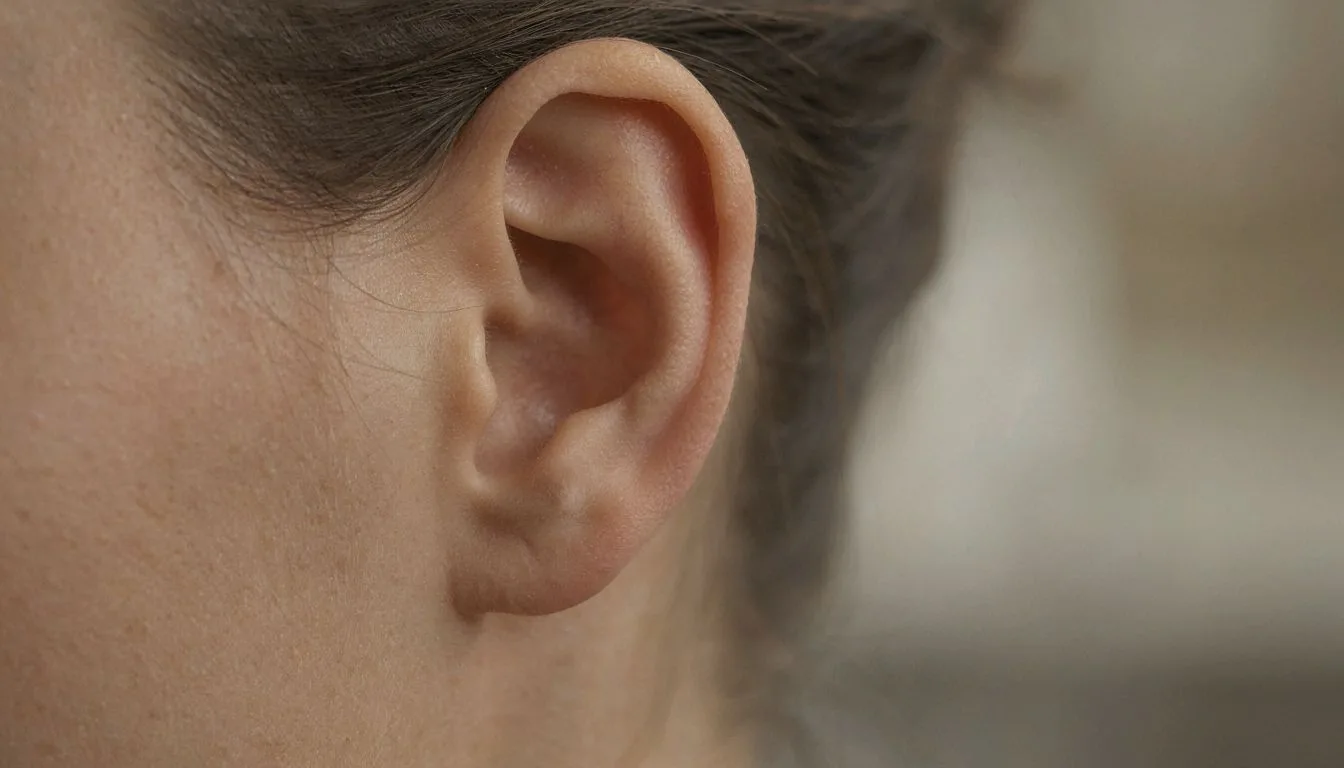
Otoplasty incisions are deliberately placed where they are hardest to see — usually in the crease behind the ear or along its natural fold. Because of this, most scars remain discreet even shortly after surgery, and for many patients they are practically invisible once healed.
Every scar goes through a predictable maturation process. In the first weeks, the incision line typically looks red, slightly raised, and firmer than the surrounding skin. Over the following three to six months, it gradually fades to a paler tone, softens, and flattens. This shift from angry pink to a quiet, thin line is a sign of healthy healing, not a problem.
Certain features, however, suggest that a scar is not settling as it should. A scar that keeps growing well beyond the original incision, becomes increasingly raised and ropey, or is persistently itchy and tender may indicate abnormal scarring such as hypertrophic scarring. Some people carry a higher tendency toward keloids — scars that spread beyond the wound itself — particularly those with darker skin tones or a personal or family history of keloid formation. If you have this history, mention it before surgery; surgeons can adjust their technique and aftercare accordingly.
Early attention matters. Silicone gels, tapes, or a short course of scar treatment started once the incision has closed can significantly improve the final appearance, so raise any concerns during your follow-up visits rather than waiting.
When Asymmetry Is Temporary and When It Needs Correction

Noticing that one ear sits differently than the other in the mirror can be the most unsettling moment of the entire recovery — often more distressing than the swelling or soreness itself. The reassuring truth is that early asymmetry is nearly universal. Each ear swells at its own pace, sutures may hold tension unevenly in the first weeks, and one side simply tends to heal faster than the other. What you see at week two is not the final result.
Surgeons consistently advise waiting before drawing conclusions. Most recommend judging the final ear position only after the full maturation of swelling and scar tissue, which typically takes three to six months. During this window, a subtle difference between the ears often settles on its own as inflammation resolves and tissues soften.
Some patterns suggest a structural cause rather than normal healing. A difference that stays obvious and unchanged after several months, one ear sitting noticeably higher or flaring distinctly further from the head, or a visible contour irregularity that persists once swelling has fully gone — these are worth mentioning at a follow-up appointment.
If a lasting correction is genuinely needed, a small revision procedure is possible. It’s a calm, straightforward option — not a likely outcome, and not something to worry about during the early healing months.
FAQs
How long do swelling and bruising last after otoplasty?
Swelling and bruising after otoplasty typically peak within the first 2 to 3 days and then gradually improve. Most bruising fades noticeably by the end of the first or second week, while residual swelling can take 4 to 6 weeks to fully subside. Mild firmness or subtle swelling may persist for a few months, but this usually goes unnoticed by others. Sleeping with your head elevated during the first week helps speed up recovery.
When should ear numbness after surgery become a concern?
Ear numbness after surgery is usually temporary and nothing to worry about, but contact your doctor if it lasts beyond several weeks, worsens instead of gradually improving, or comes with pain, redness, swelling, or discharge at the surgical site. You should also seek prompt medical attention if the numbness spreads, affects your face beyond the surgical area, or appears suddenly alongside weakness or difficulty speaking, as these can signal a more serious problem. In most cases, however, lingering numbness simply reflects irritated or healing nerves and typically resolves on its own over weeks to months.
Is mild asymmetry in ear position a normal part of healing?
Yes, mild asymmetry in ear position is a normal part of healing. Swelling, tissue tightness, and uneven healing rates on each side commonly cause one ear to sit slightly higher or project more than the other in the early weeks after otoplasty. In most cases, this settles as swelling subsides and tissues soften over the following months. Significant asymmetry that persists after full healing is uncommon, so if you notice a pronounced difference, your surgeon can evaluate it during follow-up visits.