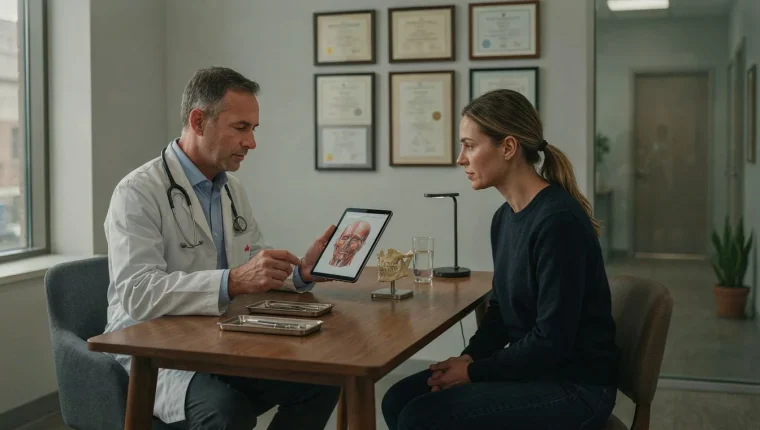
If you’re a Canadian considering chin augmentation in Turkey, you’re likely weighing a real decision, not chasing a trend. Turkey has become a destination for facial procedures, and Canadians are increasingly asking whether the savings justify the travel. The answer depends on your goals, budget, and how much risk you’re willing to manage.
This guide is written for Canadians specifically. We’ll look at what actually drives people to book abroad, how costs really compare once flights and follow-ups are counted, and where chin implants and fillers differ in practice. You’ll also get a clear checklist for verifying surgeons and clinics, a realistic picture of recovery, and the risks that matter more when you’re flying home afterward.
By the end, you should know whether Turkey fits your situation, and what questions to ask before you commit.
Why Canadians Consider Turkey for Chin Augmentation

Canadians who start researching chin surgery abroad usually arrive at the same set of questions from two directions at once: what will this cost, and how long will I have to wait if I stay home? Both pressures are real, and together they explain much of the interest in travelling to Turkey.
Cost sensitivity sits at the centre of most decisions. Canadian patients often describe a gap between what they are quoted locally and what they see advertised by Turkish clinics, and that gap is wide enough to make the trip worth investigating. Price transparency matters too. Many Turkish providers publish package structures that bundle consultation, the procedure itself, and short-term follow-up, which makes budgeting easier than chasing separate invoices. Whether those packages represent genuine value depends on what is included, so the figures deserve a closer look before any commitment.
Access plays an equally important role. Wait times and referral pathways in Canada can stretch a straightforward aesthetic consultation into a months-long process, and some patients find that general practitioners are reluctant to refer for procedures they consider elective. Turkey’s high-volume aesthetic clinics, by contrast, tend to schedule quickly and handle a large number of similar cases each month. That volume can translate into familiarity with a narrow set of techniques, though it says nothing on its own about quality.
The third driver is practical: combining surgery with travel. Recovery time doubles as time away, and medical travel packages often fold accommodation and transfers into one arrangement. For Canadians already comfortable with long-haul trips, the logistics feel manageable rather than exotic.
Typical Costs in Turkey Compared to Canadian Clinics
Comparing headline prices between a Turkish and a Canadian clinic is where most cost research goes wrong. The number you see advertised is rarely the number you pay, because the true cost of chin augmentation is the sum of several separate line items, and providers in each country bundle them differently. A Canadian quote may fold anesthesia and facility fees into one surgical price, while a Turkish package may separate them or include them alongside transfers and hotel nights. Until you see the same components itemized on both sides, a savings estimate is guesswork.
Ask each provider for a written, itemized quote covering every component below. Currency matters too: Turkish clinics often quote in euros or US dollars, so confirm which currency applies, how the deposit is taken, and what the refund policy is if your plans change. Add flights, accommodation, and unpaid time off work to both columns before you judge the gap.
| Cost component | What to confirm from each provider |
|---|---|
| Surgeon fee | Whether the operating surgeon’s fee is quoted separately or bundled |
| Anesthesia | Included or billed separately; type of anesthesia used |
| Facility / hospital fees | Operating room, overnight stay, and nursing care |
| Implant or filler material | Implant brand and type, or filler product and volume per session |
| Follow-up visits | How many are included, and whether remote check-ins count |
| Travel and accommodation | Flights, hotel nights, and local transfers |
| Time off work | Unpaid leave tied to recovery and travel days |
| Currency, deposit, refunds | Quoted currency, deposit amount, and cancellation terms |
Two components deserve extra attention. Filler costs recur, since results fade and repeat sessions are needed, whereas an implant is a one-time surgical expense. And any quote that excludes revision or complication care understates the real total, so ask explicitly what happens financially if a second procedure is required.
How Chin Implant and Filler Procedures Differ in Turkey

When Canadians picture chin augmentation, they often imagine a single procedure. In practice, Turkish clinics offer two distinct routes: surgical chin implants and injectable dermal fillers. They differ in almost every practical dimension, from how the procedure is performed to how long results last.
A chin implant is a surgical procedure. It requires an operating room, anesthesia, and a small incision, usually inside the mouth or beneath the chin. The implant is fixed to the jawbone to add projection and definition, and results are permanent or very long-lasting. Because it is surgery, the decision is essentially a commitment: reversing or resizing an implant means a second operation.
Chin fillers work differently. A hyaluronic acid gel is injected in an office setting, typically in under an hour, with no anesthesia beyond a topical numbing cream. Results appear immediately and last roughly six to eighteen months, depending on the product and the patient’s metabolism. Fillers are reversible, since the gel can be dissolved, and repeat sessions are needed to maintain the look.
Turkish clinics generally present implants as the choice for patients wanting a permanent change and fillers as a lower-commitment option for testing a new profile or correcting mild recession. Recovery timelines and complication profiles for each are covered later in this article.
Evaluating Surgeon Credentials and Clinic Standards
Marketing materials from Turkish clinics can look polished and nearly identical, which makes independent verification the only reliable way to judge a surgeon. Instead of trusting a website’s claims, you can confirm credentials through official registries and ask questions that reveal how involved the surgeon actually is in your care.
The most important step is confirming the surgeon holds valid medical board registration and specialty training in plastic, reconstructive, or maxillofacial surgery. General practitioners occasionally advertise cosmetic procedures, so matching the doctor’s registered specialty to your procedure matters. A video consultation lets you ask directly who will perform the operation, how many similar cases they handle each year, and what hospital privileges they hold for emergencies.
- Medical board registration: Cross-check the surgeon’s license through Turkey’s official physician registry rather than relying on clinic brochures.
- Facility accreditation: Confirm the clinic or hospital holds recognized accreditation and has qualified anesthesia oversight on site.
- Photo authenticity: Request unedited before-and-after images tied to real case files, and be cautious of stock or heavily filtered results.
- Case volume: Ask how many chin procedures the surgeon performs monthly and whether they specialize in facial surgery.
- Direct access: Use a video consult to confirm the operating surgeon is the same person you speak with beforehand.
Written answers to these questions, saved before you book, give you a clear record to compare against what happens on arrival. If a clinic avoids specifics about registration numbers or who holds the scalpel, that hesitation itself is useful information.
What the Recovery Timeline Looks Like After Surgery
Healing after chin surgery follows a fairly predictable arc, though the pace varies with the technique and your own body. In the immediate post-op period, expect noticeable swelling, bruising, and a tight or numb feeling around the chin and lower lip. Most surgeons ask you to sleep with your head elevated, avoid strenuous activity, and stick to cold, soft foods for the first few days. Discomfort is usually manageable with prescribed medication, and many patients feel presentable enough to leave their accommodation within two or three days.
Through the early weeks, sutures or dressings come out, and the swelling begins to settle. A soft diet remains sensible while the area is tender, and most people feel ready to return to desk-based work after about a week, though visible puffiness lingers. Bruising tends to fade within ten to fourteen days. Light activity can resume gradually, but contact sports and heavy lifting should wait until your surgeon clears you.
Most of the swelling resolves over four to six weeks, and the final contour becomes visible around the three-month mark, with subtle refinement continuing for up to a year. Filler recovery is far shorter by comparison: some redness and mild swelling settle within days, and normal activity resumes almost immediately, though results are temporary.
Risks, Complications, and Revision Considerations for Canadian Patients
Any operation carries risk, and chin surgery is no exception. For Canadians traveling to Turkey, the more pressing concern is often not the procedure itself but what happens if something goes wrong far from home. Understanding the realistic complication profile helps you weigh whether the savings justify the added complexity.
The most frequently reported issues after chin implant placement include infection, asymmetry, and implant displacement, where the implant shifts from its intended position. Filler treatments carry their own risks, particularly migration of product away from the injection site and, in rare cases, vascular occlusion. Revision rates vary widely by surgeon and technique, and the practical difficulty of arranging a revision is where traveling patients feel the squeeze most acutely. A revision abroad means another flight, another recovery period, and often another full fee. A revision at home means finding a Canadian surgeon willing to operate on another provider’s work, which many are hesitant to do and which typically costs more than the original procedure.
Travel itself adds risk layers: long-haul flights raise clot risk during the post-operative window, and crowded airports or clinics increase infection exposure. If a problem emerges after you return to Canada, your local follow-up options are limited, and your provincial health plan will not cover complications from elective surgery performed abroad. Legal recourse against a Turkish provider is difficult to pursue from Canada, and most travel insurance policies exclude elective cosmetic procedures. These constraints do not make surgery in Turkey unreasonable, but they do mean the margin for error is thinner than it would be at home.
Planning Travel, Accommodation, and Follow-Up Care
Booking a flight and a hotel is the easy part. The harder question is how long you should actually stay in Turkey, because leaving too early can undermine the result you paid for. Most surgeons prefer that patients remain in the city until the first post-operative review, when swelling has begun to settle and the incision or injection sites can be checked in person. For implant surgery, that usually means staying roughly seven to ten days; for fillers, a shorter window of three to four days is often enough. Build your itinerary around that medical milestone rather than around cheaper airfare.
A workable trip plan tends to follow the same structure:
- Length of stay: Confirm the minimum number of nights your surgeon requires before you book anything, and add a buffer day in case the pre-departure check is moved.
- Accommodation: Choose a hotel within walking distance of the clinic or on a direct transport route, ideally with room service and a lift.
- Transport after sedation: Arrange a private transfer or a companion for the ride back from the procedure; do not plan to take public transit alone.
- Pre-departure check: Schedule this before your flight and ask for written clearance to travel.
- Follow-up at home: Line up a Canadian physician or nurse who can inspect the site and, if needed, remove sutures.
- Documents to carry: Operative notes, implant or filler brand and lot details, medication instructions, and emergency contacts.
That paperwork matters more than most patients expect. If a Canadian clinician later needs to assess asymmetry, infection, or implant displacement, having the exact product name and surgical record on hand speeds up the assessment considerably. Keep digital and printed copies, and store your surgeon’s direct contact in your phone before you fly home.
FAQs
How much can Canadians typically save on chin augmentation in Turkey compared to prices at home?
Canadians typically save between 50% and 70% on chin augmentation in Turkey compared to domestic prices, since a procedure that costs roughly CAD 4,000 to 8,000 at home often runs about CAD 1,500 to 3,000 in Turkey. These figures vary with surgeon reputation, implant type, and whether the procedure is combined with other facial surgeries.
Does chin augmentation Turkey for Canadians require a longer stay because of travel and recovery time?
Canadians typically need to plan a longer stay in Turkey for chin augmentation than local patients, mainly because of travel and recovery logistics rather than the procedure itself. Most surgeons advise staying in Turkey for about 7 to 10 days after surgery so that initial swelling subsides and a follow-up check can be done before flying. Long-haul flights of 10 hours or more also raise the risk of blood clots and pressure on healing tissues, so many clinics recommend waiting at least 7 to 10 days before the return flight and avoiding strenuous activity for several weeks after getting home.
How do Canadians verify that a Turkish clinic performing chin augmentation is properly accredited?
Canadians can verify a Turkish clinic's accreditation by checking whether it holds a valid health tourism authorization certificate issued by the Turkish Ministry of Health, which maintains a public list of licensed facilities. They should also confirm that the operating surgeon is registered with the Turkish Medical Association and holds relevant board certification in plastic, reconstructive, or aesthetic surgery. Cross-referencing the clinic with internationally recognized accrediting bodies such as JCI or ISO, and requesting documentation directly from the clinic, provides additional confirmation.