
Feeling self-conscious before or after a hair transplant is more common than many people expect. You may worry that others will notice the shaved donor area, redness, swelling, or early shedding, especially at work or in social situations. These concerns can make you avoid photos, gatherings, or conversations, even when the recovery is progressing normally. Understanding what people are likely to see and what they usually do not notice can make the process feel more manageable. Learn practical ways to handle hair transplant social anxiety, prepare for questions, and protect your confidence during recovery. You will also learn how FUE or DHI healing, graft placement, temporary changes in hair density, and clear communication with your clinic can affect your comfort in public.
Understanding Why Hair Transplant Social Anxiety Happens
Feeling anxious after a hair transplant often comes from uncertainty rather than the procedure itself. Changes in appearance, temporary swelling, visible scabs, and uneven early growth can make you wonder how other people will react. Because hair is closely linked with identity and confidence, even a small change around the hairline may feel highly noticeable to you, although others may pay far less attention.
Uncertainty during recovery is a common trigger. You may not know when the recipient area will look natural, whether shedding is expected, or how long redness will last. Early transplant results can also appear uneven because implanted grafts develop gradually. This temporary stage does not necessarily indicate a poor outcome, but comparing your appearance with polished online photos can increase worry and self-consciousness.
Social concerns may also reflect previous experiences with hair loss. Teasing, unwanted comments, or years of avoiding photographs can create habits of checking mirrors, hiding the scalp, or assuming that people are looking at it. These reactions can continue even after treatment and may amplify normal recovery changes.
It can help to separate medical concerns from appearance-related fears. Contact your clinic if you notice symptoms such as worsening pain, spreading redness, fever, or unusual discharge. For ordinary questions about shedding, scabbing, or hair density, following your surgeon’s aftercare guidance can provide a more realistic sense of what to expect and reduce unnecessary worry.
Planning Your Procedure With Confidence
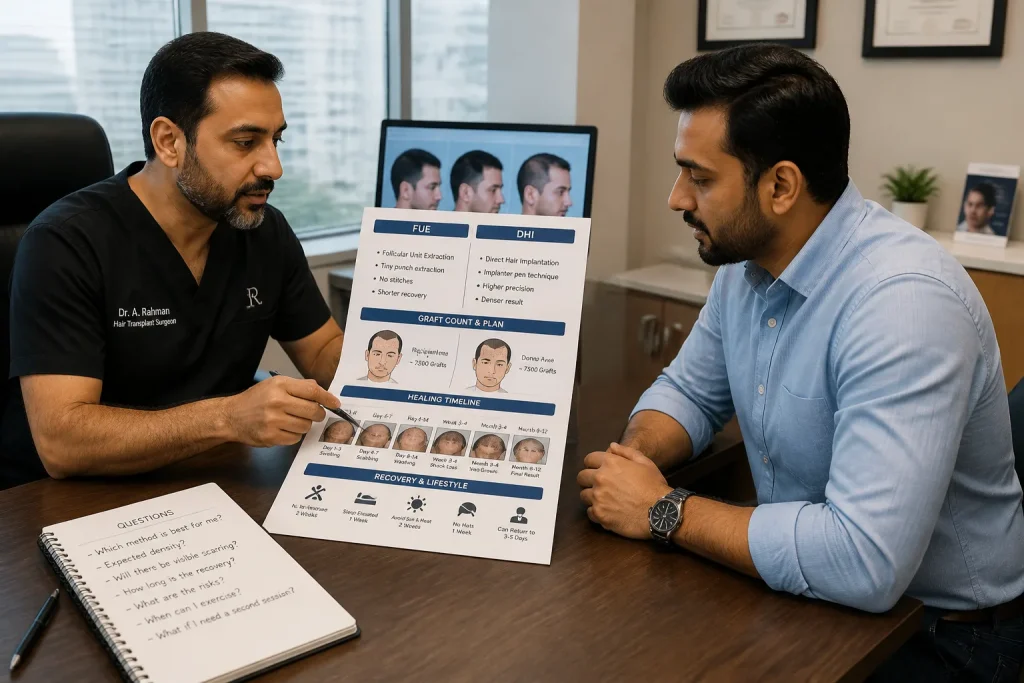
Confidence often begins before the appointment. A clear consultation can replace vague fears with practical expectations about the treatment plan, healing process, and likely timeline. Ask the surgeon to explain whether FUE, DHI, or another approach is appropriate, how many grafts may be needed, and how the donor and recipient areas will be managed.
Prepare specific questions in advance, especially if appearance at work or around family is a concern. Discuss swelling, scabbing, temporary redness, washing instructions, exercise restrictions, and when you can comfortably return to normal social activities. Understanding these details helps you make realistic arrangements rather than imagining the most noticeable outcome.
Choosing a qualified, transparent clinic also supports better decision-making. Look for appropriate medical credentials, consistent before-and-after photographs, and a consultation that addresses your individual hair loss pattern instead of promising guaranteed density. You should feel comfortable asking who performs each stage of the procedure and how follow-up care is provided.
A personalized recovery timeline is one of the most useful planning tools. Your surgeon can explain when grafts are secure, when visible signs usually settle, and when temporary shedding or uneven growth may occur. Schedule the procedure during a period with manageable commitments, arrange transport if sedation or discomfort is expected, and keep prescribed aftercare supplies ready at home.
If anxiety remains high, tell the clinical team before treatment. They may clarify misconceptions, adjust communication, or recommend discussing emotional concerns with a healthcare professional. Feeling prepared does not require knowing exactly how every day will look; it means having reliable information and a plan for questions that arise.
Managing Visibility During Recovery

Being visible during the early recovery period can feel uncomfortable, especially if swelling, redness, scabbing, or a closely trimmed donor area makes the procedure noticeable. Planning how you will handle everyday exposure can reduce self-consciousness without forcing you to avoid work, friends, or normal activities.
Your clinic’s aftercare instructions should guide decisions about hats, washing, exercise, and returning to public settings. A loose, clean covering may be allowed in some cases, but pressure, friction, and unsuitable materials can disturb newly placed grafts. Ask your surgeon when each option is safe for your specific procedure and recipient area.
- Choose low-pressure headwear: If approved by your clinic, select a loose, breathable hat that does not rub against grafts or require tight adjustment.
- Schedule strategically: Allow extra private time after the procedure if your work or social commitments would make visible swelling or scabbing stressful.
- Follow gentle hygiene: Wash and handle the scalp exactly as instructed rather than trying to conceal flakes or crusts through vigorous cleaning.
- Protect the donor area: Keep the back and sides of the scalp protected from unnecessary friction while these sites heal.
Temporary changes can appear more noticeable to you because you are monitoring them closely. Most observers may not know what they are seeing, and you do not have to explain your appearance before you feel ready. If redness, pain, swelling, bleeding, or discharge seems unusual, contact your clinic instead of attempting cosmetic concealment.
Explaining Your Hair Restoration to Others

Deciding what to tell people about your hair restoration is a personal choice. You are not required to announce the procedure, explain every detail, or answer questions before you feel ready. A short, calm explanation can help you stay in control while reducing awkwardness during recovery.
For trusted friends, family members, or close colleagues, you might say that you had a hair transplant and are following a temporary aftercare plan. Explain that redness, scabbing, swelling, or visible changes can occur while the recipient and donor areas heal. Setting expectations in advance may prevent unnecessary concern and gives others a respectful way to support you.
For casual acquaintances, a simpler response is usually enough. You can mention that you are having a minor cosmetic treatment or dealing with a routine scalp recovery. If someone asks intrusive questions, try saying, “I appreciate your concern, but I would rather not discuss it.” Rehearsing this response can make social situations feel less stressful.
Privacy boundaries are especially useful at work or in environments where appearance is frequently discussed. Share information only with people who genuinely need to know, such as a manager if you require time away or temporary adjustments. Your clinic can also advise you about realistic recovery milestones, appropriate wording, and when visible activity should be discussed with others.
Building Confidence as New Hair Growth Develops

As new hair begins to emerge, confidence often returns gradually rather than all at once. Early growth can look uneven, fine, or patchy, and the transplanted area may not immediately resemble the final result. Understanding this normal progression can reduce self-consciousness and help you judge changes over time instead of focusing on daily fluctuations.
Hair follicles typically enter different growth phases, so some grafts may produce visible strands before others. Temporary shedding can also occur after transplantation, followed by slower regrowth during the months that follow. Taking photographs under similar lighting and at consistent intervals can provide a more accurate view of progress than checking the recipient area repeatedly in the mirror.
Realistic expectations are central to rebuilding social confidence. New hair growth usually develops gradually, and density may continue improving for many months. Your surgeon can explain what is appropriate for your procedure, whether you had FUE, DHI, or another hair restoration technique, and how your donor area and recipient area are expected to change.
During this stage, continue prescribed aftercare and attend follow-up appointments, even if progress feels slow. If you notice unusual pain, spreading redness, significant swelling, or other unexpected symptoms, contact your clinic rather than relying on online comparisons. Confidence can also grow through small, practical choices: return to social activities at your own pace, style the existing hair gently, and focus on comfort rather than concealing every visible change.
FAQs
Will people notice my hair transplant immediately?
Most people will notice some redness, swelling, scabbing, or closely trimmed hair in the first few days after a hair transplant, especially in the recipient and donor areas. These temporary signs usually improve during recovery, and the transplanted hair follicles typically begin producing visible new growth after several months. Following your clinic’s aftercare instructions can help the scalp heal discreetly.
How can I hide signs of recovery at work?
You cannot always hide signs of recovery, so plan honestly and follow your surgeon’s aftercare instructions. Wear approved loose-fitting headwear only if permitted, avoid touching or scratching the recipient area, and schedule the procedure when you can take enough time off. If coworkers ask, a simple explanation such as a minor medical procedure is usually sufficient; contact your clinic if swelling, bleeding, or redness seems unusual.
When should I talk to friends about my procedure?
Talk to close friends when you feel emotionally and physically ready, often after the procedure and any initial recovery period. Share only what you are comfortable discussing, and explain that temporary swelling, bruising, shedding, or changes in appearance may occur depending on the treatment. If you need practical or emotional support, consider telling a trusted friend before the procedure so they can help during recovery.