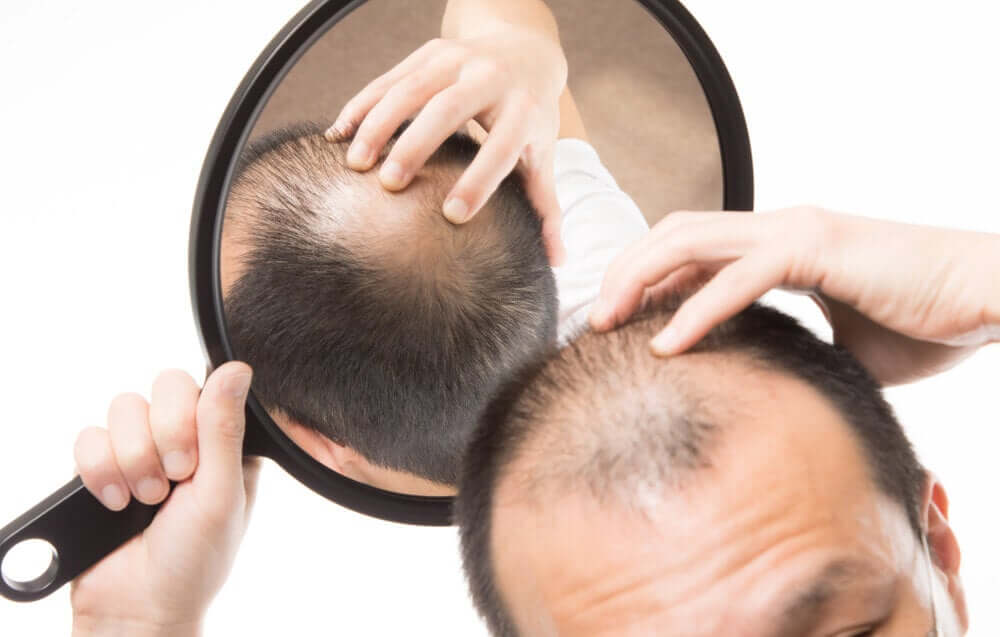
Deciding when to consider a hair transplant depends on more than age or the amount of hair already lost. The more useful questions are whether the cause of hair loss has been identified, whether your expectations are realistic, and whether a long-term restoration plan is possible. Some people may benefit from an evaluation while their thinning is manageable, while others may need to stabilize ongoing loss or explore medical treatment first. A transplant may not be suitable for every pattern of hair loss, and the quality of the donor area also matters. Several factors can help you decide whether to seek professional advice, but they cannot replace an individual diagnosis or guarantee a particular result.
When to Consider Hair Transplant Based on Your Hair Loss Pattern
The visible pattern of hair loss can help determine whether hair restoration is worth evaluating. A receding hairline may be suitable for rebuilding the frontal frame, while thinning at the crown may call for a different design and more conservative density goals. Localized loss from an injury, surgery, or a clearly defined area can also be assessed separately from typical genetic pattern hair loss.
However, appearance alone does not confirm candidacy. The underlying cause should be identified before surgery is considered. Male or female pattern hair loss, traction, inflammatory conditions, alopecia areata, and sudden shedding may require different treatments. A dermatologist or hair restoration physician can examine the scalp and decide whether transplantation addresses the problem or whether further medical assessment is needed.
The recipient area also influences the plan. A broad, clearly defined area may require more grafts than a small region, and existing hairs can affect how much density is realistically achievable. A natural-looking result usually depends on matching the transplant design to the patient’s facial proportions, hair characteristics, and available coverage rather than trying to recreate youthful density everywhere.
Patterns that continue to expand, change quickly, or include inflammation, pain, scaling, or patchy loss deserve evaluation before any procedure is scheduled. Even with a familiar recession or crown pattern, an in-person assessment is needed to distinguish a suitable restoration goal from a condition that should be treated first.
How Hair Loss Stability Affects Transplant Timing
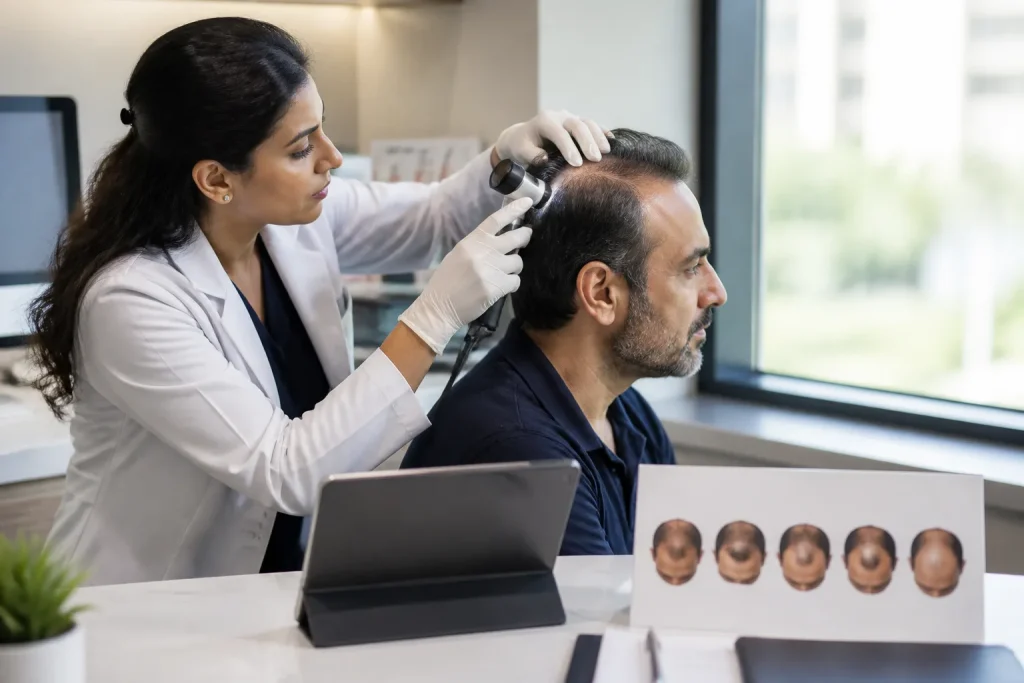
Timing a hair transplant depends heavily on whether hair loss is still changing. Temporary shedding may follow illness, stress, nutritional problems, or certain medications, and it can improve after the underlying trigger is addressed. Active thinning, however, may indicate ongoing pattern hair loss, inflammation, or another condition that needs attention before surgery is considered.
A medical evaluation can help distinguish temporary shedding from progressive loss. A clinician may review your history, examine the scalp, and recommend blood tests or other investigations when appropriate. If hair loss is continuing, medical treatment may be suggested first to protect existing hair and clarify the eventual pattern. Transplanting grafts into an area that is still thinning can make long-term planning more difficult, because native hairs may recede around the transplanted follicles.
There is no universal age at which someone becomes ready for restoration. A younger person with rapidly progressing loss may benefit from stabilizing the condition before committing to surgery, while an older person can still require evaluation if shedding has an unclear cause. The key consideration is hair loss stability, supported by a diagnosis, a realistic assessment of future progression, and sufficient donor supply.
Even after shedding appears calmer, monitoring may be useful before finalizing a surgical plan. Changes in density, hairline position, or scalp symptoms should be reported, since they can affect graft placement and the amount of coverage that is realistically achievable.
Is Your Donor Area Suitable for Hair Restoration?
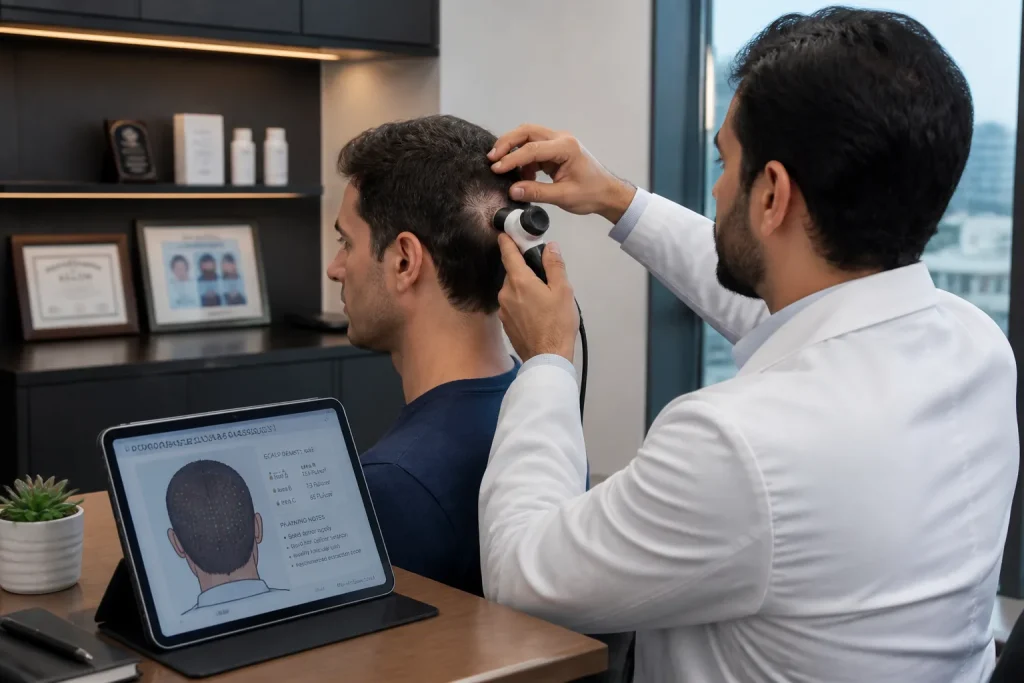
The back and sides of the scalp usually provide the follicles used for transplantation, so their condition strongly influences how much coverage is possible. A suitable donor area generally has stable growth, adequate density, and enough healthy follicles to support the planned recipient area without creating visible thinning where grafts are removed.
A clinician will consider donor hair density, hair caliber, follicle quality, and the contrast between the hair and scalp. Thicker, darker hair can often provide more visual coverage than fine hair, even when the follicle count is similar. The scalp should also be assessed for conditions such as inflammation, scarring, or previous procedures that may affect extraction and healing.
Donor supply must be compared with the size of the area requiring restoration. A broad recipient area and limited graft reserve may make complete coverage unrealistic, particularly if future hair loss remains possible. Planning too aggressively can reduce the donor area’s appearance and limit options later.
When donor resources are modest, a surgeon may recommend more conservative goals, staged treatment, medical management, or non-surgical hair restoration instead of immediate surgery. A professional assessment is therefore essential before deciding whether transplantation is appropriate or how much improvement can reasonably be expected.
What to Expect From a Hair Transplant Consultation
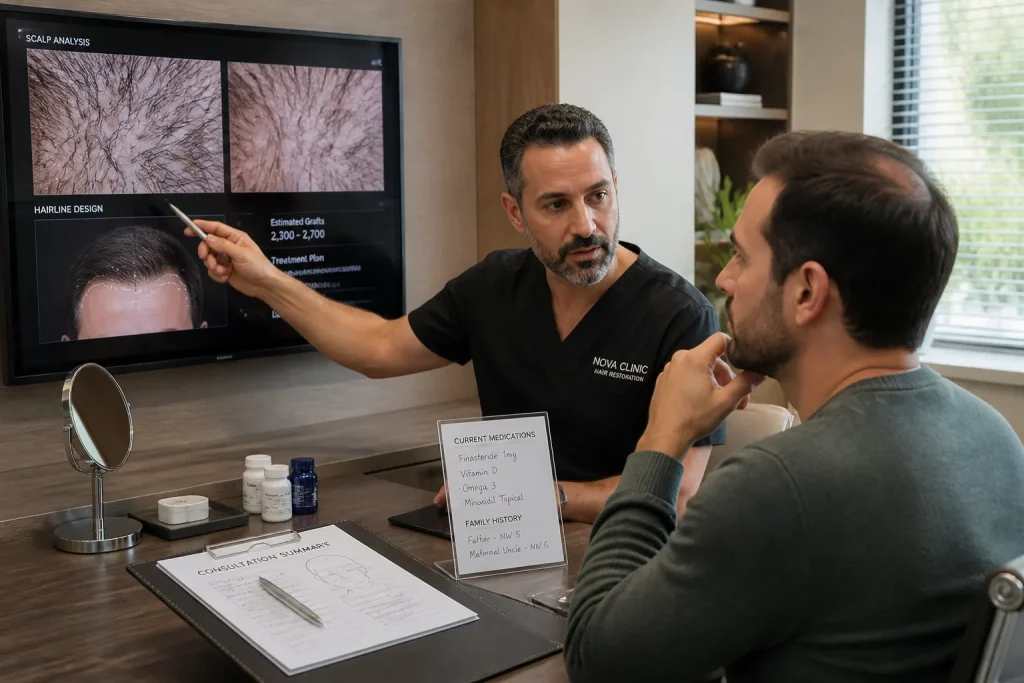
A consultation turns general concern about thinning hair into an individualized treatment assessment. The clinician will ask when shedding began, whether it has changed recently, which relatives have experienced hair loss, and what treatments or supplements you have tried. Mention previous scalp procedures, medications, allergies, and medical conditions, even if they seem unrelated.
A close examination of the scalp and donor area helps assess follicle quality, existing hair density, miniaturization, and signs of conditions that may require medical treatment first. The clinician may also examine the recipient area and use magnification or photographs to document the pattern. These findings are more reliable than judging candidacy from online images alone.
Hairline design should reflect facial proportions, age, and the likely progression of future loss. Ask how many grafts may be appropriate, what density is realistically achievable, and how the plan would protect available donor follicles. Realistic expectations should be discussed openly, since transplanted hair cannot recreate unlimited density or guarantee a particular cosmetic result.
Before deciding, ask about potential complications, recovery, temporary shedding, aftercare, follow-up appointments, and the clinician’s experience with comparable cases. Clarify how ongoing hair loss would be managed and whether additional restoration might be needed later. A qualified medical assessment should guide these decisions rather than a photo-based promise.
Choosing Between FUE, DHI, and Other Restoration Options
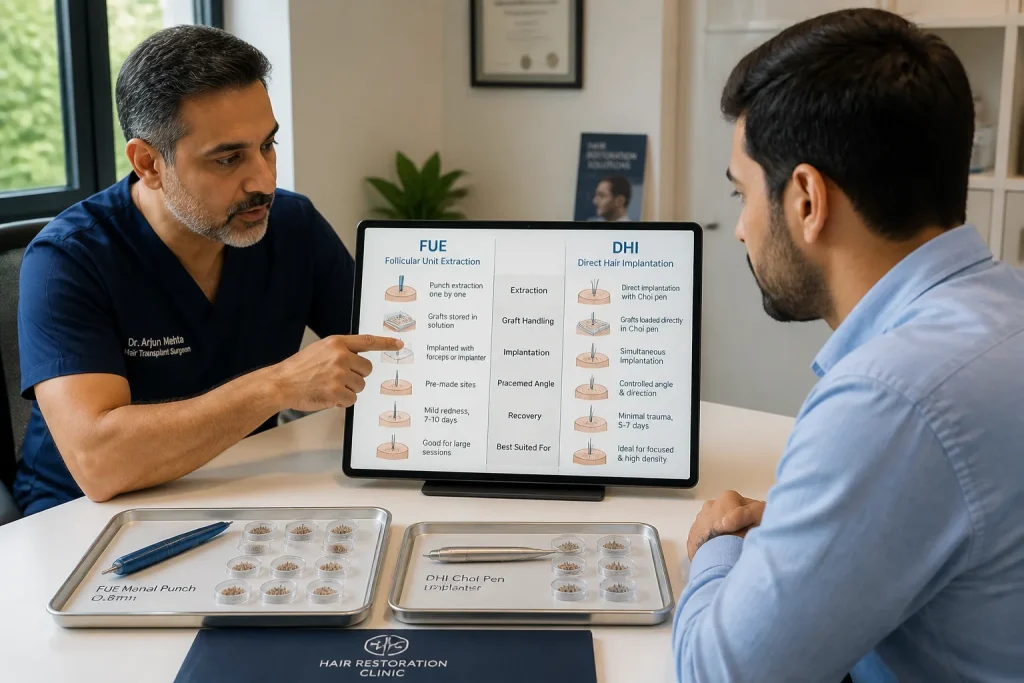
FUE and DHI describe different ways of handling hair grafts during a transplant. With follicular unit extraction (FUE), individual follicles are removed from the donor area and placed into prepared recipient sites. Direct hair implantation (DHI) also uses extracted follicles, but implantation is performed with a specialized pen, which may allow the clinician to control placement and angle during the procedure. Neither approach is automatically better for every patient.
The most suitable technique depends on donor hair characteristics, the size and location of the thinning area, hair texture, desired density, and the clinician’s experience. A qualified assessment should also compare likely recovery, temporary shedding, scarring risks, limitations, and aftercare requirements rather than relying on promotional claims.
Diagnosis and timing should guide the decision. Medical treatment may help manage ongoing hair loss, while postponing surgery can be sensible if the pattern is still changing or the donor supply is limited. In some cases, medication, scalp camouflage, or other nonsurgical hair restoration options may better match the person’s goals. A consultation can clarify whether FUE, DHI, another surgical method, or continued medical management is the most responsible next step.
FAQs
Can a hair transplant stop future hair loss?
A hair transplant restores hair in thinning areas but does not stop ongoing hair loss from untreated follicles. Transplanted follicles are usually resistant to pattern baldness, while existing hair may continue to thin, so treatments such as finasteride or minoxidil may help preserve density when medically appropriate. A specialist can assess your donor area, hair loss pattern, and long-term treatment plan.
How long should I wait after noticing thinning hair?
Do not wait if hair thinning persists, progresses quickly, or appears with sudden shedding, scalp irritation, or patchy bald spots. Book an evaluation with a dermatologist or qualified hair-loss specialist within a few weeks so they can identify the cause and discuss treatment options. Early assessment can help protect existing hair follicles and improve the chances of effective management.
Is there an ideal age for hair restoration?
There is no single ideal age for hair restoration, but surgeons often recommend waiting until hair loss has stabilized, typically after the mid-20s. Younger patients may experience ongoing thinning, which can affect the long-term appearance and available donor area. A qualified hair restoration specialist can assess hair follicles, pattern loss, medical treatments, and whether procedures such as FUE or DHI are appropriate.