If you have been quoted over $1,500 for a single dental crown in the United States, you have probably already typed “dental crowns Turkey vs USA cost” into a search bar. You are not alone. The price gap between the two countries is real and large enough to make cautious patients reconsider their options.
But a headline number only tells part of the story. A crown that costs a fraction abroad may come with travel expenses, follow-up complications, or material differences that change the final math. So this comparison looks at the full picture: typical price ranges, material choices, hidden extras, quality factors, travel costs, and overall value.
What this article will not do is hand you a single “correct” answer. Your case depends on the tooth, the material, your gum health, and the clinic you choose. An exact quote requires a personal assessment — no article can replace that. What we can do is give you the numbers and context you need to ask better questions before you commit.
Average Price of Dental Crowns in Turkey and the USA
If you want a realistic baseline before booking anything, the numbers speak for themselves. In Turkey, a single dental crown typically runs somewhere between $150 and $400, depending on the clinic and the material chosen. In the United States, that same crown usually lands between $800 and $2,500, with metropolitan areas like New York, San Francisco, or Boston pushing toward the higher end of that range.
Several variables explain why these ranges are so wide rather than fixed. In Turkey, pricing shifts based on the city, the reputation of the clinic, and whether the practice caters primarily to international patients or local ones. Istanbul and Antalya tend to have more competitive pricing because of the volume of dental tourism, while smaller cities may charge less but offer fewer English-speaking staff.
In the USA, the higher figures reflect structural costs rather than simply higher profit margins. American clinics carry substantial overhead: malpractice insurance, licensing fees, laboratory costs, and compliance with state and federal regulations all add to the final bill. Insurance structures also play a role, since many patients pay partially out of pocket, and the listed price often represents the uninsured rate.
These ranges are starting points, not final quotes. A crown that looks affordable on a website may cost more once the examination, X-rays, and any preparatory work are factored in. The honest takeaway is that both countries show significant internal variation, and the gap between them is real but not as simple as a single number suggests.
Key Factors That Shape Crown Pricing in Each Country
Two clinics can place the same type of crown and still land on very different final numbers. The gap comes from how each market is built, not from a single line item. In the USA, labor is the heaviest driver: a dentist’s time, a licensed hygienist, front-desk staff, and a certified dental lab all carry wages that reflect the local cost of living. On top of that sit rent for a fully equipped operatory, malpractice premiums, sterilization compliance, and the administrative load of billing insurers. That overhead is baked into every appointment, whether or not a crown is involved.
Insurance shapes US pricing in a second, quieter way. Because reimbursement contracts set ceilings on what a practice can collect for covered procedures, providers often set their fee schedules to keep private-pay and out-of-network cases profitable. The result is a list price that reflects negotiation with payers as much as the actual clinical work.
Turkey’s market works on different economics. A dense cluster of dental clinics, especially in cities like Istanbul and Antalya, competes directly for international patients, which keeps margins tighter. Lower labor costs, cheaper rent, and a steady flow of dental tourism traffic let clinics spread fixed costs across more procedures. Currency movement adds another layer: when the lira weakens against the dollar or euro, treatment priced in local currency becomes more affordable for foreign patients, even if the clinic’s internal costs have not changed.
None of this automatically says one system delivers better dentistry. It simply explains why the same crown carries a different price tag on each side of the Atlantic.
Material Choices and Their Impact on Total Treatment Cost
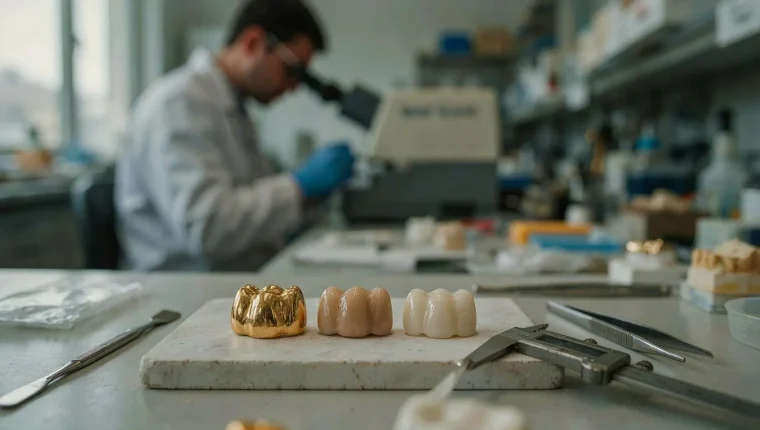
Material selection is often the single largest variable a patient can control, and it shifts the price gap between Turkey and the USA in ways that are not always proportional. The four materials you will encounter most often are porcelain-fused-to-metal, all-ceramic, zirconia, and gold. Each carries its own cost profile, and each behaves differently in the mouth over time.
Porcelain-fused-to-metal sits at the budget end in both countries. It is durable and affordable, but the metal core can show as a dark line at the gum and may wear down opposing teeth. All-ceramic crowns offer the best aesthetics and are ideal for front teeth, yet they cost more and can be more brittle under heavy bite force. Zirconia has become the modern workhorse: strong, tooth-colored, and suitable for molars, it sits in the middle-to-upper range. Gold remains the most biocompatible and gentle on opposing teeth, but its price tracks the metal market and it is rarely chosen for visible areas.
Here is where the gap widens. In the USA, a zirconia crown might run $1,200–$1,800, while a porcelain-fused-to-metal version could be $800–$1,100. In Turkey, the same zirconia crown may cost $200–$350, and porcelain-fused-to-metal as little as $120–$180. The absolute dollar difference is larger for premium materials, which means choosing zirconia in Turkey can save more in raw dollars than choosing a budget material.
The cheapest material is not always the lowest long-term cost. A brittle all-ceramic crown that fractures after three years may need replacement, and a replacement abroad means another flight, another hotel, and another round of time off work. That calculation belongs to a later section on long-term value, but the principle matters here: match the material to the tooth, the bite, and your timeline, not just the price tag.
Hidden Expenses Beyond the Crown Itself
Even a carefully negotiated crown price rarely reflects what you actually pay at the end of treatment. The gap between the advertised number and the final invoice comes from add-ons that both Turkish and American clinics bill separately, and these extras can shift the total by hundreds of dollars in either direction. Understanding what sits outside the crown itself is what separates a fair comparison from a misleading one.
The most common surprise is the pre-treatment diagnostic and preparation work that must happen before any crown is seated. In the USA, these items usually appear as individual line charges on your statement, while Turkish clinics more often fold them into a single package — but not always, so the inclusion list matters as much as the headline rate.
- Exams, X-rays, and impressions: A diagnostic exam, periapical or panoramic imaging, and digital or physical impressions are billed separately in most US practices and may or may not be bundled abroad.
- Temporary crowns: If your permanent crown is fabricated in a lab over several days, a provisional restoration protects the prepared tooth in the meantime — sometimes free, sometimes a distinct fee.
- Preparatory dental work: A root canal, core buildup, or extraction may be required before the tooth can support a crown, and these procedures carry their own costs on top of the crown price.
- Follow-up visits and repairs: Adjustment appointments, recementation, or a replacement if the crown fractures or fails early can generate additional charges.
- Insurance gaps: US dental plans frequently cap annual benefits or classify crowns as major services with partial coverage, leaving a significant out-of-pocket balance.
Turkish treatment packages often advertise an all-inclusive figure that covers consultation, imaging, and the crown itself, which is why the quoted price can look deceptively complete. The catch is that package inclusions vary widely between clinics, and a procedure like a root canal or a buildup may still be quoted as an extra. Asking for a written itemized estimate before committing — in either country — is the single most reliable way to close the gap between the advertised crown and the amount you actually pay.
Quality Standards and Clinical Outcomes Compared
Quality in dentistry is less about the country on the diploma and more about the specific clinic, the lab behind it, and the traceability of what goes into your mouth. In the USA, crown production is governed by strict state dental boards, FDA oversight of materials, and laboratories that frequently hold ISO or DAMAS certifications, meaning every batch of ceramic or zirconia can be traced to its manufacturer. Turkey operates under Ministry of Health regulations and a growing number of clinics pursue ISO 9001, JCI, or Turkish Dental Association accreditation, but enforcement varies widely between a modern Istanbul clinic and a smaller regional practice. That gap is where the real risk sits.
Clinician training tells a similar story. American dentists complete four years of doctoral study plus licensure exams and mandatory continuing education. Turkish dentists follow a comparable university path, and many leading practitioners train abroad or teach at research hospitals, yet experience with complex cases such as full-mouth reconstructions or implant-supported crowns is uneven. The same variability applies to materials: premium clinics use branded zirconia with certificates of origin, while budget operations may substitute generic blocks with weaker fracture resistance. When you review a clinic, look for before-and-after case documentation, laboratory partner names, and patient reviews that mention long-term follow-up rather than only the initial visit. A single accreditation badge means little without dated case photos and material certificates to back it up.
Travel, Stay, and Scheduling Costs for Dental Tourism

Once the crown itself is priced, the trip around it becomes the next real number. A return flight from a major US or European city to Istanbul or Antalya typically runs between $400 and $900 depending on season, how early you book, and whether you fly direct. Airport transfers and local transport are minor by comparison, usually $30 to $80 total for the visit, though some clinics include them in their package.
Accommodation is where the schedule and the budget meet. Crown work rarely finishes in a single sitting. Preparation, impression or digital scan, temporary placement, and final fitting can stretch across five to ten days, and clinics often quote treatment in two stages. Budget roughly $40 to $120 per night for a comfortable hotel near the clinic, so a week-long stay adds $300 to $800 to the trip. If the lab needs more time, or if a second visit is required for the final cementation, that figure can double.
Time away from work is the cost that never appears on an invoice. Most patients need seven to ten days off for a single-visit protocol, and staged cases can demand two separate trips weeks apart. Before committing, ask the clinic to confirm the full treatment timeline in writing, including any buffer days for lab work, so you can weigh the total trip against the crown price itself.
Is the Savings Worth It? Balancing Cost and Long-Term Value
Deciding whether a crown placed abroad is worth it comes down to one honest calculation: the total cost of the entire experience measured against the value you actually receive. A lower price tag means little if the crown fails in three years and you cannot easily return for a repair. Start by adding everything up — the crown fee, flights, hotel nights, meals, time away from work, and the cost of any follow-up you may need back home. That figure, not the advertised price, is your real comparison point.
Then think about lifespan and access. A well-made crown can last many years, but if something goes wrong, local dentists may be reluctant to adjust or replace another clinic’s work, and you could pay full price for a fix. Consider your own priorities: budget, willingness to travel, and whether continuity of care matters to you. For some patients, the savings clearly justify the effort; for others, staying close to home is worth the premium. This is a personal, case-specific decision — there is no universal right answer.
FAQs
How much do dental crowns cost in Turkey compared to the USA?
Dental crowns in Turkey typically cost between $150 and $400 per tooth, while the same procedure in the USA often ranges from $800 to $2,500 or more depending on the material and location. This means patients can save 60% to 80% by choosing a clinic in Turkey, even after factoring in travel and accommodation. Many Turkish clinics use the same branded materials, such as zirconia and E-max, that are common in US practices.
Is the quality of dental crowns in Turkey comparable to those in the USA despite the lower cost?
Yes, many dental clinics in Turkey use the same internationally certified materials and CAD/CAM technology found in US practices, so crown quality can be comparable when you choose an accredited, experienced provider. The lower cost mainly reflects favorable exchange rates and lower operating expenses rather than inferior materials or techniques. Quality varies widely between clinics, so check credentials, lab certifications, and patient reviews before committing.
What additional expenses should I consider when comparing dental crowns Turkey vs USA cost?
When comparing dental crown costs between Turkey and the USA, factor in additional expenses such as flights, accommodation, meals, and local transportation, which can add several hundred to over a thousand dollars to a Turkey trip. You should also account for potential follow-up visits, possible complications requiring revision work, and the cost of a second trip if a crown fails or needs adjustment after you return home. US patients may face sales tax on dental services in some states and higher lab fees, while Turkey typically bundles lab costs into the quoted price. Travel insurance, time off work, and currency exchange fees further widen the real cost gap beyond the headline crown price.